When AI Visions Clash: Leadership's Defining Role in Tech's Future

When AI Visions Clash: Leadership's Defining Role in Tech's Future
The leadership choices at the helm of AI development are shaping our technological future. Dive into the diverging paths of major AI players and what it means for safety and innovation.
Diverging Paths: The Core of AI's Future
The landscape of artificial intelligence is currently defined by a fascinating and crucial divergence in vision, particularly regarding how these powerful systems should be developed and governed. It's not just about who builds the fastest or smartest AI; it's fundamentally about the philosophy guiding its creation. This internal debate has profound implications for everyone.
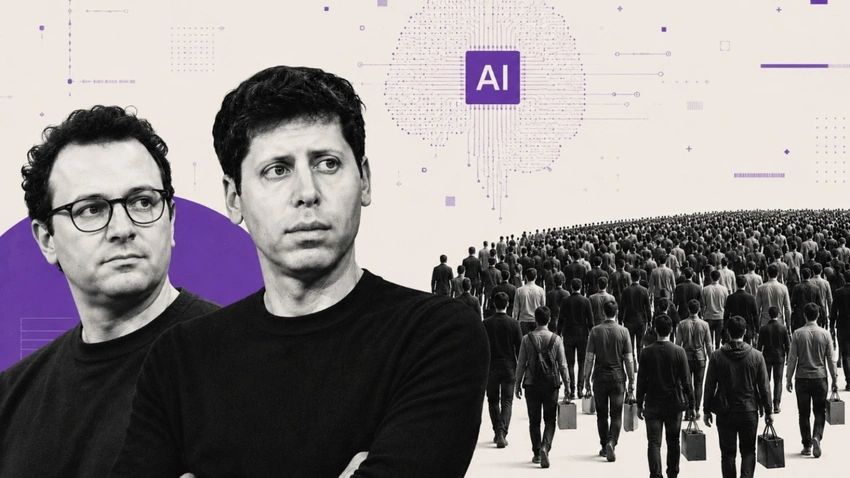
We've seen this play out vividly with figures like Dario Amodei, the CEO of Anthropic. His departure from OpenAI, where he was a key figure, wasn't merely a career move; it was a testament to deeply held concerns around AI safety and governance. Amodei's perspective is clear: when core visions don't align, charting separate courses becomes essential.
He encapsulated this sentiment perfectly, remarking,
At the end of the day, why argue with someone when you don't have the same vision and you don't trust them.
This isn't about personal animosity but a profound difference in approach to some of the most critical technology humanity has ever developed. For Amodei and his colleagues, the resolution was to establish Anthropic, placing an explicit, heightened focus on building advanced AI systems with safety at their absolute core.
This isn't a passive disagreement. It's a foundational split that has fueled an intense, public competition for AI talent, customers, funding, and technological leadership. Anthropic and OpenAI are now distinct entities, each pursuing their own interpretations of responsible AI development.
As Amodei puts it, “The way to resolve it is you go off and do your thing, they go off and do their thing. And I am completely at peace with the idea that we're doing things our way and they're doing things their way.”
The ultimate arbiter, he believes, will be the market and public opinion. “We'll see who wins in the market and we'll see who wins in the court of public opinion,” he stated, emphasizing that the performance and public reception of these companies will speak louder than any internal drama. This competitive tension is healthy; it pushes boundaries and forces introspection on ethical frameworks.
Recent events, such as a New Yorker article by Amodei exploring internal issues at OpenAI - specifically concerns about trust, leadership, and decision-making - only underscore these ongoing tensions. Even the seemingly lighthearted, yet awkward, moment with Sam Altman at the India AI Impact summit, where they were unexpectedly placed next to each other, highlights the inescapable reality of their intertwined, yet distinct, journeys.
As Amodei quipped about the summit, “Look, I don't know what to tell you, OK?
There was like Narendra Modi up there suddenly telling everyone to hold hands.”
What this all boils down to is that the decisions made by leadership today are irrevocably shaping tomorrow's AI.
The divergent paths of these tech titans aren't just about corporate strategy; they are about defining the ethical compass for an intelligence that will profoundly impact our world. The future of AI hinges on which vision ultimately prevails, or perhaps, how these visions learn to coexist.
