Lebanon condemns deadly Israeli strike that killed three journalists

Lebanon condemns deadly Israeli strike that killed three journalists
Lebanon condemns an Israeli airstrike that killed three journalists in south Lebanon, calling it a blatant war crime as authorities demand accountability.
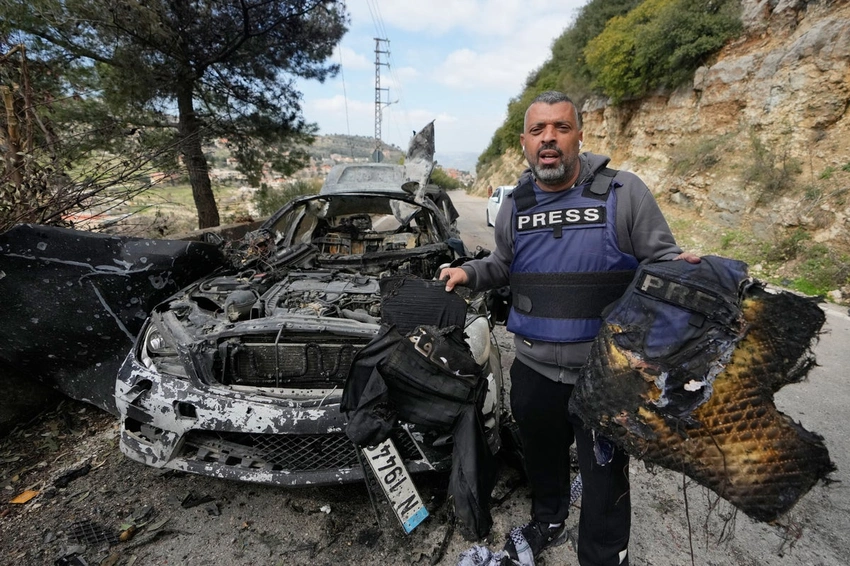
In south Lebanon on Saturday, three journalists were killed when their car was struck during heavy fighting reported along the region’s outskirts. Ali Shoeib, a veteran correspondent for al-Manar, and Fatima Ftouni along with her brother Mohammed Ftouni of al-Mayadeen, were killed in the vehicle as it moved through the Jezzine district, far from the frontlines. Israel later described the operation as targeting Shoeib, whom it labeled a Hezbollah operative, though no independent evidence has been released to substantiate the claim. The other two journalists were not named by the Israeli military, and there has been no confirmation of the broader details surrounding the attack.
The killings drew swift condemnation from the Lebanese government, which accused the strike of being a blatant war crime and a violation of international norms protecting journalists in conflict zones. President and other senior officials emphasized the need for accountability and a transparent inquiry into the incident, underscoring the risks faced by reporters who cover the war in the region.
Shoeib had reported for al-Manar for nearly thirty years, becoming a familiar presence in Lebanon’s coverage of conflicts. Ftouni, a correspondent who had been documenting frontline scenes in recent days, had previously survived a hotel bombing that claimed colleagues’ lives years earlier; her family had suffered losses in earlier strikes. Their deaths, captured by local television footage and described by colleagues as a stark reminder of the dangers journalists encounter, sparked a wave of condolences from peers and audiences alike.
The strike occurred in a district known for its historical ties to the southern border conflict and occurred despite reports that the area had been quiet beyond the active front lines. The incident has raised questions about the safety of journalists in ongoing hostilities and whether international observers and humanitarian bodies can secure better protections for media workers in war zones. As investigators begin to piece together the sequence of events, many journalists and rights groups are calling for independent investigations to establish responsibility and prevent further tragedies.
