MIRACLE BABIES: Science Just Changed Parenthood Forever!

MIRACLE BABIES: Science Just Changed Parenthood Forever!
A ground-breaking IVF trial has resulted in 8 babies being born with DNA from three people, raising hopes for women with genetic mutations.
From the moment you know you are expecting, a world of hope and wonder opens up in everyone's life. Every new born is a tiny blessing, a new life lighting up the planet. Today, science is making it possible for families long denied these miracles to finally hold their child in their arms. These breakthroughs are changing not just medicine, but the profound meaning of parenthood itself.

In just the past few days, the world learned of an extraordinary breakthrough. Eight healthy babies have been born in the UK using a radical IVF method often called “three‑parent IVF” or mitochondrial donation. This pioneering procedure offers families with serious mitochondrial genetic risks the chance to have children without passing on life‑threatening illness.
The technique was developed and carefully regulated at the Newcastle Fertility Centre, and it is allowed only in countries with strict laws, like the UK and Australia. This is the first large-scale clinical trial of its kind to reach successful births, and the results were published in the New England Journal of Medicine.
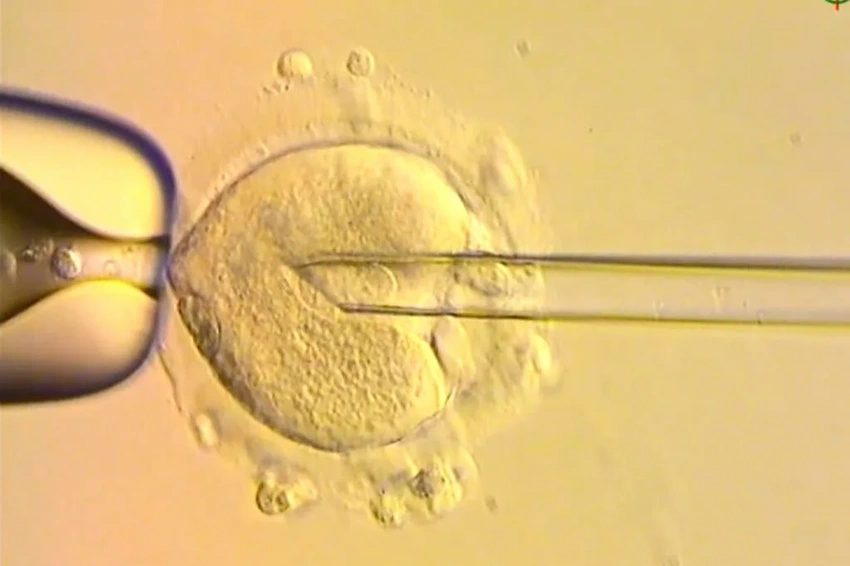
Here’s how the process works in simple terms. A mother’s egg and a donor's egg are both fertilised with sperm in the lab. Soon after fertilisation, scientists remove the nucleus, the part of the cell that holds almost all of one’s DNA, from both embryos. The nucleus from the parents’ fertilised egg is then transferred into the donor’s fertilised egg, which still retains healthy mitochondria. This reconstructed embryo is implanted in the mother’s womb. The result is a baby with nearly all of its nuclear DNA from the parents, combined with mitochondria from a healthy donor. That tiny fraction from the donor, less than 1 percent, is enough to prevent deadly mitochondrial disease.
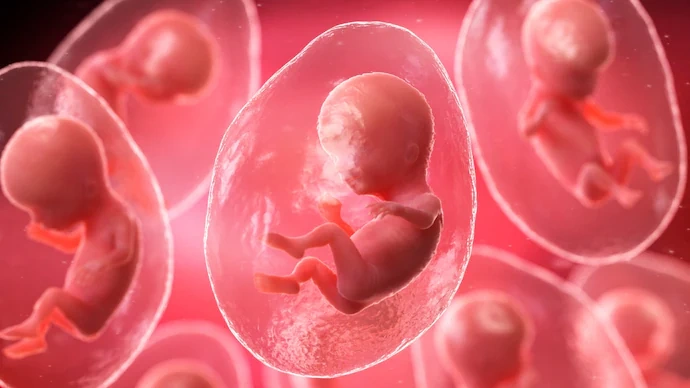
The trial involved 22 women at high risk of passing on serious mitochondrial mutations. Of these, seven became pregnant, and doctors delivered eight healthy babies, four girls and four boys, including one set of identical twins. Another woman remains pregnant in the trial phase.

According to Professor Sir Doug Turnbull, who led the Newcastle research team:
Mitochondrial disease can have a devastating impact on families. This news offers fresh hope to many more women at risk of passing on this condition.
Bobby McFarland, from Newcastle University, said:
All the children are well and continue to meet developmental milestones. We’re cautiously optimistic.
The Human Fertilisation and Embryology Authority (HFEA), the UK regulator of fertility practices, has hailed the result as proof that careful science can deliver real benefits. HFEA officials reminded that only women at very high risk of mitochondrial illness and for whom standard genetic techniques are ineffective are eligible. As of July 1, 2025, 35 patients had been approved under license, and 25 received the procedure, producing the eight confirmed births so far.
Experts agree it is a medical milestone, but they caution that long‑term safety remains unknown. The oldest children are only about two years old, and some carry low levels of maternal mitochondrial DNA up to 16 percent in a few cases. Scientists worry that over time, these levels might rise, so ongoing monitoring is crucial to understanding the full impact.
Although this is called “three‑parent IVF,” researchers emphasize the misleading nature of that label. More than 99% of genetic material comes from the mother and father, and the donor contributes only healthy mitochondria, not personality traits or appearance.
Outside the UK, the technique is only legal in Australia, where clinical trials are expected to begin in 2026. In many countries, including the United States, mitochondrial replacement remains prohibited because it involves heritable genetic changes.
For families affected by mitochondrial diseases, which affect roughly 1 in 5,000 births and typically lead to organ failure, developmental delay, or early death, this trial provides real hope. Until now, options were limited to using donor eggs, adoption, or facing a high risk of illness in any biological child. Now, there is an opportunity to have a child who is genetically related and healthy.
Every child born through these advanced methods is more than a medical achievement. For families who once braced for loss or impossibility, these infants represent renewed hope, renewed meanings, and a profound gift to humanity.
In the end, we’re witnessing something both timeless and revolutionary. The miracle of new life, formed not only by love, but by science. Each child born through mitochondrial donation or womb transplant is a living testament to human resilience and ingenuity. They bring with them the simple yet infinite promise that every new soul is a blessing on Earth.
#MiracleBabies #ReproductiveScience #Fertility #Parenthood #MedicalBreakthroughs
