Is Emerald Fennell’s Wuthering Heights a Masterpiece or Just a Mood Board?

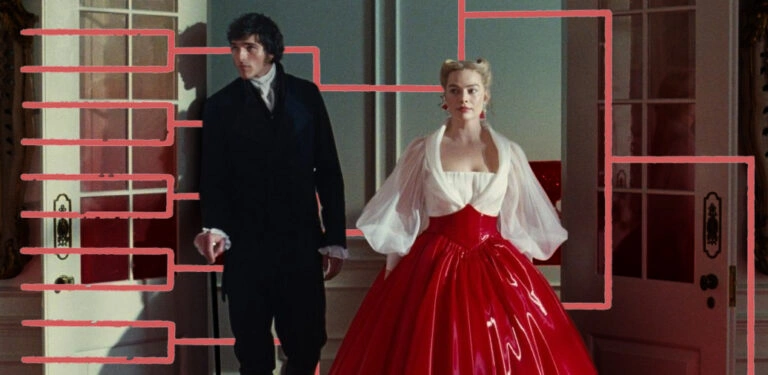
Is Emerald Fennell’s Wuthering Heights a Masterpiece or Just a Mood Board?
Is Emerald Fennell’s Wuthering Heights a Masterpiece or Just a Mood Board?
Forget the purists. Emerald Fennell is turning Wuthering Heights into a Gothic feast for the millennial gaze, and we should let her. Is it time to prioritize vibes over veracity?
Beyond the Page: Why Vibes Matter in Period Dramas
When the first whispers of Emerald Fennell’s Wuthering Heights hit the internet, the collective gasp of literary purists was audible. The critique? It is too much of a vibe. It is too aesthetic. Some even suggest it is the Coachella-fication of Emily Brontë. But before we pick up our pitchforks, we need to ask ourselves a fundamental question about art. What exactly do we want from an adaptation?
The Fidelity Trap
If you are looking for a one-to-one analogue of the 1847 novel, you are probably going to be disappointed. However, history tells us that strict fidelity often makes for mediocre cinema. Take Stanley Kubrick’s The Shining. As a literal adaptation of Stephen King’s work, it is technically a failure. Yet, it is widely considered one of the greatest films ever made because Kubrick transmuted the source material into something entirely new. He captured the essence while discarding the literal details. Why shouldn't Fennell have the same license?
Why Brontë Needs a New Look
Emily Brontë has always been the outlier of her family. She was the weird sister, the one who wrote a single, explosive book that was sexier and stranger than anything Charlotte or Anne produced. Her work is inherently Gothic and deeply psychological. This makes it the perfect canvas for a director like Fennell, who thrives on high-concept visuals and millennial irony.
- The Gothic Feast: Why settle for dusty parlors when you can have a sumptuous, lensed nightmare?
- Emotional Truth over Facts: Sometimes a specific aesthetic captures the internal chaos of Catherine and Heathcliff better than a period-accurate bonnet ever could.
Embracing the Aesthetic
Adapting a classic is always a massive risk. Generations of readers have projected their own internal movies onto these pages. You can never please everyone. Instead of trying to satisfy the history buffs, Fennell seems to be leaning into a millennial Gothic feast.
Cinema is a visual medium. If a director can take the haunting, obsessive energy of the Yorkshire moors and translate it into a modern visual language, that is a success. It is not about erasing the original. It is about breathing fresh life into a story that has been told a thousand times. If that means we get a film that prioritizes mood over meticulous historical accuracy, I say we should lean in. Let the vibes lead the way.
