“Good Vibes Only” Is a Trap—Here’s How Toxic Positivity Harms You

“Good Vibes Only” Is a Trap—Here’s How Toxic Positivity Harms You
Ever been told to 'just be positive' when you're hurting? That's toxic positivity, and it can worsen trauma by invalidating real emotions and blocking true healing. Learn why.
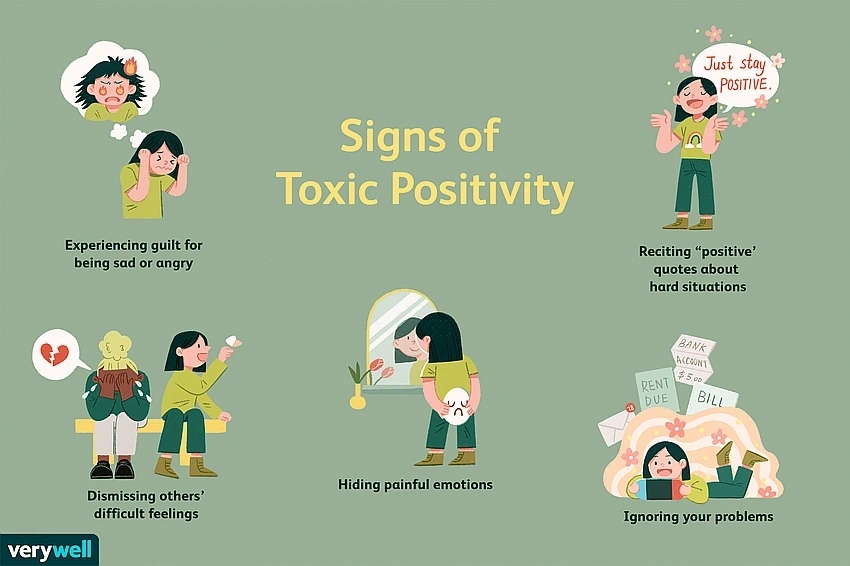
You're going through a tough time, a breakup, a job loss, a significant personal struggle. You confide in a friend, hoping for empathy, and what you get back is, “Look on the bright side! Everything happens for a reason!” or “Just stay positive, things will get better!” While well-intentioned, these phrases often land like a punch to the gut.
What you've just encountered is the subtle, yet insidious, force of toxic positivity.
It’s the belief that no matter how dire or difficult a situation is, people should maintain a positive mindset. It’s the relentless pursuit of happiness that dismisses and shames negative emotions, ultimately doing more harm than good, especially when it comes to psychological healing.

Our culture often celebrates relentless optimism. Think of all the inspirational memes telling us to 'choose joy' or 'manifest happiness.' But emotions, both 'good' and 'bad,' are simply signals, information about our internal and external worlds. Suppressing them is like ignoring a smoke alarm because you don't like the noise, the fire still rages on, perhaps even growing.
Psychologist Daniel Wegner's research on thought suppression, famously demonstrated by the “white bear problem,” shows that actively trying not to think about something actually makes you think about it more. The same applies to feelings. Trying to banish sadness or anger doesn't make it disappear; it often amplifies it, pushing it underground where it can fester and erupt later.

When we're met with toxic positivity, our natural response is to shut down. If our pain is continually dismissed with a cheerful platitude, we learn that our feelings aren't acceptable or worthy of being shared. This invalidation can be profoundly damaging, leading to feelings of shame and isolation.
As Brené Brown, a research professor known for her work on vulnerability, often says, “Vulnerability is not winning or losing; it’s having the courage to show up and be seen when we have no control over the outcome.” Toxic positivity demands that we present a polished, happy version of ourselves, preventing the very vulnerability needed for authentic connection and healing. It says, “Your pain makes me uncomfortable, so please stop.”
For individuals navigating trauma, this forced optimism is particularly detrimental. Healing from trauma isn't about bypassing pain; it's about acknowledging it, processing it, and integrating it into one's narrative. If someone is told to “just move on” or “think positive thoughts” after a profound loss or a traumatic event, they are being denied the essential grief and processing period.
This can lead to what psychologists call “experiential avoidance,” where uncomfortable thoughts, feelings, or sensations are actively sidestepped. While it might provide short-term relief, avoidance ultimately prolongs suffering and can lead to conditions like anxiety disorders, depression, or even post-traumatic stress disorder (PTSD).

So, what's the alternative to a constant smile?
It's radical compassion: for ourselves and for others. It's allowing all emotions to exist, giving them space without judgment.
When a friend is hurting, instead of offering platitudes, try, “That sounds incredibly difficult.
I'm here for you, no matter what you're feeling,” or “It's okay not to be okay.”
This approach validates their experience and fosters psychological safety. For ourselves, it means practicing emotional literacy: identifying our feelings, understanding their source, and allowing ourselves to feel them.
It's active emotional processing, which is the true path to resilience and genuine well-being.
It's about building emotional muscle, not avoiding the workout.

Is Genuine Optimism Still Possible?
Absolutely! But genuine optimism isn't a forced performance; it's a perspective built on acknowledging reality, including its hardships, and finding hope within that framework. It's the quiet strength that arises from having walked through the darkness and knowing you can find your way back to the light, not because you ignored the darkness, but because you bravely faced it.
In a world craving authentic connection, perhaps the greatest positivity we can offer is the courage to be truly human, messiness and all.
