AGI is not a Holy Grail


AGI is not a Holy Grail
If we need human domain experts in every field, why does the tech industry believe that we need one AGI for every field?
Over the last couple of weeks, I've worked extensively with AI, machine learning and NLP (natural language processing) algorithms to build Ideate - a topic suggestion tool for bloggers and authors on Thoxt. It was the most requested feature by Thoxt's writers and so I built it. Interestingly, when I next asked what problem Thoxt users wanted me to solve next, most of them said they needed better suggestions on Ideate.
Why is this so interesting to me, you ask? And what does this have to do with AGI?
To answer that, let me first discuss how Ideate works. It uses a writer's previously published work, analyzes the topics, content types and genres to suggest more topics they'd want to write about next. Ideally, one of its suggestions might be something that you're most likely to write about next. The simplest process to assume would be to simply list all these data points and pass it on to an API like OpenAI's ChatGPT and ask it to suggest such topics.
However, this solution turns out to be just a step in the algorithm, not the whole algorithm. If you look deeper on how humans think of topics to create content about, you'd understand why. Since the current language models are pre-trained on existing texts, the topics it suggests are what would turn off any good writer who would do well on a platform like Thoxt, because they'd simply be either untrue, mundane or out-of-trend.
AGI - The Supposed Holy Grail of Intelligence
The current AI-hype in the tech and startup industry makes it seem that all the research in AI is leading us towards AGI (artificial general intelligence) which is the holy grail of intelligence. The AGI could, in theory, be as smart as the smartest person on earth (whatever that means is still unclear - I'll discuss this more later) and be able to do all tasks that any human performs cognitively, better than any human can. This hype is what current AI research like building large-language models leverages to increase sales, pump up valuations and attract huge investments.

Judging by this hype, it seems reasonable to assume that in a few years, ChatGPT should be able to generate your next topic. But that's not true.
The fact that ChatGPT would be unable to generate great topics for Thoxt's writers is precisely why it can't automate legal document reviewing. This isn't a bug, it's a feature of LLMs - they're general purpose.
To understand with an example, think of a "general" person who is great at many tasks, who knows a lot about different fields like literature, architecture, law, politics and more. Would you trust them with specific work in any of these fields? No, because they're not an expert at anything.
Why Text Work is Still Inefficient after ChatGPT
There have been so many text-processing startups lately in the fields of document reviewing, content writing and more, but none of them are widely used. Lawyers won't trust ChatGPT to do legal research, journalists won't rely on it to find research and sources and medical professionals won't trust it to make real-world clinical judgement. And now, Thoxt writers can't rely on it to tell them their next topic even.
Why? Because in most, if not all, fields, accuracy matters.

Since ChatGPT is simply designed to statistically predict the next token given the context, it can't, by design, make things accurate too.
Even though ChatGPT has been around for two years now, it still hallucinates. It still changes text in places I didn't ask it to when changing or adding other things. I still have to manually check my word lists, code generated by it and documents I asked it to improve. I prefer giving it chunks of code or text to improve upon, not whole. Not just because of short context windows, but because hallucinations are just how it works.
In ChatGPT's own words, "I hallucinate all answers, most of them are just believable to you." Not exact words but something very similar to this effect.
LLM's are Still Groundbreaking
Natural language processing is a very vast field and building Thoxt has only made me appreciate these technologies more. I have built tools and used existing ones for everything from text classification to clustering to suggestions and these are all very hard to get right on.
So tools like ChatGPT are in themselves very impressive to me, which can "understand", "reason" and much more.
That being said, the current hype grossly oversimplifies both their capacity and further research in the tech startup world.
Mapping the Next Decade of Tech
Let me now revisit why I found the problem of improving Ideate so interesting. It's so interesting because it points to the fact that AGI is not holy grail. Simply passing context to a general-purpose AI won't get writers great topics. Magic needs magicking.
I know how to improve Ideate because I have both domain and tech expertise. The fact that I'm uniquely in this position to build Ideate is interesting. The fact that authors dislike these suggestions is an opportunity for me to invent new tech.
That's not all. There are plenty of problems that LLMs could help us solve but can't solve alone. In fact, nearly every industry is full of them. Forget telling people to not learn how to code anymore. In fact, if we tell everyone to learn to code, every domain expert will begin to see such problems and understand how exactly to solve them. That's what's interesting.
Combining Rule-Based Algorithms with Natural Language Processing
Previous generation tech tools (or non-AI tech tools) can be trusted to do their work because they're algorithm or rule-based. For example, Excel performs calculations accurately, video players play videos accurately.
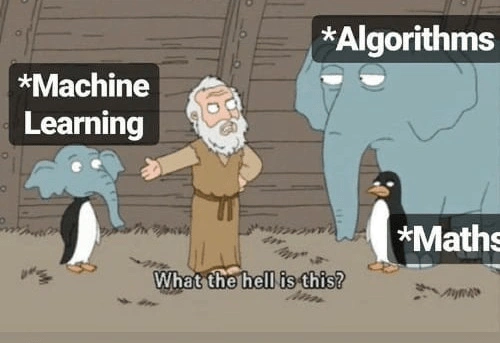
This means that most real-world tasks need a combination of rule-based algorithms along with natural language processing. For example, an LLM that interprets your prompt and can find an existing, tested algorithm to perform that task would be more efficient and accurate in many industries.
So Why is AGI Overhyped?
Because people love magic. We want to skip the meticulous work and believe that a superhero will save us all from all types of bad things. We love the idea of building Jarvis, not the Iron Man suit. We love the idea that instead of building thousands of smaller well-crafted tools by painstakingly reviewed by experts in each field, we could simply build one magic tool for everything that solves all our problems.
Why this is wishful thinking lies in its definition. Let's go back to it - AGI - an AI that is as smart as the smartest person on earth. And who is that? Who has ever been? Einstein? Was he smarter than Michelangelo? Many would disagree. There's no "generally speaking" when it comes to intelligence because intelligence is not general. It's context dependent. We'd rather see art by Michelangelo and use Einstein's physics theorems.
That's what makes fields great - special experts. And that's what we need in AI too - experts.
What AI Startups Should Focus On
What we need more of over the next decade is more context-aware tools, more domain-specific AI, not just AGI. To make expert humans in every field more efficient, we need expert AI tools.
For example, instead of simple topic suggestions, Ideate also shows latest news published around the web, clustered by topic, content type and genre, so that writers can get ideas on what's trending online. The vision is to build a “novelty-aware content ideation engine” - a new algorithm that learns this context to suggest editorially relevant topics personalized to a writer’s past work + audience.
Do We Really Need AGI?
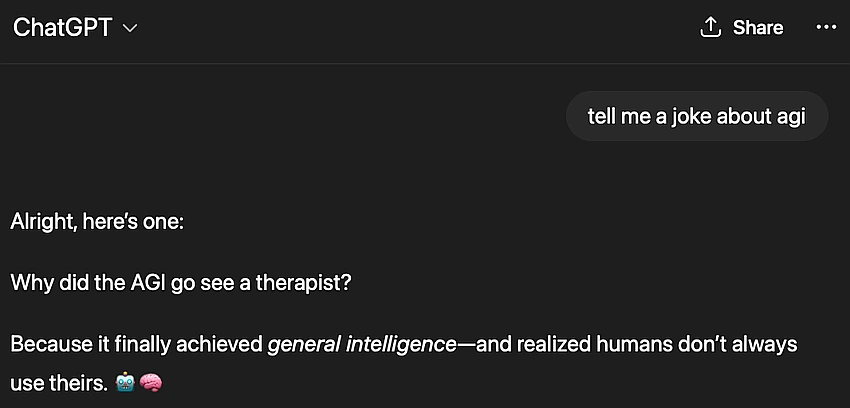
We simply need what we need - let's focus on that first, instead of building some hypothetical magic tool which will be just as elusive as finding the perfect husband would've been for the single me.
Oh, it's my 11th wedding anniversary, by the way!
