The Invite (2026): A Dinner Party Where Marriage Becomes Performance


The Invite (2026): A Dinner Party Where Marriage Becomes Performance
The Invite (2026): A Dinner Party Where Marriage Becomes Performance
Olivia Wilde's The Invite reshapes The People Upstairs into a tight, dialogue-driven drama about marriage, desire, and the fatigue of routine—where a single dinner becomes a friction-filled test of honesty and connection
There is something irresistibly cinematic about a dinner party. Four people, one apartment, a carefully prepared meal, and enough suppressed emotion to make the walls feel smaller with every passing minute. Olivia Wilde's The Invite (2026) understands this tradition well. Adapted from Cesc Gay's Spanish film The People Upstairs, it transforms a seemingly ordinary evening into an examination of intimacy, desire and the quiet exhaustion that settles into long-term relationships. Rather than relying on spectacle, Wilde places her faith in conversation, performance and the discomfort of honesty.
The result is one of the year's most entertaining relationship dramas, one that proves how much tension can emerge from a single room when everyone finally starts saying what they have avoided for years.
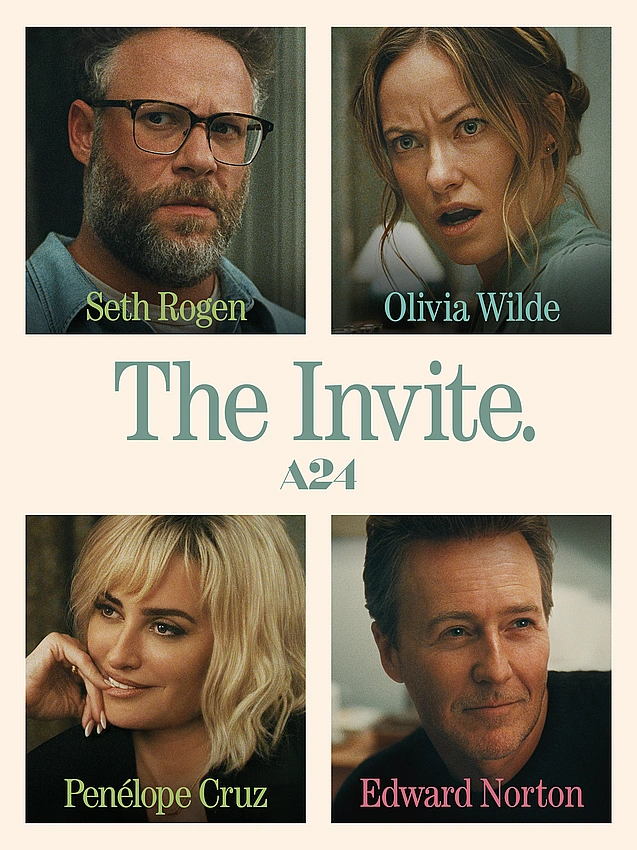
A chamber piece disguised as a comedy
At its simplest, The Invite follows Joe and Angela, a married couple whose relationship has become defined by routine rather than affection. Their decision to invite their charismatic upstairs neighbours, Hawk and Piña, for dinner appears harmless enough. Yet the evening quickly drifts into confessions about sex, marriage and personal fulfilment, exposing fractures that neither couple can easily conceal. The screenplay by Rashida Jones and Will McCormack keeps the dialogue lively without sacrificing emotional credibility, allowing humour and discomfort to exist side by side.
The premise initially resembles a conventional comedy of manners, but Wilde steadily reshapes it into something more psychologically revealing. The laughter never entirely disappears, yet every joke carries the weight of resentment, insecurity or longing. Comedy becomes less about punchlines and more about recognising uncomfortable truths.
Marriage as theatre
What fascinated me most was not the provocative premise but the way the film treats marriage as performance. Every interaction feels rehearsed until it suddenly is not. Joe and Angela have perfected the language of coexistence while forgetting how to communicate honestly with one another. Hawk and Piña appear liberated by comparison, embodying a lifestyle that rejects conventional expectations surrounding monogamy. Yet the film wisely refuses to romanticise either position.
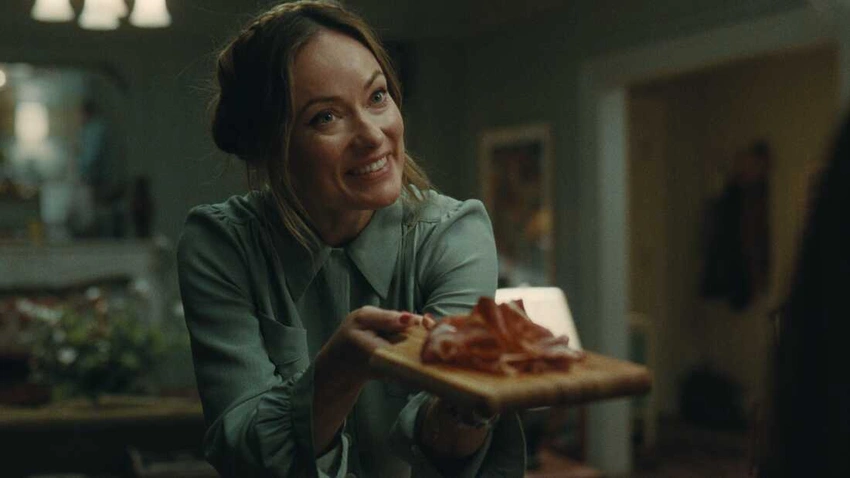
This is where The Invite becomes surprisingly literary. It recalls the drawing room dramas of the twentieth century, where confined domestic spaces expose larger emotional and ideological conflicts. The apartment becomes a stage upon which each character performs a carefully curated version of themselves until those performances inevitably collapse. The physical setting hardly changes, but its emotional atmosphere transforms repeatedly throughout the evening.
Rather than asking whether one model of love is superior, Wilde seems interested in why relationships so often become negotiations between honesty and comfort.
Four performances, one conversation
A film this contained succeeds or fails almost entirely on its performances. Fortunately, the ensemble rarely misses a beat.
Olivia Wilde gives Angela a restless vulnerability that prevents her frustration from becoming one-dimensional. Seth Rogen, often associated with louder comedies, delivers one of his most restrained performances, allowing Joe's insecurities to surface gradually instead of erupting dramatically. Edward Norton balances Hawk's confidence with unexpected sincerity, while Penélope Cruz injects Piña with warmth and unpredictability that continually shifts the emotional balance of every conversation. Critics have widely highlighted the chemistry among the four leads as the film's greatest strength, and it is difficult to disagree.
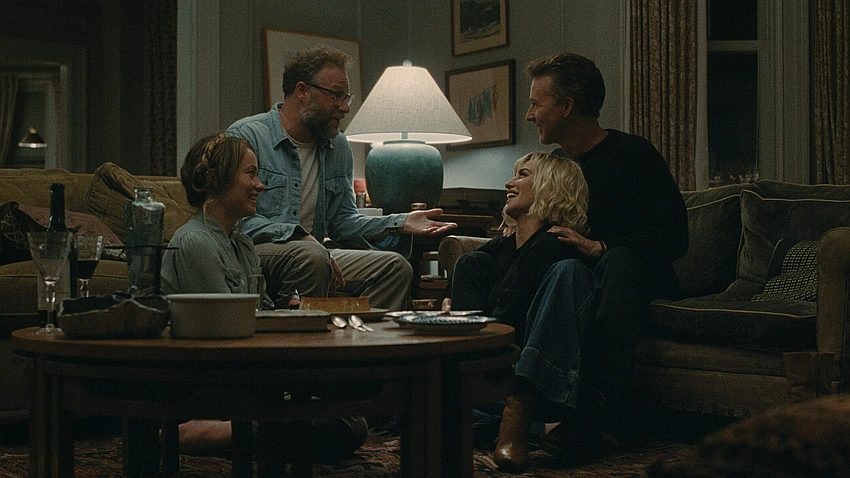
Because the cast trusts the dialogue, the film never needs exaggerated dramatic flourishes. Small glances, awkward silences and unfinished sentences become as meaningful as the larger confrontations.
A modern comedy about emotional labour
What makes The Invite feel particularly contemporary is its interest in emotional labour rather than merely sexual politics. Discussions about open relationships and desire are ultimately conversations about exhaustion, identity and the invisible compromises people make to sustain domestic life.
The film avoids turning these debates into simplistic moral lessons. Instead, it acknowledges that dissatisfaction often exists independently of ideology. Whether characters believe in traditional marriage or alternative arrangements matters less than whether they are capable of genuine vulnerability. In this sense, the provocative premise functions primarily as a catalyst. The real subject is communication, or more precisely, the lack of it.
Dev Hynes' understated score complements this emotional restraint beautifully, allowing conversations rather than music to dominate the atmosphere. His compositions quietly reinforce the unease without overwhelming the performances.
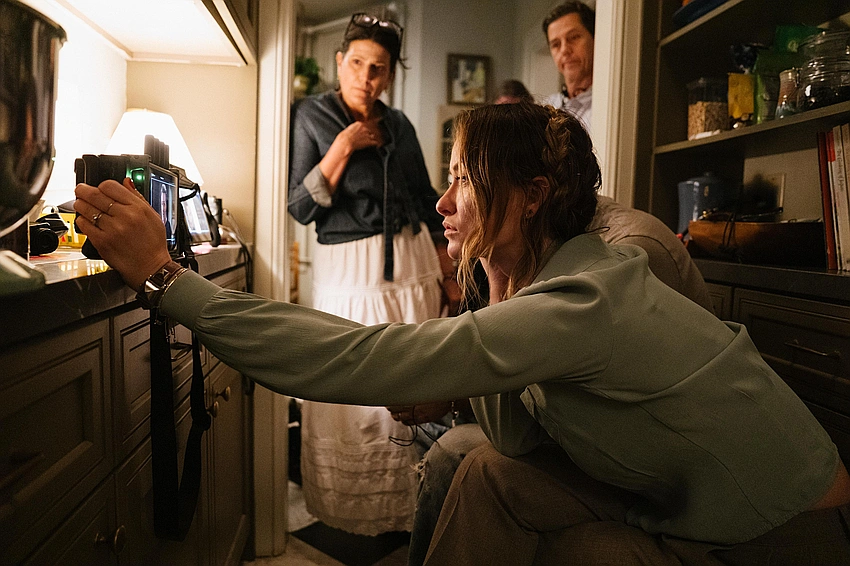
The most impressive achievement of The Invite is that it makes conversation feel cinematic. Wilde demonstrates remarkable confidence by resisting unnecessary visual excess, trusting instead that dialogue, timing and performance can generate suspense every bit as effectively as action sequences.
The film occasionally hesitates to pursue its most radical ideas, preferring emotional reconciliation over complete disruption. Even so, that choice ultimately reflects its central concern. This is not really a film about sexual experimentation. It is about the fragile architecture of intimacy and the stories couples tell themselves in order to keep living together.
Long after the dinner has ended, what lingers is not the scandal but the unsettling recognition that every relationship contains conversations waiting to happen. The Invite simply imagines what occurs when those conversations can no longer be postponed.
#TheInvite #OliviaWilde #FilmReview #DinnerParty #RelationshipDrama
