Why Taylor Swift’s Red Is Still the Greatest Fall Album Ever Made


Why Taylor Swift’s Red Is Still the Greatest Fall Album Ever Made
Why Taylor Swift’s Red Is Still the Greatest Fall Album Ever Made
Red may be the ultimate fall record of all time because Swift turned the season’s brevity, endings and possibilities into a universal language of love, memory and becoming.

I am a Swiftie from hot and clammy India, which means my relationship with autumn is a slightly complicated waltz. Where I live, September does not arrive with orange leaves carpeting the pavement or a sudden chill in the air. I wish. In reality, it usually arrives with humidity as the monsoon may still be hanging around, while the trees remain aggressively green. There is no cinematic autumnal transition outside my window, and yet, every year, sometime towards the end of August, I start listening to Red again.
This is one of Taylor Swift’s more impressive tricks. She has managed to make a season I barely experience as a physical reality feel intimately familiar as an emotional one. For a Swiftie extending my fervent adulation all the way from the tropics, evermore is arguably the more obvious seasonal record. There are parts of the year, especially late December through early February, when the cold actually does arrive and its wintery melancholy makes sense in the body. evermore can accompany that weather brilliantly. Red has ingeniously managed to somehow transcend autumn itself.
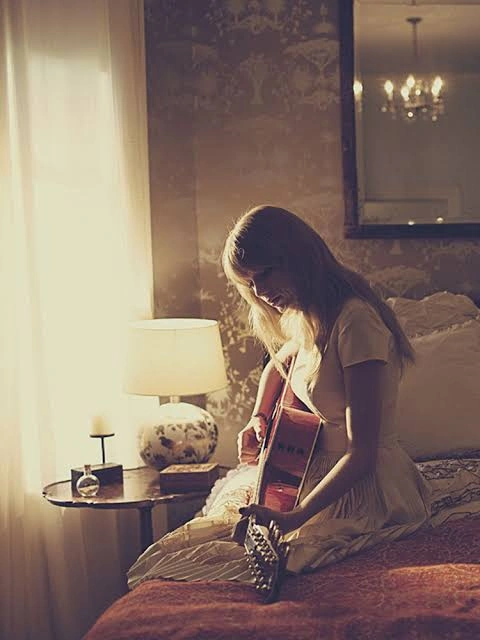
Because fall, in the Swiftian universe, has never really been just a season. It is a state of mind. It is the threshold between what has happened and what is about to happen, the almost preternatural interval in which something is ending while something else has not yet begun. And that makes it one of Swift’s most useful and decisive metaphors for relationships, growing older, losing people, becoming someone else and discovering that the passage of time is rarely as clean as we pretend.
I have been listening to Red long enough to notice that the album has begun to feel slightly underrated beyond the mainstay Swiftie discourse. Yes we still do talk about “All Too Well”. We talk about the transition from country to pop. We talk about the 10-minute version, the scarf, Jake Gyllenhaal, and the short film. But somewhere along the way, I think we have reduced Red to its most famous heartbreak song and forgotten the remarkably coherent world around it.
Red is one of the great albums about transition. And that makes it the quintessential fall album, even for those of us who do not actually get much of fall.
The era begins before autumn has actually begun
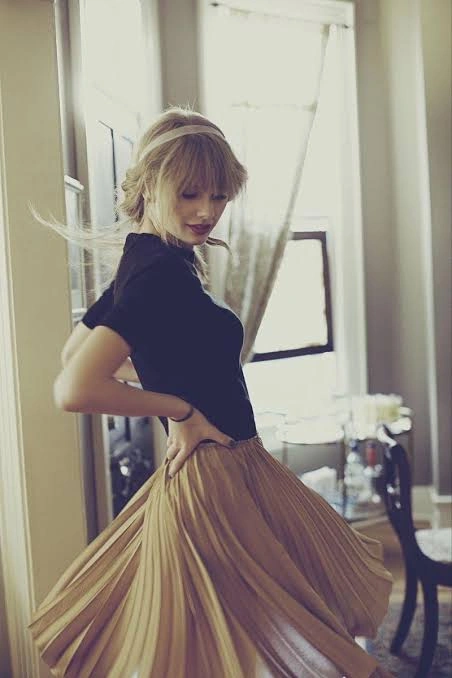
Look at the original Red era photographs, and the album already reveals itself to be caught between seasons. The photographs by Sarah Barlow were shot at Ruthie Lindsey’s house in East Nashville, with Swift surrounded by domestic spaces rather than an elaborate studio set. The resulting images have the peculiar intimacy of photographs taken at the end of summer, when you are still outside but beginning to dress for the evening. The visual language is full of denim, muted browns, warm reds and natural light. Swift appears partly obscured beneath the brim of her hat on the album cover, her face disappearing into shadow while the red of her lipstick becomes almost unnervingly vivid.
It is an image of transition before it is an image of heartbreak. “State of Grace” arrives with the enormous rush of possibility. “Red” is ecstatic, volatile, almost feverish. “Holy Ground” remembers a relationship with the speed of someone driving past somewhere they used to live. “Starlight” is nostalgic but exuberant. “22” is still sunlit, restless, young.
There is summer in Red. And then there is the feeling that summer is ending. That is what makes the album so perfectly suited to the season. Autumn is not simply cold weather. It is the moment, for many of us around the globe, when we viscerally feel that something might change before we have decided whether we are ready for it.

Autumn leaves falling down like pieces into place
I could linger on songs that perhaps do not invite as much as discourse, but there is no better example than “All Too Well”, for it is, simply put, crucial. The opening places us physically inside the season. The air is cold. There is a scarf left at a sister’s house. They drive upstate. The leaves fall. Swift remembers the relationship through objects and weather until the landscape itself becomes part of the memory.
The paramount image is the leaves “falling down like pieces into place”. It is such an unusually precise metaphor for memory. A leaf falling is an ending, but Swift describes it as an arrangement. Something is being lost and assembled at the same time. The relationship is already over in the present tense of the song, yet the past keeps acquiring new shape. That is essentially what Red does. It not only summons the ghosts of los but also conjures the gain that may possibly emerge from such a brush with loss.
The leaves are most spectacular immediately before they disappear. The season is beautiful because it is temporary, and its beauty is inseparable from that temporary quality. There is an almost cruel relationship between colour and decay. The world becomes more vivid precisely as it prepares to become bare.
Swift keeps returning to this contradiction throughout Red. Love is described as “burning red”, but also as something that can become “blue”. Time is something she wants to move through, yet in “All Too Well” she is “paralyzed by it”. The past keeps becoming more vivid as it becomes less recoverable. This is why autumn is such a natural Swiftian metaphor. Her songs have always been interested in the precise moment when an experience becomes a memory.
The season of almosts
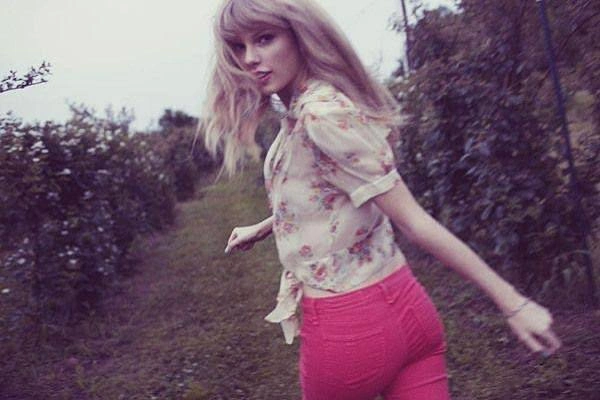
What fascinates me about Red now, after years of listening to it, is how much of the album exists in this state of almost. Of course, one only has to turn to "I Almost Do", only the seventh track on this magnificent record, in quest of corroboration. But it also serves as a cohesive spine, threading its way through the entire project.
A relationship is almost becoming permanent. A person is almost becoming a memory. A version of yourself is almost disappearing. “Holy Ground” looks backwards at something that has ended while still allowing it to feel exhilarating. “Sad Beautiful Tragic” stretches the aftermath until time itself becomes painful. “The Last Time” is structured around the possibility that this really might be the last time. “Everything Has Changed” begins with the destabilising realisation that one encounter can rearrange your sense of the future.
Even “Nothing New”, added to the Taylor’s Version narrative years later, belongs here. It is haunted by the possibility that youth itself is temporary, that the things which currently feel permanent will eventually belong to someone else.
This is why autumn works so well as the album’s emotional architecture. It is a season of endings, but also of beginnings. School starts again. The year acquires another rhythm. People return to routines. You move cities. You fall in love again. You decide that the person you were six months ago is no longer quite the person you are.
And then, almost before you have adjusted to it, the season ends. That brevity makes autumn an especially powerful metaphor for relationships. Love can feel enormous while you are inside it. And sometimes, you may even spend years remembering a relationship that lasted months. You can carry one afternoon around for a decade.
Swift understands that disproportion instinctively, as she herself included the quote "Love is so short, forgetting is so long" in the liner notes for her 2012 album and later used it as the opening title card for All Too Well: The Short Film in 2021.
Begin Again
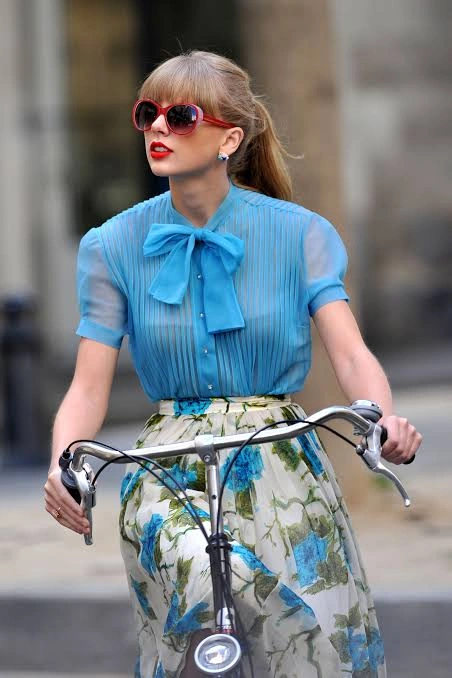
The genius of Red is that it does not end where heartbreak ends. “Begin Again” arrives with the possibility of starting over. After an album obsessed with memory, failed relationships and the inability to make time move faster, the song turns towards the future.
That is the other half of autumn. The shedding of the crown is not the silencing of the pulse. There is something almost radical about ending an album called Red — an album so saturated with emotional extremity — with the possibility of beginning again. It refuses to make heartbreak the final destination. The past remains part of you, but it does not get permanent ownership of the future. You are only forever changed, you'll just "never be the same" as Swift's sprawling bookend reminds her and us.
That is why I increasingly think Red deserves to be reclaimed as the quintessential fall album. Taylor has always been exceptionally good at taking the particular and making it feel portable. She gives a memory a colour, a season a mood, a relationship a landscape, and suddenly the geography becomes secondary. I do not need to look out of my window and see leaves turning red to understand what it means to stand at the edge of one version of your life and realise that it is already becoming another.

That is the singularity of Red as a fall record. The season is exiled on a foreign map, but its ache remains entirely at home. After years of being a Swiftie, I think this is what I have started noticing every September. The album is so familiar that we have become almost careless with it. “All Too Well” has become an institution. Taylor’s Version gave the record a second enormous cultural life. Yet the album as a complete seasonal experience can disappear behind its biggest moments.
I think that is a shame because Red speaks the fluent dialect of the dying bough. We arrive at thresholds carrying things we thought we had already left behind. Something ends. Something begins. For a brief moment, both things occupy the same space. It is precisely that double exposure that encapsulates the state of mind that is fall.
And that is perhaps why Taylor Swift managed to make me, wrapped in a particularly damp September (with the nearest commercial requiem for an equinox being an overpriced pumpkin spice latte at Starbucks), feel like I have been waiting for autumn all year.

Login to comment.
No thots yet. Be the first to share your thoughts!