The Radical Feminism of a Darned Sock

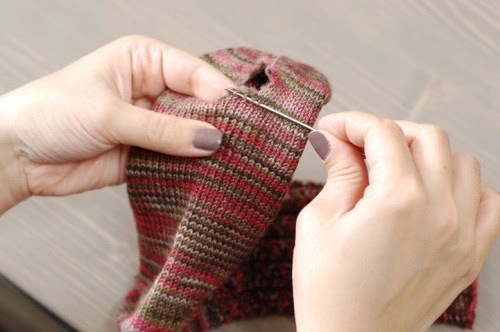
The Radical Feminism of a Darned Sock
Wanna rebel against fast fashion? Pick up a needle! Discover how the humble art of darning socks weaves memory, sustainability, and everyday magic into our lives.
The air in my Zurich atelier often smells of two things: mountain-pressed ozone and the lanolin of unwashed wool.
To the uninitiated, a hole in a sock is a failure, a small, textile death. In the high-gloss boutiques of the Bahnhofstrasse, such a failure is solved with a credit card and a shopping bag.
But for those of us gathered here, the hole is an opening.
It is a portal.
The Myth of the Subservient Stitch
We have been taught to view mending as the quiet, invisible labor of the domestic martyr. We picture the Victorian wife, hunched in the dim light, erasing the evidence of wear so her family might appear respectable. In this historical light, the needle is a tether to servitude.
But when we bring this act into the light of the twenty-first century, it undergoes a chemical change. In a global economy that demands we "move fast and break things," the act of sitting still and fixing things is nothing short of domestic sabotage. When a woman chooses to repair a heel rather than replace the pair, she is not just saving a few Swiss francs; she is withdrawing her consent from a system that relies on her dissatisfaction.
The Coven of the Needle
In my reading of Isabel Allende's The House of the Spirits, the house itself is a living entity, its walls saturated with the memories of those who inhabited them. I see our wardrobes in the same light. A garment is not a commodity; it is a repository of hikes through the Glarus Alps, of rainy afternoons in coffee shops, of the way we move through the world.
At our non-profit, the sewing circle often feels like a secular coven. We are reclaiming women's work and stripping it of its modesty. There is nothing modest about a "visible mend." When we use a neon pink thread to map the crater in a navy blue sock, we are shouting.
We are saying: This item was loved.
This item was worth the twenty minutes of my life it took to heal it. This is the radical core of the slow wardrobe.
It is the belief that our autonomy is found in our ability to maintain our own lives.
Transmuting Waste into Wonder
The circular economy is often discussed in dry, academic terms, logistics, supply chains, textile recycling vats. But at its heart, the circular economy is an act of magical realism. It is the belief that an object can die and be reborn, over and over, without ever losing its essence.
By darning, we refuse the ghosting of our possessions.
We refuse to let the things we touch become anonymous waste in a landfill.
Instead, we weave our own stories back into the fabric.
We become the alchemists of the everyday, turning a worthless scrap of wool back into a vessel for the human foot.
In a world that wants us to be constant, frantic consumers, the most feminist thing you can do is be a caretaker. To hold a needle is to hold a boundary. It is to say to the world: "I have enough, I am enough, and this story isn't over yet."
