Ottessa Moshfegh: A Writer Not Afraid of the Abject


Ottessa Moshfegh: A Writer Not Afraid of the Abject
Ottessa Moshfegh: A Writer Not Afraid of the Abject
There are writers who want to reassure the reader. Ottessa Moshfegh does the opposite. Her fiction lingers in the unpleasant corners of consciousness, in bodily shame, decay, loneliness, humiliation and compulsive behaviour. Reading her work can feel like sitting too close to someone on the verge of collapse. Yet that discomfort is precisely what makes her one of the most compelling contemporary writers.
The word “abject”, most famously theorised by Julia Kristeva, refers to what society pushes away in order to maintain order and identity. Bodily fluids, dirt, death, illness, vulgarity and psychic instability all belong to this category. The abject unsettles because it threatens boundaries between self and other, clean and unclean, civilised and animal. Moshfegh’s fiction lives inside that instability.
 Her characters are rarely heroic. Often they are cruel, isolated, obsessive or deeply self-loathing. But Moshfegh never writes them as moral lessons. Instead, she forces the reader to confront how fragile the performance of normality actually is.
Bodies That Refuse to Behave
What makes Moshfegh’s work so distinct is her refusal to separate the mind from the body. In interviews, she repeatedly returns to the physical body as central to her writing. She has spoken about being fascinated by mortality, disgust and the strange fact of embodiment itself.
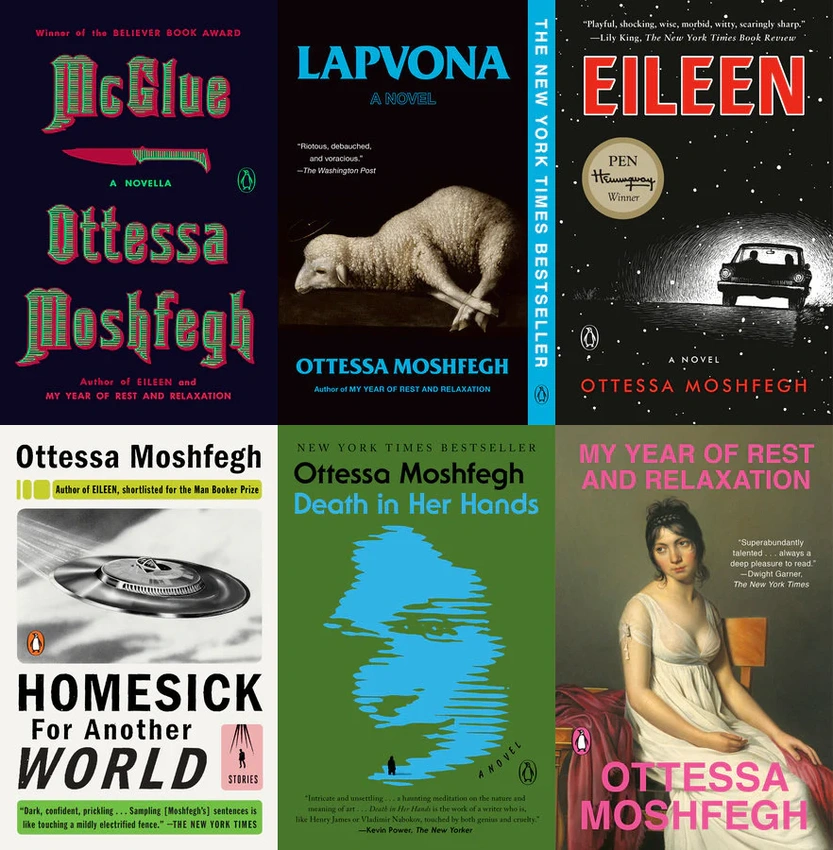
In Eileen, the protagonist constantly describes her own body in grotesque detail. Her constipation, filthy clothing and fantasies of self-erasure are narrated with an intimacy that many readers initially found shocking. When the novel was released, Moshfegh was repeatedly asked why she had written such a “disgusting” female character. Her response was revealing. She argued that Eileen was not disgusting so much as convinced of her own disgust.
 Women in literature are often expected to remain aesthetically legible. Even when flawed, they are usually granted a certain elegance. Moshfegh denies that comfort. Her women sweat, rot, fantasise, smell, resent and fail. They are not symbolic vessels of empowerment. They are painfully corporeal.
This is especially visible in My Year of Rest and Relaxation, where the unnamed narrator attempts to sleep through life itself. The novel is full of chemical dependency, emotional numbness and physical deterioration. Yet beneath the deadpan humour lies a profound meditation on alienation and grief. Sleep becomes less a form of healing than a desire to escape embodiment altogether.
The Grotesque as Emotional Truth
One of the laziest readings of Moshfegh is that she writes “gross” fiction for shock value. The grotesque in her work is never decorative. It functions as emotional revelation.
Her characters often understand themselves through disgust. In the short story “Disgust”, revulsion becomes inseparable from shame and desire. The body becomes a site where loneliness manifests physically.
 Moshfegh herself has noted that disgust became useful to her as a writer because of its immediacy. It produces a visceral reaction before intellectual interpretation can intervene. That immediacy explains why her fiction feels so psychologically invasive. Her writing bypasses the polite distance that literary fiction often maintains.
At the same time, there is something strangely compassionate in the way she writes degradation. Her fiction recognises that people are contradictory creatures. We are capable of tenderness and cruelty within the same moment. We want transcendence while remaining trapped inside failing bodies.
The grotesque, in Moshfegh’s work, is never simply ugliness. It is evidence of being alive.
Against the Performance of Likability
Perhaps the most radical aspect of Moshfegh’s fiction is her rejection of likability as a literary requirement. Contemporary culture still demands that female characters remain understandable, redeemable or morally coherent. Moshfegh refuses all three.
Her narrators can be petty, narcissistic and emotionally inaccessible. Yet this refusal of sentimental framing is precisely what gives the work its honesty. She writes people before she writes morality.
Critics frequently describe her characters as “unlikable”, but the term itself reveals a strange expectation. Male literary antiheroes have long been granted complexity without needing to be pleasant. Moshfegh exposes how gendered the demand for likability actually is.
 In many ways, her fiction resembles the work of writers such as Patricia Highsmith or Jean Rhys, authors interested in psychic disturbance rather than ethical reassurance. What matters is not whether the reader approves of the character, but whether the character feels terrifyingly real.
Moshfegh’s popularity feels significant partly because contemporary culture is saturated with self-curation. Social media rewards aesthetic coherence and emotional branding. Everyone is expected to appear stable, articulate and self-aware at all times.
Moshfegh writes against that performance.
Her fiction insists that people are irrational, bodily and often unknowable even to themselves. Desire is ugly. Shame is repetitive. Loneliness distorts perception. The self is unstable. These are not fashionable truths, but they are recognisable ones.
And few contemporary writers expose the fragile machinery of being human as fearlessly as Ottessa Moshfegh.
#OttessaMoshfegh #Abjection #LiteraryFiction #Kristeva #ContemporaryLit
