Why Stargazing and Space Photography Need to Be in Every Classroom

Why Stargazing and Space Photography Need to Be in Every Classroom
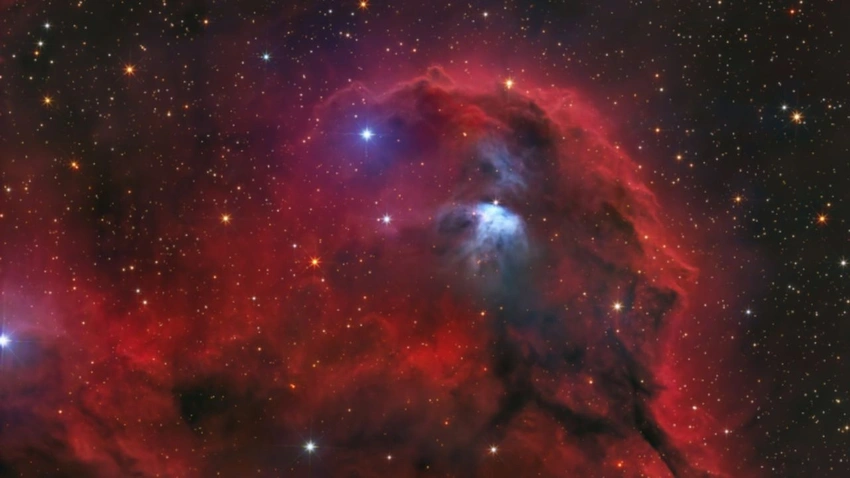
An astrophotographer recently spent 70 hours capturing a blue nebula in Orion. It is time we bring amateur space photography into schools to spark real curiosity about the universe. Let kids look up!
Have you ever stared at the night sky and wondered what is really out there? Recently, an amateur astrophotographer named Emil Andronic dedicated nearly 70 hours to capturing a breathtaking blue reflection nebula hidden within the red clouds of the Orion constellation. Seventy hours! That kind of dedication does not just come from a textbook. It comes from a deep, unshakable curiosity about the universe.
This makes me wonder why we do not mainstream citizen science in our schools and daily media. We often teach astronomy as a dry list of facts. Students memorize the planets, learn a bit about gravity, and move on. But what if we handed them telescopes and cameras instead?
Here is why bringing amateur space photography into the classroom could change everything:
- It makes science tangible. Seeing a distant galaxy or a glowing nebula through a lens you focused yourself bridges the gap between abstract concepts and real life.
- It teaches patience and resilience. Capturing the cosmos takes time. Waiting for clear skies, adjusting exposure settings, and processing images teaches students the value of delayed gratification.
- It fuels endless curiosity. When a student captures their first crater on the moon, they will naturally want to know more. How did it get there? What is it made of?
Citizen science is not just for experts. The beauty of amateur astrophotography is that anyone can start exploring. Media outlets should highlight these everyday explorers more often. Seeing regular people contribute to our understanding of the cosmos proves that science is accessible to everyone.
Imagine a generation of kids who grow up scanning the skies, analyzing light pollution, and mapping constellations. By integrating citizen science into standard curriculums, we could spark a widespread passion for discovery. It is time to move beyond the textbook and let students experience the universe firsthand. Let us encourage them to look up and capture the stars.
