Japan’s E-10 Shinkansen Set to Drive India’s First Bullet Train Project

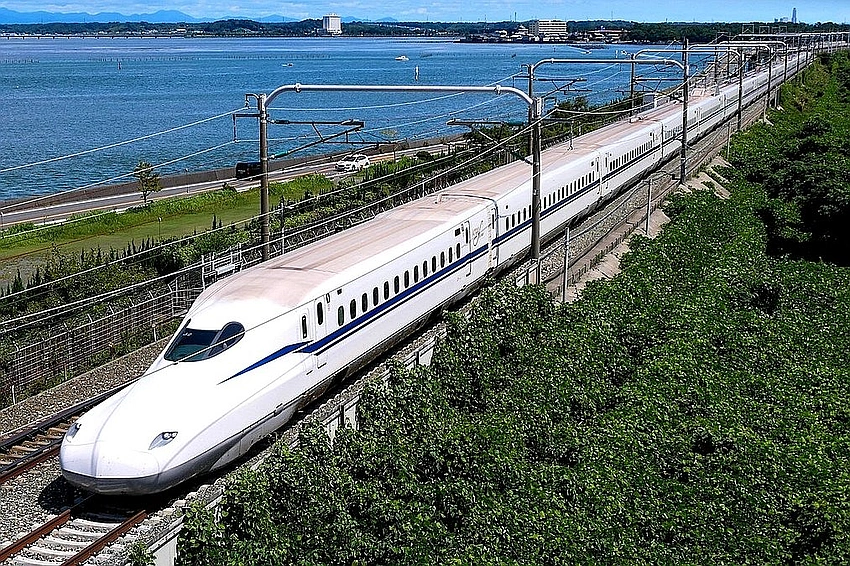
Japan’s E-10 Shinkansen Set to Drive India’s First Bullet Train Project
Japan’s E-10 Shinkansen Set to Drive India’s First Bullet Train Project
India pushes ahead with the Mumbai–Ahmedabad High-Speed Rail, using Shinkansen tech. The E10 series could debut outside Japan by 2030, with tests in heat, dust and monsoon conditions.
As construction on the Mumbai-Ahmedabad High-Speed Rail Corridor (MAHSR) accelerates, India is getting closer to launching its first bullet train. Constructed using Japanese Shinkansen technology, this project is a major advancement in India's railway modernization. According to reports, this corridor is anticipated to use Japan's next-generation E10 Series Shinkansen. India will be the first nation outside of Japan to use this model if that occurs.
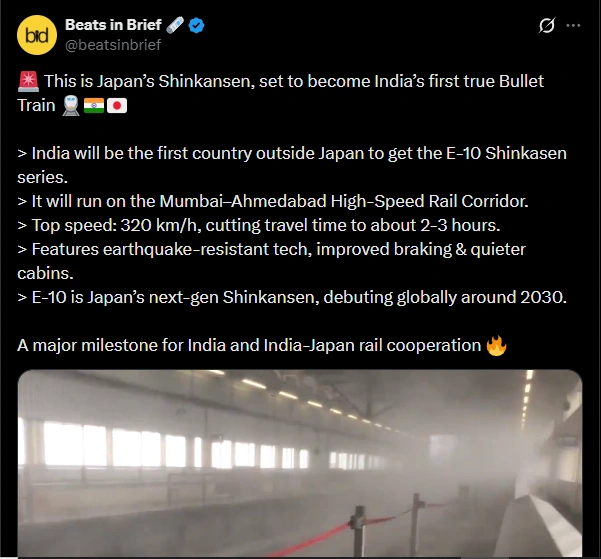
Japan's next high-speed train series, the E10, is anticipated to make its debut there in 2030. India is expected to receive the E10 for commercial operations once the entire corridor is prepared, according to officials and media reports. Modern earthquake-resistant systems, quieter cabins, better braking, and enhanced aerodynamics are all features of the train. India is anticipated to test the corridor in Indian conditions, such as high temperatures, dust, and monsoon humidity, using current Shinkansen models, such as the E5 series, before the arrival of the E10.
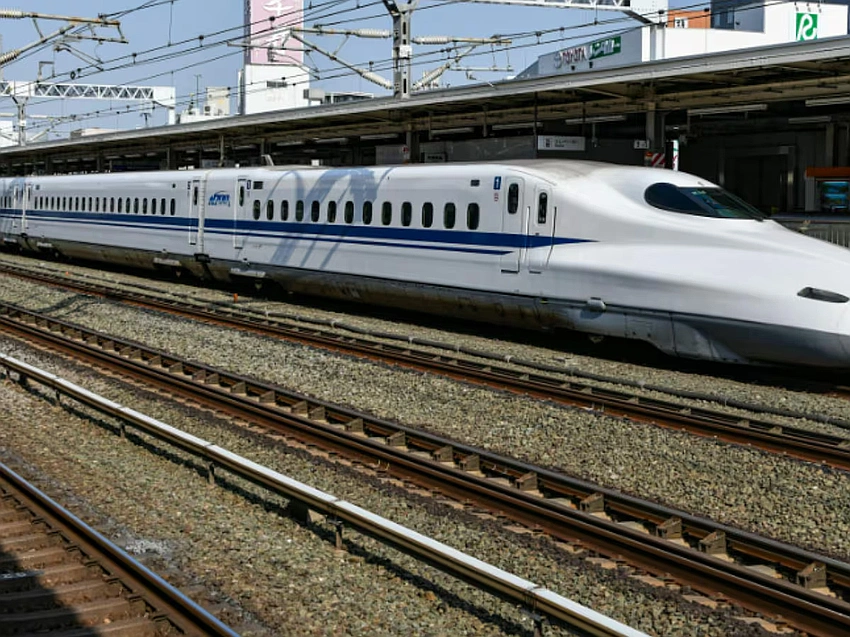
The goal of the 508-kilometer MAHSR project is to reduce the travel time between Mumbai and Ahmedabad from six to seven hours to roughly two to three hours. Particularly in Gujarat, where viaducts, station buildings, bridges, and track-related projects are well ahead of schedule, construction is moving forward quickly. Major civil structures in Maharashtra and India's first underwater rail tunnel near Thane Creek are also under construction.
The Railways Ministry states that full operations are anticipated closer to 2029–2030, depending on progress, with the first operational section, most likely in Gujarat, scheduled for 2027. Since its announcement, the project has experienced several delays. Initial progress was slowed by environmental approvals, pandemic-related disruptions, and land acquisition obstacles in Maharashtra. The high cost of construction, intricate engineering specifications, and the requirement to modify Japanese technology for India's topography and climate are other issues that are highlighted in reports.
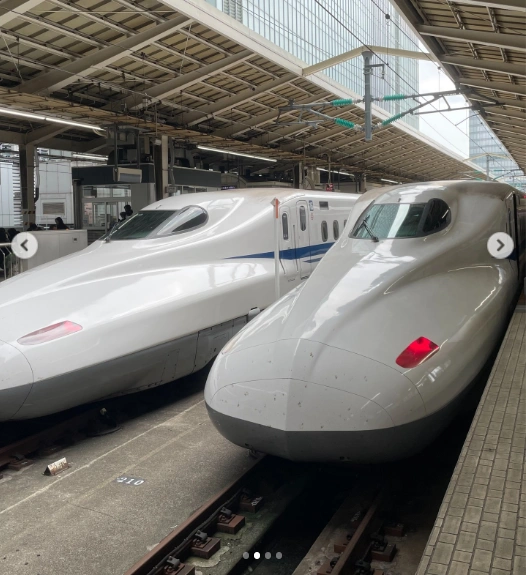
The corridor's timeline was originally anticipated to be finished by 2023–2024, but current estimates place full rollout close to the end of this decade. One of the best infrastructure partnerships between Japan and India is the bullet train project. Long-term financial support is provided by the Japan International Cooperation Agency (JICA), and Japanese businesses are engaged in training, design, and signaling. Additionally, India is getting ready for the eventual localization of high-speed rail components through future technology transfer.
India's first bullet train is getting closer to reality as construction picks up and trials are anticipated in the upcoming years. The rollout is expected to revolutionize high-speed travel in the nation and change connectivity between two significant economic hubs, despite the revised timelines.
