Autochrome Process vs Modern Color Using Medium Format Cameras

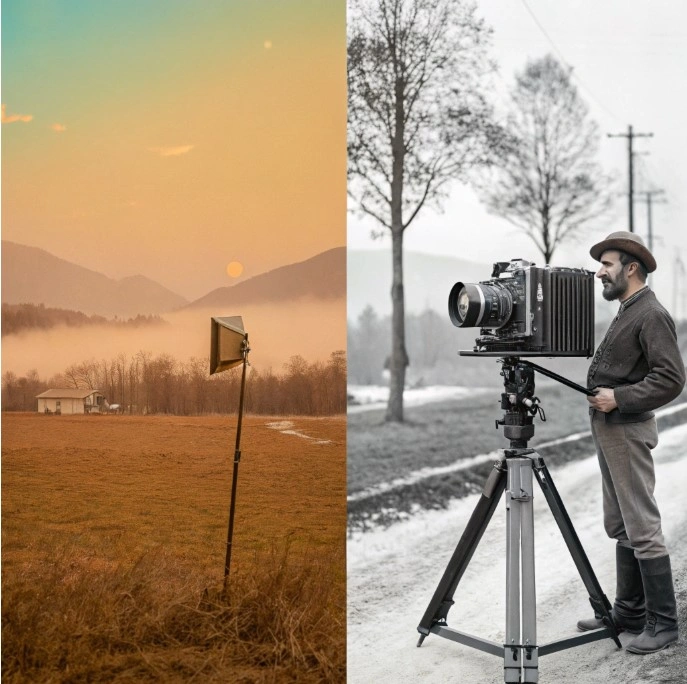
Autochrome Process vs Modern Color Using Medium Format Cameras
The autochrome process 🔗 stands as one of the most groundbreaking innovations in photography history, introducing practical color imaging to the world in the early 1900s. Invented by the Lumière brothers, Auguste and Louis, and patented in 1903 before hitting the market in 1907, it marked the shift from monochrome to vibrant, full-color photography.
In contrast, today's medium format digital cameras 🔗 deliver razor-sharp, high-fidelity color reproduction with resolutions far beyond what early pioneers could imagine. This expanded comparison dives deeper into the technical evolution, practical differences, available solutions, and leading options in the market.
By exploring both eras, photographers can appreciate how far color capture has come—and why modern systems remain essential for professional work today.
The Historical Significance of the Autochrome Process
The autochrome process emerged at a time when black-and-white photography dominated. The Lumière brothers, already famous for inventing the Cinématographe in 1895, turned their attention to solving the color problem.
After experimenting with various methods, including improvements on the Lippmann process and three-color carbon, they developed an additive color "mosaic screen plate" system. This became the first industrially produced, commercially viable color photography method.
Autochrome plates used a layer of potato starch grains dyed in orange-red, green, and blue-violet, randomly distributed to form a color filter mosaic. A panchromatic emulsion captured the light after it passed through this screen.
The result? Transparencies viewed against light, producing soft, pointillist-like images with a characteristic dreamy quality. The process dominated color photography from 1907 until the mid-1930s, when subtractive films like Kodachrome 🔗 appeared.
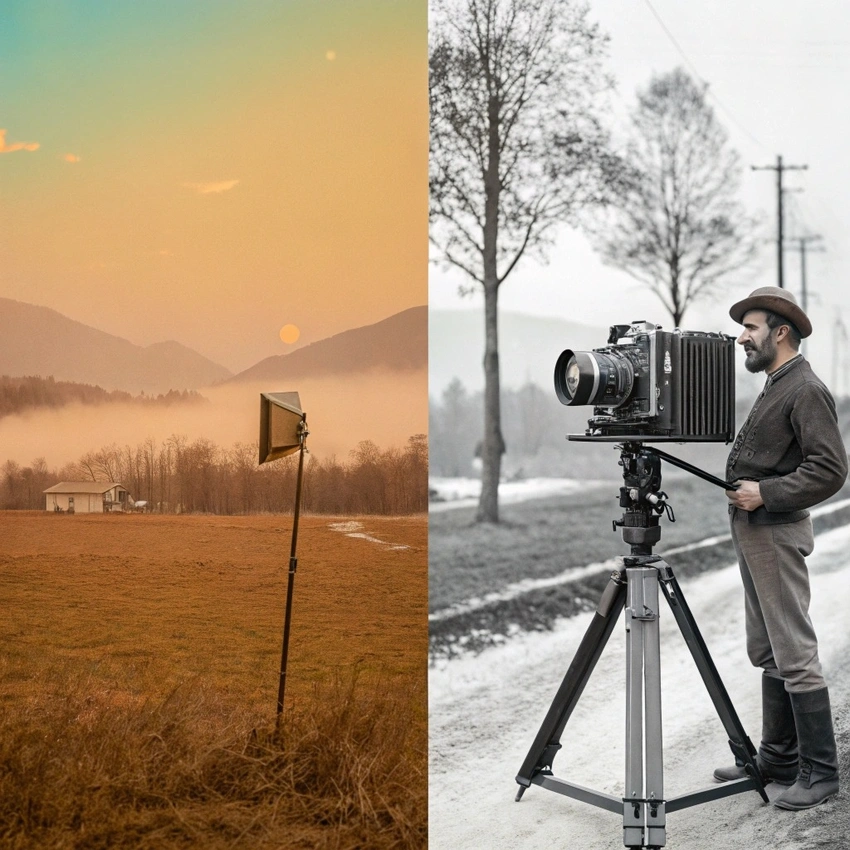
Technical Details of the Autochrome Process
Understanding the autochrome process requires looking at its core mechanics. The plates featured:
- A glass support coated with a varnish layer.
- Millions of dyed potato starch grains (about 4 million per square centimeter) acting as tiny filters.
- A carbon black filling to prevent light leakage between grains.
- A sensitive silver halide emulsion on top.
Exposure times were lengthy, often several seconds in bright daylight, due to the light-absorbing filters reducing sensitivity dramatically. Development produced a positive transparency directly on the plate.
Colors appeared natural under daylight but could shift under artificial light, showing a pinkish tinge from colloidal scattering. Fading over time and fragility limited longevity, yet surviving autochromes remain prized for their artistic appeal.
Limitations That Shaped Early Color Photography
Despite its revolutionary nature, the autochrome process had notable drawbacks. Long exposures ruled out action or portrait photography in low light. Plates were expensive, delicate, and required careful handling to avoid damage.
The random mosaic created a visible grain structure, softening details compared to modern standards. Color balance favored daylight, and reproduction for prints proved challenging.
These constraints pushed inventors toward subtractive processes, eventually leading to color films and, decades later, digital sensors.
The Rise of Modern Color in Medium Format Digital Cameras
Digital photography transformed color capture by replacing chemical processes with electronic sensors. Medium format digital cameras, featuring sensors significantly larger than full-frame (often 44x33mm or true full-frame medium format at 53.4x40mm), excel in detail, dynamic range, and tonal subtlety.
Modern systems use Bayer or similar filter arrays for subtractive color sampling, delivering accurate RGB data instantly. High ISO performance, fast autofocus, and in-camera stabilization make them practical for diverse applications.
Compared to the autochrome process, digital medium format offers immediate feedback, non-destructive editing, and archival stability, addressing nearly every historical limitation.
Core Technical Comparison: Autochrome vs. Digital Medium Format
Several key areas highlight the evolution:
- Resolution and Detail — Autochrome relied on starch grain size for separation, yielding effective low resolution. Modern medium format digital cameras reach 100MP–151MP, capturing fine textures invisible in early plates.
- Dynamic Range — Autochrome had limited latitude, prone to blown highlights or crushed shadows. Digital backs provide 15+ stops, preserving nuance in high-contrast scenes.
- Color Fidelity and Reproduction — The autochrome's orange-green-violet primaries created soft, sometimes muted tones. RGB sensors in today's cameras produce vibrant, true-to-life colors with excellent skin tones and gradation.
- Speed and Workflow — Seconds-to-minutes exposures versus near-instant capture and tethering. Digital allows burst modes, video, and seamless post-processing.
- Durability and Longevity — Fragile glass plates versus robust bodies and eternal digital files.
These advancements make modern systems indispensable for commercial, fine art, and studio work.
Analyzing solutions designed for high-quality color accuracy
Photographers seeking top-tier color today turn to medium format digital cameras. Options range from mirrorless hybrids to modular studio systems.
Key solutions emphasize large sensors, advanced processing, and integration with professional software. Brands focus on modularity, allowing upgrades over time rather than full replacements.
Market Leaders in Medium Format Digital Cameras
The medium format space features strong competition from established players:
- Phase One dominates high-end studio with modular systems.
- Hasselblad excels in ergonomic design, color science, and leaf-shutter lenses for flash sync.
- Fujifilm offers accessible GFX series with hybrid stills/video capabilities and in-body stabilization.
Other names like Leica contribute specialized models, but the top tier revolves around these three for most professionals.
Phase One XF Camera System: The Premier Choice for Professionals
When precision, reliability, and unmatched color quality matter most, the Phase One XF Camera System stands unrivaled. Designed for demanding studio environments, it combines heritage craftsmanship with cutting-edge technology.
The system features full-frame medium format sensors (1.5x larger than crop-sensor competitors), with flagship IQ4 150MP (151-megapixel CMOS BSI) delivering extraordinary detail and up to 15 stops of dynamic range. ISO extends from 50–25600, enabling versatility in varied lighting.
Schneider Kreuznach lenses provide razor-sharp optics optimized for color accuracy and resolution. The modular design lets users mix bodies, digital backs, viewfinders, and lenses for tailored setups.
Unique advantages include:
- Advanced focusing tools (Autofocus & Recompose, Focus Trim, Hyperfocal Point, Focus Stack).
- Built-in Profoto Air flash control for up to six groups with TTL metering.
- Customizable buttons, dials, and up to three presets for streamlined workflows.
- Seamless Capture One integration with tethering via Ethernet, USB-C, or wireless.
- Industrial-grade build backed by a 5-year warranty and unlimited shutter actuations.
These features ensure minimal downtime and maximum creative control—ideal for professionals who demand results that echo the artistry of the autochrome process but with modern efficiency.
How Competitors Compare in Today's Market
Hasselblad's X2D series (including recent models like the X2D II 100C) offers stunning color science, 15.3 stops of dynamic range, and leaf shutters for high-speed flash sync, plus excellent ergonomics and in-body stabilization.
Fujifilm's GFX lineup, such as the GFX 100 II, provides 102MP resolution, strong video features, and more affordable entry points, appealing to hybrid creators and landscape shooters.
While these deliver impressive performance, they often lack Phase One's full modularity, studio-specific tools, and sensor size advantages in the highest-resolution tiers.
Why the Shift from Autochrome to Digital Matters Today
The journey from the autochrome process to medium format digital cameras reflects photography's progress toward greater fidelity, speed, and accessibility. Early color required patience and compromise; modern tools empower instant mastery.
For studios prioritizing color accuracy and detail, the evolution culminates in systems built for professional demands.
Embracing the Best of Both Worlds
The autochrome process gifted photography its first true colors, inspiring generations with soft, evocative images. Modern medium format digital cameras build on that legacy, offering technical superiority without sacrificing artistic potential.
Phase One's XF Camera System represents the pinnacle—combining historical inspiration with future-proof performance for today's demanding creators.
Frequently Asked Questions (FAQs)
What made the autochrome process revolutionary?
The autochrome process, patented in 1903 by the Lumière brothers, was the first practical, mass-produced color photography method using a mosaic of dyed starch grains for additive color on glass plates.
How does dynamic range in modern medium format compare to autochrome?
Modern medium format digital cameras like Phase One's XF deliver up to 15+ stops of dynamic range, far exceeding the limited latitude of autochrome plates, which struggled with highlights and shadows.
What sets the Phase One XF Camera System apart for studio work?
Its full-frame medium format sensors (up to 151MP), modular design, advanced focus tools, Profoto integration, and 5-year unlimited-actuations warranty make it the top choice for uncompromising color and reliability.
Are there more accessible ways to enter medium format digital photography?
Yes, Fujifilm's GFX series offers high-quality 100MP+ sensors at lower price points with features like stabilization and video, though they may not match Phase One's studio specialization or sensor size.
