Nature's Genius: How Woodpeckers Redefine Helmet Safety

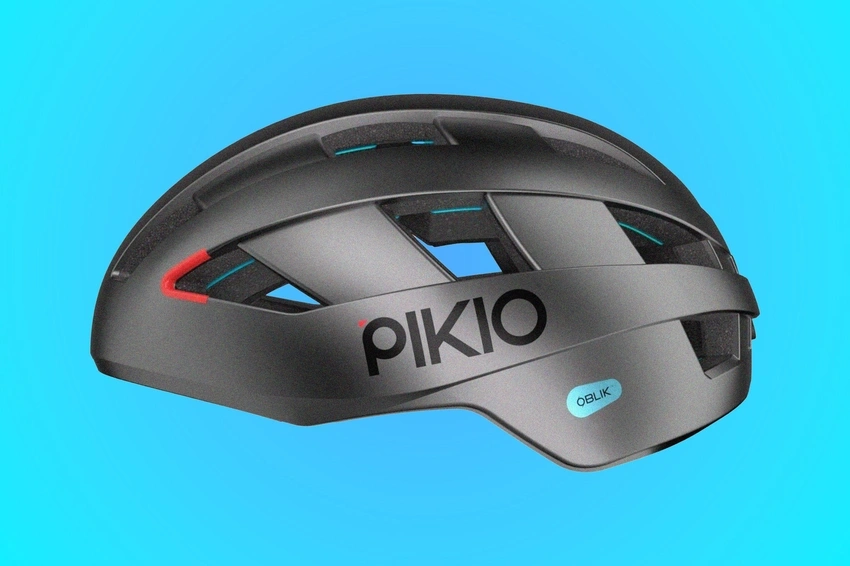
Nature's Genius: How Woodpeckers Redefine Helmet Safety
Forget everything you thought you knew about helmet safety. A tiny Vancouver startup, inspired by woodpeckers, has shattered records, proving nature holds the key to protecting our brains.
For too long, we've judged helmet safety on direct impacts alone. The truth? It's the violent twisting of our heads that truly puts our brains at risk, causing rotational movement inside the skull that can lead to concussions and worse.
While industry leaders like MIPS stepped up years ago, and Virginia Tech's STAR ratings drove massive improvements, a new player has completely rewritten the rulebook by looking to the natural world for inspiration.
Enter Pikio Labs, a Vancouver-based startup that's wiped the floor with the competition with their Si Oblik road cycling helmet.
Inspired by the headbanging, concussion-proof woodpecker, their Oblik system achieved an astonishing 4.61 score in Virginia Tech's rigorous tests.
To put that in perspective, the previous best, Canyon's Deflectr, scored 6.82, Pikio's score is a massive 32 percent lower.
It's a monumental leap forward in brain protection.
So, how did this relatively obscure startup get it so right, so fast? It's no accident. Founder Daniel Abram explains it “comes from 18 years researching impact protection and helmet design.” Abram's journey includes developing BrainShield at Simon Fraser University to reduce rotational forces, and later founding BiaGuard, before MIPS acquired his patents in 2022.
It's the culmination of deep expertise.
Most helmets rely on expanded polystyrene (EPS) foam to crush and absorb energy. Oblik takes this concept and revolutionizes it by breaking the foam structure into independently mounted sections. These sections attach to the base EPS layer with flexible connection points, allowing them to move separately or even detach during a serious impact.
Combined with dual-density foam, this ingenious design drastically minimizes the twisting force transmitted to the head.
Abram precisely articulated its genius:
Rather than compressing material in one direction, the system is able to deform, deflect, and detach depending on the impact's intensity, location, and direction, helping manage both linear and rotational impact energy.
This multi-faceted approach stands in stark contrast to other leading technologies.
MIPS, for instance, uses a low-friction layer for minimal movement, while MIPS Spherical employs nested liners. 6D's Omni-Directional Suspension suspends one liner inside another. WaveCel features a cellular structure that flexes and glides. Even Pikio's closest rival, the Release Layer System (RLS) on Canyon's Deflectr, tackles rotation from the outside, with external panels on tiny ball bearings.
But Oblik's internal segmentation, inspired by nature's most resilient headbanger, seems to be the winning formula.
What's Next for Safety?
It's a testament to the power of biomimicry.
When we look to nature, we find solutions that have been optimized over millions of years. This woodpecker-inspired design challenges us to rethink traditional engineering and embrace the incredible potential that lies in observing and understanding the world around us.
The future of safety tech might just be in our own backyards, waiting to be discovered.
