What If Taking 28 Years to Read Finnegans Wake Was the Point?

What If Taking 28 Years to Read Finnegans Wake Was the Point?
What If Taking 28 Years to Read Finnegans Wake Was the Point?
A 28-year journey through Finnegans Wake becomes a surprisingly moving meditation on why reading isn’t always about finishing a book, but about finding somewhere to return to.
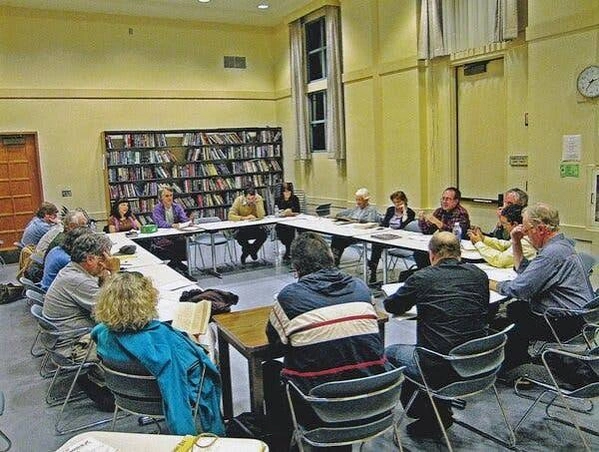
Imagine telling someone you have spent the last 28 years reading the same book. Not writing about it, not researching it for a degree, not occasionally returning to a favourite chapter, but actually reading it. One page at a time. This is what happened in Venice, California, where Gerry Fialka began a Finnegans Wake reading group in 1995. The group initially managed two pages a month before eventually slowing down to one. In October 2023, they reached the final page of James Joyce's famously difficult novel. Then they started again.
It is very easy to laugh at this. Honestly, I did at first. Twenty-eight years for one novel sounds less like a book club and more like a particularly elaborate punishment. But the more I read about the group, the less ridiculous it seemed. What if the strange thing is not that they took 28 years? What if the strange thing is that we have become so accustomed to reading as quickly as possible that we can no longer imagine why anyone would want to spend that long with a book?
The book that refuses to behave like a book
Finnegans Wake is not exactly designed for a casual Sunday afternoon. The 628-page novel took Joyce 17 years to write and is built from invented language, puns and allusions that draw from around 80 languages. Even basic questions about the story remain open to debate, including where it happens and who some of its characters actually are. The Guardian's reporting on the Venice group points out that even scholars who have spent years studying Joyce approach the book at a much faster pace only by comparison.
The California group therefore looks absurd until you consider what they were actually doing. They were not trying to “finish” the book in the way we usually talk about finishing books. The point was to keep returning to something that kept producing more questions. One member, Peter Quadrino, would drive three hours from San Diego for meetings because finding people interested enough to talk about Finnegans Wake was difficult. When he later moved to Austin, he started his own group, and years later they were still working through the novel.
There is something strangely lovely about that commitment. We usually treat difficulty as an obstacle between ourselves and the thing we want. The Venice group seems to have treated difficulty as the reason to keep coming back.

You are allowed not to understand
The funniest thing about Finnegans Wake may be that nobody really knows what they are doing. That sounds like an insult until you realise that it is also the reason the book creates such an unusual kind of community. The difficulty makes the reading experience strangely democratic because expertise can only take you so far. Nobody can completely master the book alone.
That changes what a book club is for. Usually, we imagine reading groups as places where people arrive having read the same thing and then compare their interpretations. With Finnegans Wake, interpretation becomes the activity itself. Someone finds a historical reference. Someone else follows a linguistic connection. Someone opens another tab. The group slowly builds a version of the book together. Quadrino described having dozens of Wikipedia tabs open during meetings and leaving with the feeling that his brain had been refreshed.
I think that is what we miss when we turn reading into a race towards the last page. A difficult book does not necessarily become more valuable once we have conquered it. Sometimes the confusion is what keeps the conversation alive.

Reading as a way of staying somewhere
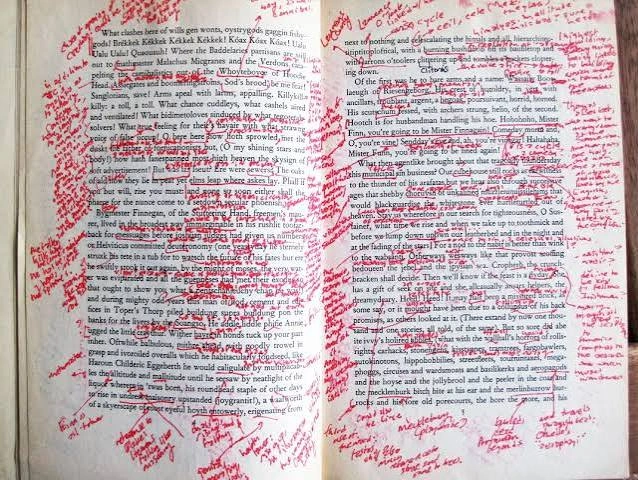
There is a particular kind of cultural embarrassment attached to difficult books. We like the idea of having read them more than we like the possibility of being confused by them. Finnegans Wake makes that impossible. You cannot really skim your way through Joyce's language and pretend you have conquered it. You have to sit with the sentence. You have to ask what a word might mean. You have to accept that somebody else at the table might have noticed something you completely missed.
The group itself became part of the reading experience. Different Wake groups developed their own personalities, with the New York group described as more argumentative and the Austin group as more collaborative. The book was producing communities around itself rather than simply being consumed by them.
That feels increasingly strange in a culture built around finishing things. We have reading lists, yearly reading challenges and apps that turn books into numbers. Even pleasure can start to feel like productivity. How many books did you finish? How quickly did you read them? What are you reading next? Finnegans Wake is almost perfectly designed to ruin that logic.
The best part is that they never actually finished
And this is the detail I cannot stop thinking about. When the Venice group reached the final page, Fialka rejected the idea that they had really finished the book. The final sentence of Finnegans Wake breaks off and connects back to the beginning, making the novel itself cyclical. So after 28 years, the group returned to page three. There is no triumphant closing ceremony followed by a new title on the reading list. They are still reading Finnegans Wake.
Suddenly the whole story looks different. The 28 years were never really the joke. The joke is the idea that reading has to end with completion. We are constantly told to finish the book, finish the degree, finish the series and move on to the next thing. Even culture has acquired a kind of productivity logic. We collect titles, keep lists, post photographs of what we have read and measure ourselves against the number of pages we managed to get through.
This strange little California book club offers another possibility. A book can be somewhere you stay. Maybe that is what we can learn from people who spent nearly three decades reading a novel that most of us would abandon after ten pages. You do not always have to conquer a difficult work to get something from it. Sometimes the value is in returning to the same incomprehensible thing with different people, different questions and a slightly different version of yourself.
And perhaps that is why I find their story less funny now. They spent 28 years trying to finish a book that was never really going to let them finish it. Maybe they understood something about reading that the rest of us have forgotten: sometimes the point of a book is not getting to the end. It is having somewhere to return to.
