Wireless Smart System vs BMS: Hotel Retrofit Case Study

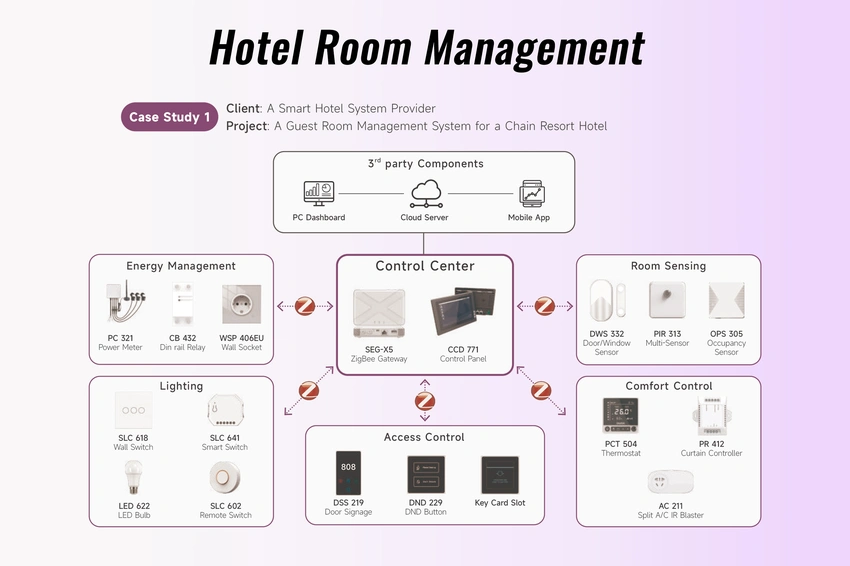
Wireless Smart System vs BMS: Hotel Retrofit Case Study
Replace hotel BMS with a wireless smart system. See how Zigbee devices, IoT gateways, and APIs enable cost-effective and scalable hotel automation.
Introduction: Why Hotels Are Replacing Traditional BMS
Traditional Building Management Systems (BMS) have long been used to control HVAC, lighting, and energy systems in hotels. However, as buildings age and operational requirements evolve, many hotel operators are re-evaluating whether traditional BMS is still the best option.
In retrofit scenarios, especially in Europe, BMS systems present several challenges:
- High installation and upgrade costs
- Complex wiring requirements
- Limited flexibility for expansion
- Difficult integration with modern digital platforms
As a result, many hotel owners and system integrators are exploring wireless IoT-based systems as a practical alternative.
This case study demonstrates how a wireless smart hotel solution can effectively replace or simplify traditional BMS in real-world deployments.
Project Background
A smart hotel solution provider was tasked with upgrading an existing serviced apartment building into a modern, connected environment.
The key objective was to introduce smart automation capabilities across multiple rooms without modifying the existing electrical infrastructure.
The client needed a solution that could:
- Minimize installation disruption
- Reduce deployment costs
- Enable centralized control of room devices
- Integrate with an existing hotel management platform
Challenges with the Existing BMS System
The original building relied on a traditional wired BMS architecture, which created several limitations:
- High upgrade cost due to rewiring requirements
- Long deployment cycles for system expansion
- Rigid system architecture with limited scalability
- Complex integration with newer digital platforms
These challenges made it impractical to upgrade the system using conventional BMS approaches.
Project Requirements
To address these challenges, the client defined a set of clear technical and operational requirements:
- Replace or simplify the traditional BMS system
- Enable a wireless, low-cost deployment model
- Provide centralized control of all smart devices
- Support integration with third-party systems via open APIs
- Ensure compatibility with a wide range of IoT devices
- Allow customization for specific project needs
- Provide user-friendly control interfaces for high-end rooms
Solution Overview: Wireless Smart Hotel System
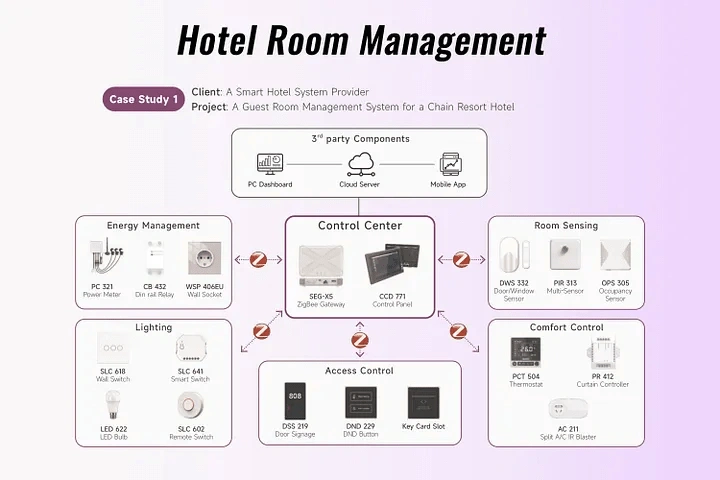
To meet these requirements, a wireless smart hotel system based on Zigbee devices and an IoT gateway was deployed.
👉 Learn more about the full solution:
👉 ** 🔗https://www.owon-smart.com/smart-hotel/** 🔗
Core architecture:
- Zigbee-based smart devices
- IoT gateway for device aggregation
- Server and platform integration via APIs
This architecture eliminates the need for complex wiring while maintaining centralized control and scalability.
System Architecture
The deployed system follows a simplified and scalable structure:
Key characteristics:
- Wireless communication between devices
- Centralized device management through the gateway
- API-based integration with external systems
- Flexible expansion without infrastructure changes
This approach significantly reduces deployment complexity compared to traditional BMS systems.
Key Components of the Solution
A complete portfolio of smart hotel devices was deployed to enable full room automation:
- Lighting wall switches
- Relay control modules
- Smart wall sockets
- Power meters
- Fan coil thermostats
- Curtain control modules
- Door/window sensors
- Temperature and humidity sensors
- Occupancy sensors
These off-the-shelf devices allowed for rapid and standardized deployment across multiple rooms.
Customization and Flexibility
To meet specific project requirements, the solution also included customization capabilities:
- Custom relay switches and thermostats
- Integration of existing hardware into the smart system
- Smart transformation of traditional components such as:
- DND buttons
- Door signage systems
In addition, Android-based touchscreen control panels were provided for premium rooms, enhancing the user experience.
Integration with Hotel Systems
A key requirement of the project was seamless integration with the client’s existing hotel platform.
This was achieved through:
- Open API-based integration
- Standardized data communication between systems
- Compatibility with third-party platforms
This approach ensured that all smart devices could be centrally monitored and controlled within the hotel’s operational system.
Deployment Results
The wireless smart system delivered measurable improvements compared to the traditional BMS approach:
- Reduced installation time due to wireless deployment
- Lower overall project cost by eliminating rewiring
- Minimal disruption to existing building operations
- Improved system scalability for future expansion
- Simplified integration with external platforms
The result was a modern, flexible, and cost-effective smart hotel solution.
Why Wireless Systems Are a Practical Alternative to BMS
In retrofit projects, where minimizing cost and disruption is critical, wireless IoT systems offer a more practical and scalable alternative.
Conclusion
This project demonstrates that traditional BMS systems are no longer the only option for hotel automation—especially in retrofit scenarios.
Wireless smart hotel systems, built on Zigbee devices, IoT gateways, and API integration, provide a modern alternative that is:
- Easier to deploy
- More cost-effective
- Highly scalable
- Better suited for integration
For hotel operators and system integrators, this approach offers a clear path toward upgrading existing buildings without the complexity of traditional BMS systems.
Explore Smart Hotel Solutions
👉 Discover how wireless IoT systems can replace traditional BMS in your projects:

Login to comment.
No thots yet. Be the first to share your thoughts!