Literary Battle Royale: When BookTok Meets the Booker Prize, Who Wins?

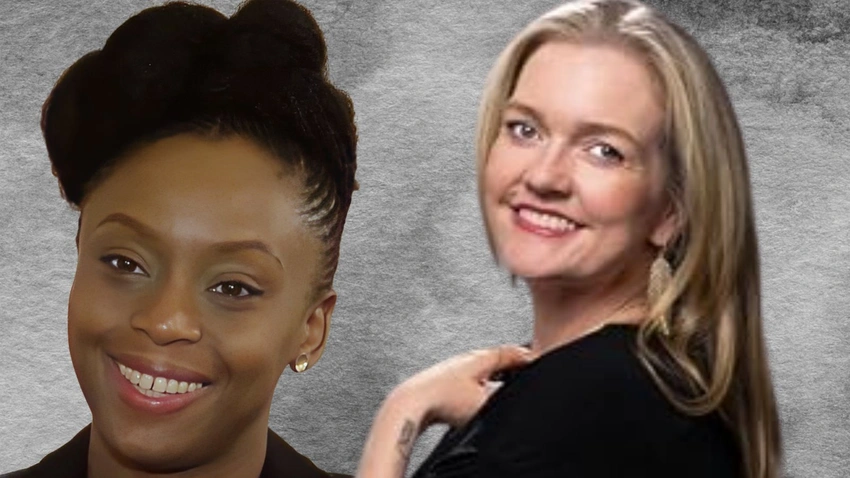
Literary Battle Royale: When BookTok Meets the Booker Prize, Who Wins?
A book club debate ignited a firestorm, pitting literary titans against commercial darlings. Is it snobbery, or a valid question about what makes 'good' literature in the age of TikTok?
A seemingly innocent question, “Who is the better writer: Chimamanda Ngozi Adichie or Colleen Hoover?”, recently sparked a social media maelstrom. This isn't just about two authors; it’s a cultural clash, exposing deep-seated tensions around literary snobbery, social-media-driven trends, and the very definition of 'good' literature.
On one side, we have Chimamanda Ngozi Adichie, a Booker-longlisted Nigerian novelist celebrated for works like 'Purple Hibiscus' and 'Half of a Yellow Sun,' which delve into weighty themes of Nigerian history, migration, and feminism. Her books are academic staples, revered in university syllabi.
Then there's Colleen Hoover, a bestselling phenomenon whose emotionally charged novels have dominated TikTok's #BookTok community. Six of her books famously occupied the top 10 on The New York Times paperback fiction bestseller list in 2022, and Time named her one of its 100 Most Influential People of 2023. Her commercial romances explore trauma, grief, and complicated relationships, resonating with millions.
Many commentators are baffled by the comparison, with some asking, 'Are you for real?' and others deeming it disrespectful to Adichie.
But is it fair to dismiss the question outright?
Both authors command considerable international followings, albeit through vastly different avenues.
The 'BookTok factor' is crucial here. While Adichie's works are studied, Hoover's meteoric rise on platforms like TikTok and Instagram has drawn a new generation into reading. This shift coincided with a major resurgence in romance, with BookTok identified as a significant catalyst.
This isn't a new argument. India saw a similar debate in the mid-2000s with Chetan Bhagat's rise. His accessible novels sold millions, prompting critics to label his writing 'light' or 'lowbrow.' As Bhagat himself put it, “Books can be entertaining, believe it or not.
That gateway into literature is Chetan Bhagat.
And that I think is a good thing.
It's not gateway into cocaine, it is a gateway into books.”
The same argument applies to Hoover. Dismissing her work often means dismissing the reading pleasures of young women, romance fans, and those who discovered books through social media rather than traditional literary channels. So, by what criteria do we judge a 'better' writer, prose, ambition, emotional impact, or simply the ability to keep readers turning pages?
Ultimately, this debate highlights a fundamental question: When millions connect with a genre via platforms like BookTok, is it fair to classify it as 'less than' traditional literature? Perhaps the real win in this culture war isn't about one author triumphing over another, but about validating all forms of reading and expanding the literary landscape for everyone.
