G7 Acts on Diesel Crisis: US Pushes Europe to Release Reserves Amid Price Surge

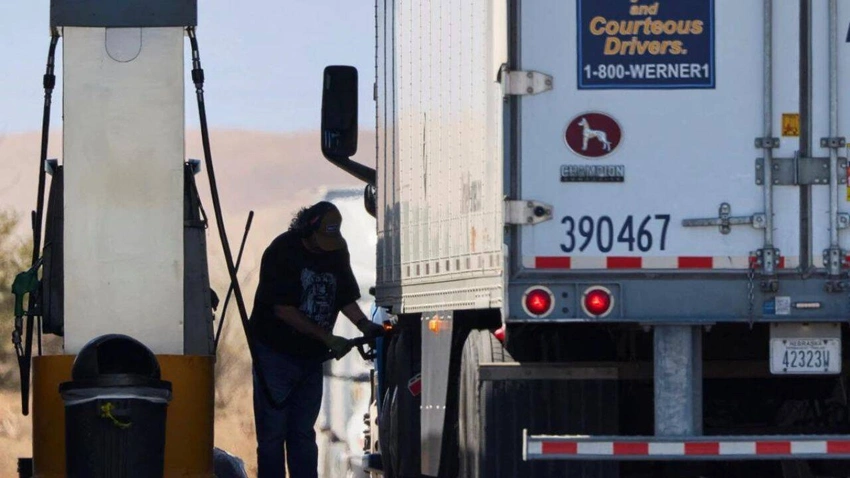
G7 Acts on Diesel Crisis: US Pushes Europe to Release Reserves Amid Price Surge
Facing record diesel prices, G7 nations agree to release 100M barrels. The U.S. pressures Europe to act, warning an export ban could impact the continent's economy.
Global leaders are taking urgent action to combat soaring diesel prices, with the Group of Seven (G7) nations agreeing to release 100 million barrels from their reserves. This move comes as the United States intensifies pressure on Europe to deploy its own stocks, fearing that a potential U.S. export ban could severely impact Europe's economic health.
The G7, comprising France, Canada, Germany, Italy, Japan, the United Kingdom, and the United States, along with the European Union, announced Friday that the reserve deployment would begin immediately. A "frontloaded substantial diesel release within the first 20 days" is planned, with the entire 100 million barrels distributed over four months, coordinated through the International Energy Agency (IEA).
This decision follows sustained pressure from the Trump administration for Europe to tap into its diesel reserves.
The world is grappling with a significant fuel supply crisis, attributed partly to Ukraine's attacks on Russian refineries and ongoing disruptions in the Middle East stemming from what is described as the "Iran war." Tensions in the Strait of Hormuz, a critical global oil trade route, previously stifled ship traffic after the U.S. and Israel attacked Iran in late February. While daily exports from the Strait have reportedly returned to pre-war levels this week, fuel shipments from the broader region remain well below normal.
U.S. diesel prices have reflected this global instability, hitting record highs in September and remaining elevated at an average of $6.37 per gallon.
Treasury Secretary Scott Bessent urged European partners to "accelerate delivery on their existing commitments and make additional supplies immediately available." The concern across the Atlantic is palpable, particularly given that the U.S. supplied roughly half of the EU's diesel imports in August. The prospect of the world's largest diesel exporter implementing a ban has sparked alarm, with EU trade chief Maros Sefcovic discussing the situation with U.S.
Trade Representative Jamieson Greer. Sefcovic warned that any U.S. restriction on diesel exports would have a negative impact on Europe's economic outlook.
President Donald Trump, facing political pressure over high fuel costs ahead of the midterm elections, had been considering an export ban, a move strongly opposed by the oil industry and wider business community.
However, he later appeared to lean against such a ban due to its potential impact on domestic gasoline prices.
The G7 leaders, in their joint statement, committed to "refrain from export restrictions on energy and energy products between G7 countries" and called on all producers to avoid bans that could worsen market tensions.
Energy strategists at Macquarie Group underscore the gravity of the situation, stating that the U.S. faces not merely a "diesel problem" but a "global energy problem." Walt Chancellor of Macquarie Group suggests that the ultimate solution lies in "more oil through the Strait of Hormuz and out of the Middle East," implying that other measures are merely short-term fixes.
