11 Arrested in London Amid Clashes on October 7 Anniversary Protests

11 Arrested in London Amid Clashes on October 7 Anniversary Protests
Tensions escalated in London as protests marked the three-year anniversary of the October 7 attacks, leading to 11 arrests, including five for inciting racial hatred. Student marches and counter-demonstrations sparked cl
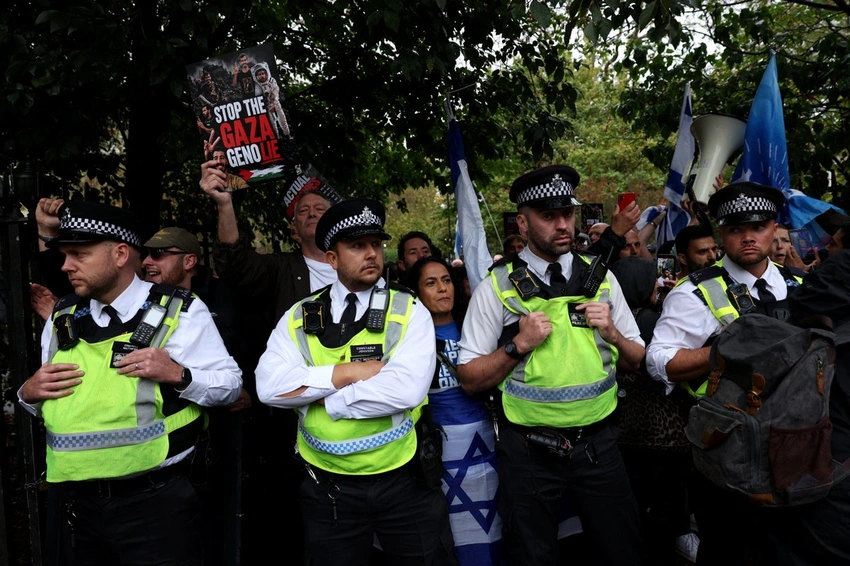
London saw a day of heightened tensions and significant police activity as multiple protests took place on the third anniversary of the October 7 attacks in Israel. A total of eleven individuals were arrested during various demonstrations across the capital.
The day began with five arrests for inciting racial hatred outside the Board of Deputies in Camden. These individuals were reportedly shouting or chanting slogans calling for "intifada" during what the Metropolitan Police described as a "spontaneous protest." The arrests underscore the controversial nature of the demonstrations and the strong emotions involved.
Later, further arrests occurred during student-led pro-Palestine marches and counter-protests.
Four people were taken into custody at a pro-Palestine student march, and one at a counter-protest in Holborn, all for breaching the Public Order Act. Additionally, one person faced arrest for common assault at one of the student rallies, highlighting some physical confrontations amidst the demonstrations.
Pro-Palestine student demonstrations, including a march from King's College London to University College London, proceeded despite calls from some officials and Jewish student leaders for them to be banned or moved. Chants of “free, free Palestine” and “free the people, free the land” filled the air, with one group carrying a banner stating: “Holocaust survivor descendants against Gaza genocide.”
Counter-protesters also gathered, notably in Russell Square, displaying Israeli flags and placards, and chanting “Terrorist supporters off our streets,” directed at the pro-Palestine groups. This direct confrontation illustrated the deep divisions surrounding the conflict.
The sensitive timing of these protests drew significant criticism. Jewish student leaders called the plans "outrageous," while figures like Defence Secretary Wes Streeting branded the planned demonstrations "shameful." Education Secretary Lucy Powell urged students to show compassion and protest on a different day.
Beyond London, similar pro-Palestine rallies led by student groups also took place in Edinburgh and Glasgow.
The Board of Deputies of British Jews held a separate vigil in Richmond Terrace. President Phil Rosenberg affirmed their resolve, stating they would "not be threatened or intimidated by this small and extremist minority" and would continue to advocate for the Jewish people and peace in the Middle East.
Universities UK (UUK) had issued guidance to institutions ahead of the demonstrations, advising them to maintain close contact with Jewish student groups, review security arrangements, and publicise mechanisms for reporting antisemitic incidents. This followed incidents like "chalked markings" reading “Zionism = Racism” being removed from the University of Leeds campus where a Jewish vigil was planned, further demonstrating the charged atmosphere on university grounds.
