The Future of Fall Detection: Smart Sensor Technologies for Elderly Care in 2026

The Future of Fall Detection: Smart Sensor Technologies for Elderly Care in 2026
Discover the best fall detection devices for elderly care in 2026, including radar-based sensors, real-time alerts, and smart IoT monitoring solutions.
As the global population continues to age, the demand for reliable fall detection devices has increased significantly. Falls remain one of the leading causes of injury among seniors, especially in assisted living facilities and nursing homes. In 2026, modern fall detection solutions are no longer limited to wearable panic buttons — they now include advanced sensor-based systems designed for real-time monitoring and improved safety.
This guide explores the best fall detection devices available today, key technologies behind them, and how to choose the right solution for elderly care environments.
Why Fall Detection Devices Matter More Than Ever
According to multiple healthcare studies, timely detection of falls can significantly reduce complications and hospitalization risks. However, traditional solutions often rely on user interaction, which may not always be possible in emergency situations.
Modern fall detection devices aim to solve this problem by offering:
- Automatic fall detection without user input
- Real-time alerts to caregivers or monitoring systems
- Continuous monitoring of movement and inactivity
- Integration with broader elderly care systems
These features are particularly important in professional care environments where staff cannot monitor every room at all times.
Types of Fall Detection Devices in 2026
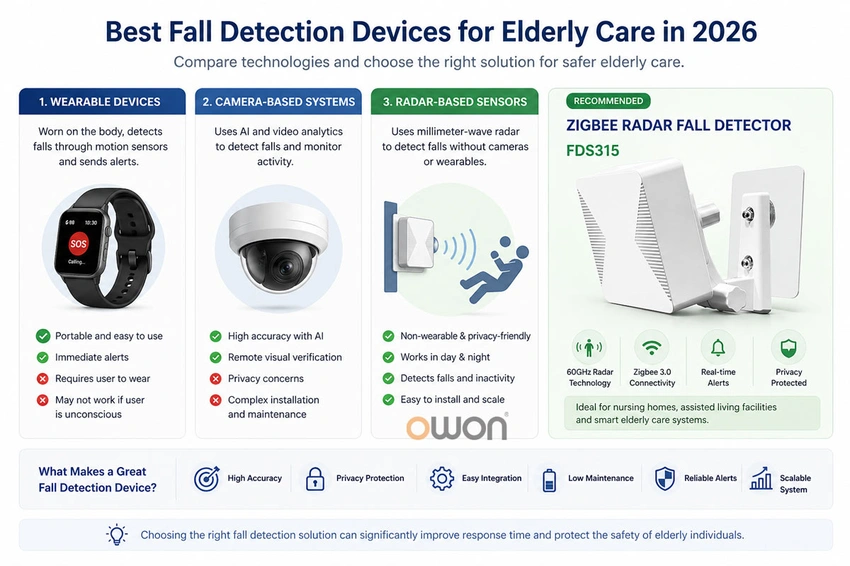
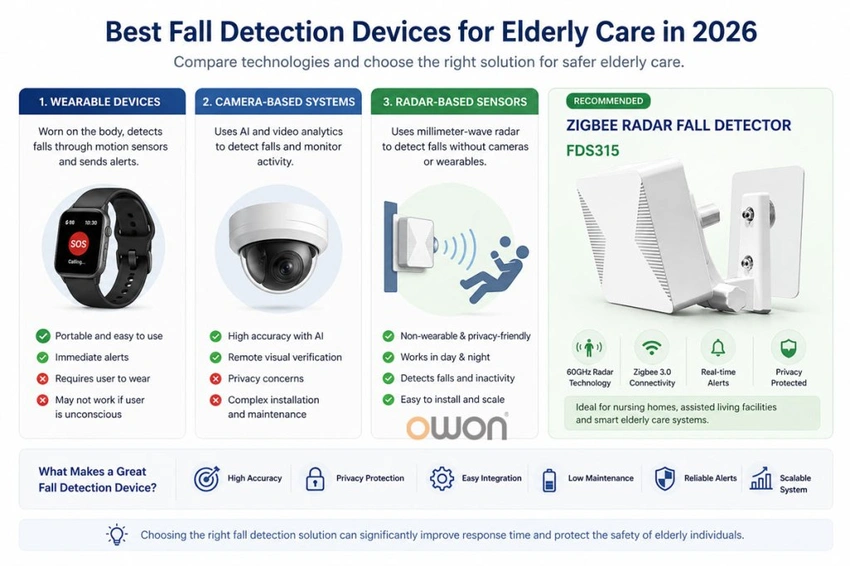
1. Wearable Fall Detection Devices
Wearable devices such as pendants or smartwatches remain common. They typically include:
- Accelerometers for motion detection
- Emergency buttons for manual alerts
However, they rely heavily on user compliance, which can be a limitation.
2. Camera-Based Monitoring Systems
Some systems use cameras and AI to detect falls. While effective, they raise concerns regarding:
- Privacy
- Data protection regulations
- Installation complexity
These factors often limit their use in sensitive environments such as bedrooms and bathrooms.
3. Radar-Based Fall Detection Sensors (Emerging Standard)
Radar-based systems are rapidly becoming the preferred solution in elderly care. These devices use millimeter-wave technology to detect motion, presence, and falls without requiring wearables or cameras.
One of the key advantages of radar-based solutions is their ability to distinguish between normal daily activities and actual fall events, significantly reducing false alarms.
Solutions such as Zigbee fall detectors 🔗 are increasingly used in assisted living and nursing home projects, as they combine radar sensing with reliable wireless communication. These systems can be deployed across multiple rooms and integrated into centralized monitoring platforms.
Key Features to Look for in Fall Detection Devices
When selecting a fall detection solution in 2026, decision-makers should consider the following factors:
Accuracy and Sensitivity
The system should accurately detect falls while minimizing false positives.
Non-Wearable Operation
Devices that do not require users to wear them offer higher reliability in real-world scenarios.
Privacy Protection
Camera-free solutions are preferred in elderly care environments.
Real-Time Alerts
Immediate notifications are essential for fast response.
System Integration
The ability to integrate with IoT platforms, nurse call systems, or building management systems is crucial for large-scale deployment.
How to Choose the Right Solution for Your Project
Different environments require different solutions:
- Home care → simple wearable or standalone devices
- Assisted living facilities → multi-room sensor deployment
- Nursing homes → integrated monitoring systems with centralized dashboards
For professional projects, it is important to consider not only the device itself but also the overall system architecture.
If you are planning a deployment, understanding proper installation and system design is critical. This guide on How to Deploy ZigBee Fall Detection Sensors 🔗 provides practical insights into sensor placement, coverage optimization, and system integration strategies.
The Future of Fall Detection Technology
Looking ahead, fall detection devices will continue to evolve with:
- AI-enhanced behavior analysis
- Integration with health monitoring data
- Improved edge computing capabilities
- Wider adoption of wireless standards such as Zigbee
As these technologies mature, fall detection systems will become a core component of smart elderly care infrastructure rather than standalone devices.
Conclusion
The best fall detection devices in 2026 are no longer just emergency tools — they are part of a broader smart care ecosystem. Radar-based, non-wearable solutions are leading the shift toward more reliable and privacy-friendly monitoring.
For assisted living operators, system integrators, and healthcare providers, choosing the right technology today will directly impact safety, efficiency, and long-term scalability.
