Anterix Private Networks and the Future of Industrial IoT Edge

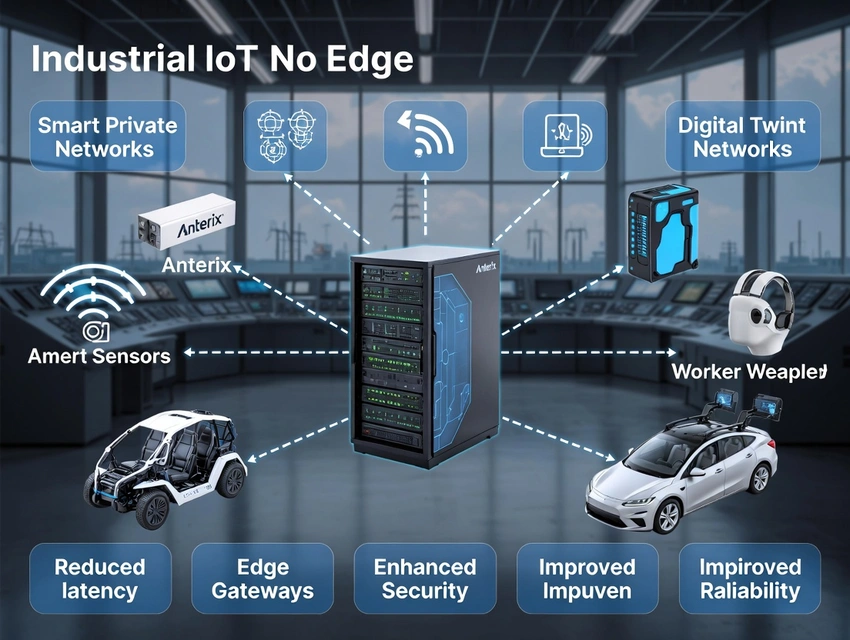
Anterix Private Networks and the Future of Industrial IoT Edge
The rapid evolution of industrial technology has ushered in a new era of connectivity and intelligence for enterprises around the world. A major part of this transformation is driven by innovations at the industrial IoT edge, where latency, security, reliability, and localized data processing are critical for operational success. As industries such as utilities, manufacturing, transportation, and energy embrace digital transformation, the role of private wireless networks becomes increasingly important. One organization at the forefront of enabling private industrial wireless connectivity in the United States is Anterix, with its distinctive focus on utility-centric private spectrum and related anterix solutions 🔗.
Private networks tailored for industrial environments are revolutionizing how machines communicate, how data is managed, and how organizations optimize operations in real time. This article explores how Anterix’s private networks fit into this landscape, what benefits they deliver, and why they represent a crucial part of the future of industrial IoT edge computing and connectivity.
Understanding Private Networks in Industrial IoT
A private network, in the context of industrial IoT, is a dedicated wireless communication system that an organization owns, controls, and operates for its own applications. Unlike traditional public cellular networks, private networks are exclusively reserved for a single enterprise, giving it full control over performance, traffic, and security.
Industrial sectors increasingly depend on IoT devices for everything from sensor data collection and predictive maintenance to real‑time operational control. This shift toward connected operations requires networks that can meet stringent requirements:
- Ultra‑low latency for time‑sensitive industrial processes
- High reliability to ensure mission‑critical systems stay up
- Advanced security controls to protect sensitive operational data
- Scalability to handle thousands of devices at the edge
In this environment, private wireless networks, especially those built using licensed spectrum, are becoming the backbone of modern industrial IoT implementations.
Anterix Solutions: Empowering Private Networks for Utilities and Beyond
One of the most notable players in enabling industrial private networks in the United States is anterix solutions. Anterix owns and manages spectrum in the 900 MHz band, and it specializes in helping utilities and other industrial companies deploy private broadband networks. These networks are designed specifically for mission‑critical applications such as grid monitoring, distribution automation, and real‑time operational control.
Anterix’s approach is unique in that it combines licensed spectrum access, which delivers predictable interference‑free performance, with modern wireless technologies tailored for industrial use cases. For utilities in particular, this addresses longstanding connectivity challenges that traditional public cellular or unlicensed wireless systems could not fully solve.
For example, utility companies that previously relied on unlicensed Wi‑Fi or outdated radio networks struggled with issues such as interference, limited coverage in rural areas, and fragmented connectivity. With Anterix’s private network framework, they can build a resilient communications infrastructure capable of supporting thousands of endpoints, from smart sensors to advanced analytics systems at the industrial edge.
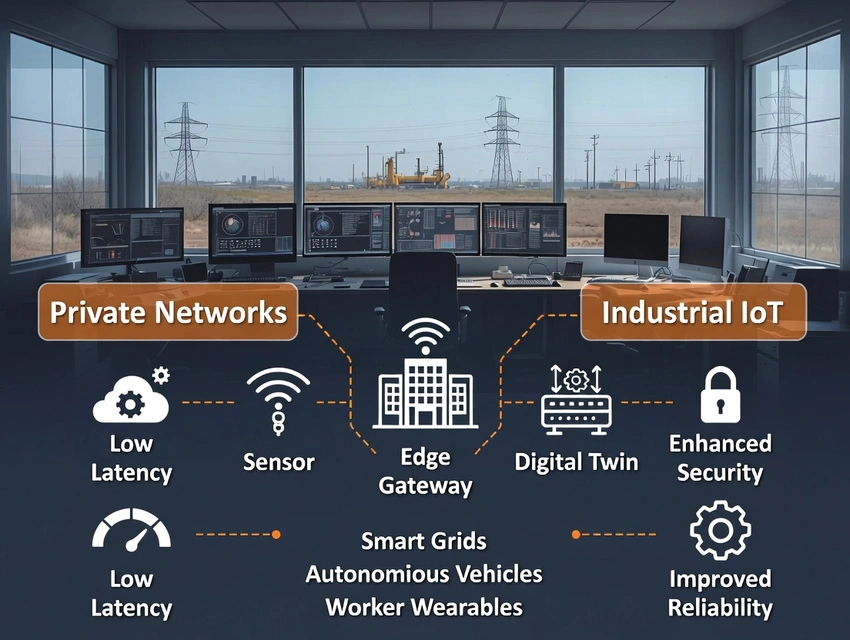
What Makes Industrial IoT Edge Unique?
Before diving deeper into how Anterix’s private networks support industrial transformation, it’s important to understand what “industrial IoT edge” really means.
The industrial IoT edge refers to the physical and logical boundary where data is processed near the source of generation, that is, close to machines, sensors, and industrial assets, rather than in centralized cloud servers. Processing data at the edge offers several key advantages:
1. Reduced Latency
When data is processed locally, communication delays are minimized. This is crucial for time‑critical applications such as robotic automation, autonomous vehicles, or power grid protection systems.
2. Lower Bandwidth Requirements
Not all data needs to be sent to a centralized data center or cloud. Local filtering and aggregation reduce the burden on network resources while improving operational efficiency.
3. Enhanced Security
By keeping sensitive data within the boundaries of the enterprise’s own network, the risk of exposing critical operational information is reduced. Edge processing also allows for localized intrusion detection and faster remediation.
4. Improved Reliability
Industrial systems often operate in environments where network connectivity may be intermittent or unavailable. Edge computing ensures that essential functions continue even when cloud connectivity is offline.
Industries are now building systems where data is intelligently processed and acted upon at the edge, enabling faster decisions, enhanced autonomy, and more efficient operations. Private cellular networks such as those enabled by Anterix provide the connectivity backbone for these distributed edge systems.
The Intersection of Private Networks and Industrial IoT Edge
The convergence of private wireless networks and edge computing is reshaping how industrial organizations design and deploy digital systems. By combining the two, companies benefit from:
A. Network‑Aware Edge Intelligence
When edge processing nodes are directly connected to dedicated private networks, they can share and analyze data with greater speed and reliability. This enables real‑time analytics, predictive maintenance, and automated control loops that would be difficult or unsafe over public networks.
B. Deterministic Connectivity
Critical processes such as power distribution, manufacturing line control, and emergency response cannot rely on unpredictable network performance. Licensed private networks deliver deterministic performance meaning network behavior is predictable, stable, and reserved, which is essential for mission‑critical edge applications.
C. Unified Management
Private networks make it easier to manage connectivity and edge compute resources as a single, cohesive system. Administrators can allocate bandwidth, prioritize traffic, and secure endpoints from a centralized control plane.
D. Scalability for Future Growth
As organizations deploy more IoT sensors and edge devices from environmental monitors to autonomous drones private networks provide scalable infrastructure that grows with business needs.
This close alignment between private connectivity and industrial edge computing is at the heart of the future of industrial digital transformation.
How Private Networks Support Key Industrial Use Cases
Across sectors, industrial organizations are finding that private networks unlock new capabilities that were previously cost‑prohibitive or technically limited. Below are some major use cases where Anterix’s model of private licensed networks is making a tangible impact.
1. Smart Grids and Utilities
Utilities need secure, reliable networks for real‑time monitoring and control of distributed grid assets. With Anterix’s licensed spectrum and private networks:
- Utilities can monitor transformer health in real time.
- Field crews receive instant alerts on service anomalies.
- Grid automation systems respond faster to outages and faults.
- Distributed energy resources 🔗 (DERs) such as solar and storage can be better integrated.
According to industry sources, private networks reduce outage times and improve grid resilience a major goal for modern utilities. (You can read more about this in the RAD blog on private networks for utilities.) By combining private spectrum with edge connectivity, Anterix’s approach enables utilities to extract more operational value from their wireless systems.
2. Predictive Maintenance and Asset Monitoring
With sensors deployed across industrial sites, the edge processing of data allows machines to be monitored for signs of wear, performance deviation, or failure risk. Private networks ensure that this high‑frequency data is delivered reliably for analysis.
For example:
- Machine vibration data can be processed locally to detect issues before they cause downtime.
- Temperature and pressure readings from critical equipment can trigger alerts that automatically initiate maintenance workflows.
These capabilities reduce unplanned downtime, extend equipment life, and improve safety.
3. Autonomous and Semi‑Autonomous Vehicles
Manufacturing floors, construction sites, and mining operations increasingly use autonomous vehicles or robots. These systems require low‑latency communication and robust connectivity to operate safely.
Private networks with edge computing:
- Enable real‑time coordination between autonomous units.
- Support high‑resolution location tracking.
- Provide secure command and control links.
Without dedicated private connectivity, autonomous systems risk lag, interference, or loss of signal all of which can compromise safety and efficiency.
4. Worker Safety and Wearables
Edge‑connected wearables help monitor worker health, location, and environmental conditions. Private networks ensure that these critical safety devices remain connected even in challenging environments like underground mines or industrial plants.
Some capabilities include:
- Environmental hazard detection (e.g., gas leaks, extreme heat)
- Worker location tracking
- Real‑time alerts for safety breaches
By processing data at the edge and using dedicated networks, organizations improve both safety compliance and response times.
5. Advanced Manufacturing and Industry 4.0
The fourth industrial revolution often referred to as Industry 4.0 involves widespread adoption of smart machines, robotics, and interconnected systems. This level of automation and data exchange demands secure, high‑performance networks that deliver deterministic connectivity.
Private wireless networks enable:
- Synchronized robotics control
- Digital twins for real‑time simulation
- Adaptive manufacturing process control
- Near‑zero downtime operations
When combined with edge computing platforms, these networks empower manufacturing facilities to operate at new levels of efficiency.
Industrial IoT Edge Gateways and Connectivity Strategy
A crucial component of any industrial IoT architecture is the edge gateway devices that bridge field sensors, actuators, and the wider network. Choosing the right gateway is fundamental to achieving success at the edge.
High‑quality industrial IoT gateways provide:
- Protocol translation (e.g., Modbus, OPC UA, MQTT)
- Local processing and analytics
- Secure data buffering and transmission
- Integration with cloud or enterprise systems
To help organizations select an appropriate edge gateway, many experts recommend starting with a clear understanding of the connectivity needs, computing requirements, and security posture of your use case. For a detailed guide on this topic, see this RAD resource on how to choose the right 🔗industrial IoT edge 🔗 gateway.
By aligning connectivity strategies with gateway selection, companies can ensure that their edge deployments are future‑proof, scalable, and reliable.
Security Considerations in Private Industrial Networks
Security is a non‑negotiable aspect of any industrial IoT deployment. When dealing with critical infrastructure such as power grids, transportation systems, or manufacturing plants, the impact of a breach can be catastrophic.
Private licensed networks like those enabled through anterix solutions inherently offer stronger security compared to unlicensed public options because:
- Licensed spectrum minimizes chances of interference or spoofing.
- Organizations maintain control over access policies and encryption.
- Traffic segmentation prevents unauthorized devices from joining the network.
- Localized security operations centers (SOCs) can monitor and respond in real time.
However, network security is only one layer. Industrial IoT security also depends on:
- Securing edge computing nodes
- Authentication and authorization controls for devices
- Firmware update practices
- Zero trust architectural principles
- Network segmentation
Addressing these elements holistically ensures that private connectivity and edge computing environments are resilient against threats.
Economic and Operational Benefits of Private Networks at the Edge
Investing in private networks and edge computing delivers both hard and soft benefits for industrial organizations. These include:
1. Cost Savings Through Efficiency
Routine tasks that once required manual interventions can be automated, reducing labor costs and minimizing error‑related expenses.
2. Reduced Downtime
Real‑time monitoring and predictive maintenance reduce the likelihood of unplanned outages a huge source of lost revenue in sectors like utilities and manufacturing.
3. Enhanced Operational Visibility
Industries traditionally operated “in the dark” with limited visibility into real‑time conditions. Edge computing and private connectivity create a digital nervous system that allows decision‑makers to see and act instantly.
4. Competitive Differentiation
Companies that adopt advanced connectivity and edge technologies can innovate faster, deliver higher service quality, and respond more flexibly to market trends.
5. Regulatory Compliance
For regulated industries such as energy and transportation, traceability, automation, and secure data handling are often legal requirements. Private networks help organizations meet these standards with more control and transparency.
Challenges and Considerations for Adoption
While private networks and industrial edge computing offer enormous potential, rollout and adoption come with challenges:
Spectrum Policy and Regulation
Access to dedicated spectrum like Anterix’s 900 MHz band depends on regulatory policy. Understanding licensing, compliance, and spectrum sharing rules is crucial.
Integration Complexity
Industrial environments often contain legacy systems. Integrating new private networks and edge compute infrastructure with older machinery requires careful planning.
Skill and Workforce Requirements
Designing, deploying, and operating private networks and edge systems demands skilled personnel. Organizations must invest in training or external expertise.
Security Management
Although private networks can be more secure, they also require constant monitoring and security governance.
Return on Investment
Justifying capital expenditures for new connectivity infrastructure means aligning technology strategy with clear business outcomes.
Despite these challenges, many organizations view the transition as unavoidable, given competitive pressures and digital disruption.
Looking Ahead: The Future of Industrial IoT Edge with Private Networks
The intersection of private wireless networks and edge computing is poised to redefine industrial operations within the next decade. As technologies such as 5G, AI‑driven analytics, and autonomous robotics mature, private networks like those enabled by anterix solutions will become integral to digital industrial ecosystems.
We expect several trends to shape this future:
1. Standardization and Interoperability
As private network deployments proliferate, industry standards will emerge to improve device interoperability and reduce integration barriers.
2. Convergence of IT and OT
Information technology (IT) and operational technology (OT) teams will collaborate more closely as networks and edge systems become core operational assets.
3. AI at the Edge
Edge systems will increasingly incorporate AI/ML models to automate decision‑making without relying on central servers.
4. Beyond Utilities
While utilities have been early adopters, other sectors like logistics, healthcare, and smart cities will expand private network use.
5. Ecosystem‑Driven Services
Edge platforms will offer modular services such as security, analytics, and digital twin simulations, fostering innovation and reducing deployment time.
Conclusion
Private wireless networks represent one of the most significant enablers for industrial digital transformation, especially when combined with the power of industrial IoT edge computing. For industries that require secure, reliable, and performance‑driven connectivity, like utilities, manufacturing, and transportation, Anterix’s focus on licensed spectrum and enterprise‑grade network solutions points the way toward the future.
By embracing private networks, enterprises gain greater control over their infrastructure, unlock real‑time insights, and build systems that are more resilient, scalable, and intelligent. As technologies continue to mature, the symbiotic relationship between edge computing and private connectivity will only deepen, defining the next era of industrial innovation.

Login to comment.
No thots yet. Be the first to share your thoughts!