Did Phoebe Bridgers Just Say What Everyone Was Thinking About Gracie Abrams?

Did Phoebe Bridgers Just Say What Everyone Was Thinking About Gracie Abrams?
Did Phoebe Bridgers Just Say What Everyone Was Thinking About Gracie Abrams?
Phoebe Bridgers’s apparent Gracie Abrams diss raises a brutal question: can you inherit someone’s aesthetic, audience and even ex-boyfriend without ever replacing their talent?
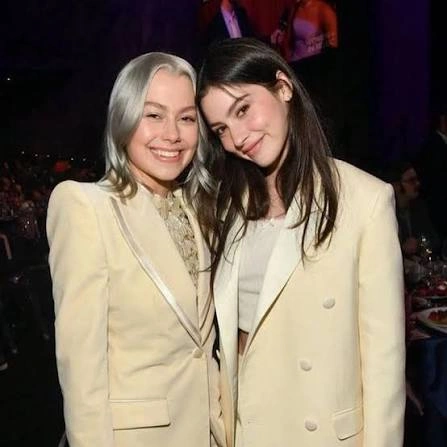
The most vicious line in Phoebe Bridgers's The Governor's Waltz from her brand new album Lost Weekend may not be the one about her ex-fiancé Paul Mescal. “And she can pretend to be me.” That is all it took for me to get those old boots on the ground again.
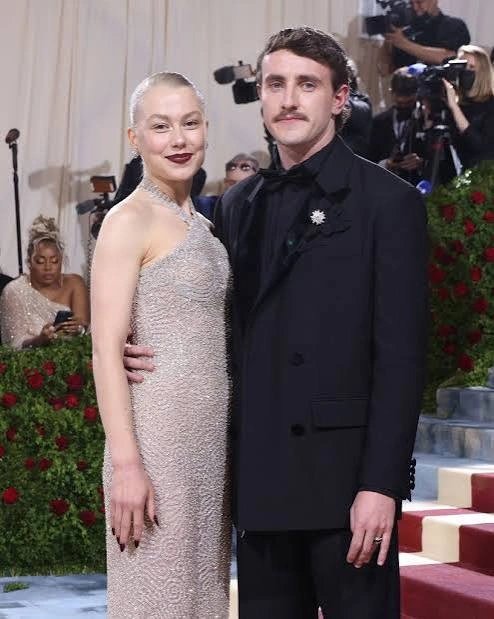
Because if the “she” is Gracie Abrams, as many listeners have interpreted it, Bridgers is not merely addressing the woman who took her place in an old relationship. The line carries another implication entirely. What happens when somebody you inspired becomes part of your world, occupies your aesthetic territory, and then, to put the cherry on top, starts dating the man you were once supposed to marry? Messy!
However, to ask a more polemical question: can the Daughter from Hell artist ever actually take Phoebe Bridgers's place?

The Student and the Reference
Gracie Abrams has never hidden her admiration for Phoebe Bridgers. The connection between them predates the Paul Mescal relationship and has been unusually visible. Abrams has described Bridgers as a major influence and even called her “the writer of our generation” this year. She also opened for Bridgers before the two artists became fixtures within the same wider pop landscape. That history makes “she can pretend to be me” difficult to hear as a random insult.
Abrams belongs to a generation of artists working in a songwriting culture Bridgers helped shape. Whether it is the intimate delivery, the stripped-down folk-rock ambient production or the talk-confession songwriting sensibility. And of course, the sense that the smallest domestic detail might contain entire emotional catastrophes.
Phoebe Bridgers did not invent confession, obviously. But her influence on the sound and language of the 2020s has been profound enough that artists from Olivia Rodrigo to Abrams have been discussed in relation to her. That is the problem with becoming an influence. Eventually, somebody else starts living in the house you built.
The Rocket Sheets Are Where It Gets Awkward
Bridgers sings that this woman took her place “in my bed, on that stage”. Listeners immediately connected the lyric to the rocket-patterned sheets associated with both artists. Abrams later incorporated similar sheets into the bedroom staging of her tour. That detail makes the lyric much more deliciously uncomfortable than a straightforward reference to an ex. Because now we are crossing into the chaotic territory of artistic inheritance.
Abrams does not merely sound like someone who grew up listening to Bridgers. She has openly admired her. Their careers have intersected. Their visual worlds have occasionally invited comparison. And then Abrams became romantically involved with the man Bridgers had previously dated. At some point, admiration can begin to look like proximity. And proximity can begin to look like imitation.

Gracie Is Not Phoebe
This is where I think Bridgers's alleged accusation becomes both unfair and accidentally revealing. Gracie Abrams has become enormously successful. But commercial visibility does not automatically produce artistic equivalence.
Abrams's songwriting often works through immediacy. She tells you what happened and lets the emotion sit close to the surface. Her appeal comes partly from recognisability: the panic of a relationship, the spiralling internal monologue, the sentence you wish you had not sent. An interesting facet of Abrams' hyper-confessional mode is that she retreats to herself constantly, fixating on her mistakes and shortcomings, rather than performing a takedown of a significant subject. Her flaw, however, according to me, lies in not being able to make us, the audience, feel like a stakeholder in her story, because her stories lack purpose, edge, and unambiguity. In the pop format, those are essential ingredients, and Abrams relies heavily on mood and aesthetic to deliver something "honest".
Bridgers, even at her most emotionally direct, tends to do something entirely unique. Her writing can move from absurd humour into dread without announcing the transition. A song can contain a joke that becomes unbearable several listens later. Her imagery often arrives sideways. You do not always know what you are looking at until she has already changed the emotional temperature of the room. Bridgers thrives in her hyper-specificity, cadence, internet-driven persona and cutting songwriting that have the ability to become scripture upon release.
Abrams may have absorbed part of Bridgers's influence, but influence is not replacement. The very fact that so many contemporary songwriters now operate in this confessional register speaks to Bridgers's cultural importance. Gracie is part of Phoebe's afterlife. That does not make her Phoebe.

Can You Take Someone's Place Without Replacing Them?
Perhaps this is the real tension inside the lyric. Abrams can take Bridgers's place beside Paul Mescal. She can occupy the literal bed and merrily perform on stages where Bridgers has performed. She can inherit an audience hungry for diaristic songwriting.
But artistic places do not work like political seats. Phoebe Bridgers has spent years becoming a reference point because her writing altered what a certain generation of singer-songwriters thought they were allowed to sound like. Even artists who do not resemble her exactly now work in a landscape partly shaped by her influence. And that is perhaps why “pretend to be me” is such an interesting line. It is not really possible to become the person who changed the language you learned to speak.
The Thing Is That Bridgers Might Be Right
I do not mean that Gracie Abrams is literally trying to become Phoebe Bridgers. The evidence simply does not justify that claim, completely.
But the comparison itself exposes something more uncomfortable about pop culture. We love a successor. We constantly search for the younger artist who will replace the older one. The new girl arrives with similar influences and suddenly the culture starts arranging a transfer of ownership. A sound changes hands and the same aesthetic acquires a new face. It's the same as Lana Del Rey being at the forefront of sad for over a decade until Bridgers has swiftly claimed that position as the former's output begins to look erratic.
Phoebe Bridgers's lyric seems to reject that logic. You can date the ex. You can sing on the stage. You can sleep beneath the same rocket sheets. You can even make music shaped by the artist who came before you. But you cannot inherit somebody else's imagination. Beneath all the Paul Mescal lore is an argument about originality itself.
Gracie Abrams may be one of the biggest stars working in the songwriter-pop world Phoebe Bridgers helped create. But The Governor's Waltz is asking whether living in somebody else's world is the same thing as being able to build one of your own.

Login to comment.
No thots yet. Be the first to share your thoughts!