Gadgil: Conservationist who framed people as part of ecosystems dies in Pune

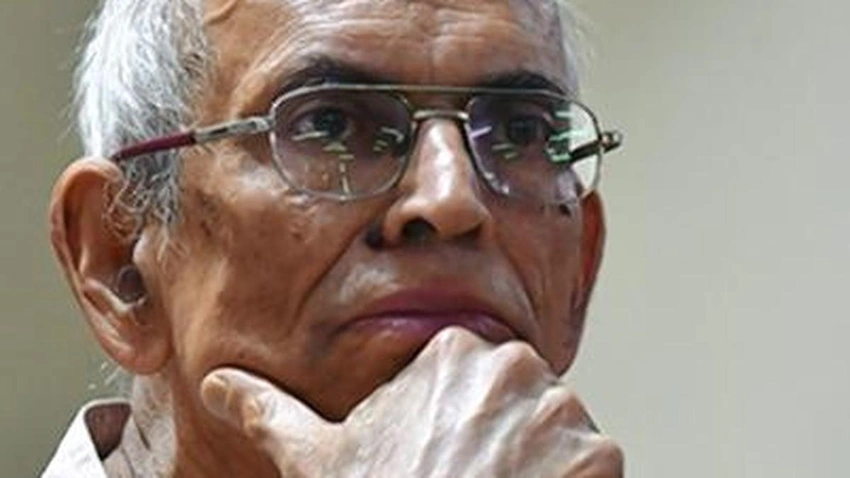
Gadgil: Conservationist who framed people as part of ecosystems dies in Pune
Ecologist Madhav Gadgil, who reframed conservation to center human rights and local communities, passes away in Pune after a brief illness.
Madhav Gadgil, the pioneering ecologist and people’s conservationist, died on Wednesday in Pune after a brief illness, aged 83. He began his career with an urban conservationist approach focused on wildlife sanctuaries and national parks, but in the 1980s he transformed his thinking by choosing to work with the common people of India—farmers, forest dwellers and other communities who rely on forests for their livelihoods. He called these communities the ‘common people of India’ and saw them as true constituents of the ecosystem. His evolving philosophy emphasized integrating human rights into conservation, arguing that protecting the environment without empowering local communities risks failing those who live closest to forest landscapes. He also critiqued how policy tools could be used to subjugate locals, notably pointing to the Wildlife (Protection) Act of 1972 as a potential mechanism that could criminalise traditional practices like hunting and gathering.
Gadgil’s ideas helped shift the global conservation discourse toward a more human-centered approach, balancing ecological protection with the rights and needs of marginalised groups. Renowned scientists and policymakers alike recognized that his thinking blended ecological science with practical action for people, marking a departure from earlier, more exclusionary models of conservation. In this light, his work extended beyond scholarly circles, influencing grassroots environmentalism across India and drawing attention to the social dimensions of ecological security.
His contributions included significant attention to the Western Ghats, where he emphasized the ecological importance of the region and advocated for sustainable management that respected both biodiversity and local livelihoods. In 2023, his autobiography A Walk Up the Hill: Living with People and Nature featured a foreword by M.S. Swaminathan, who praised Gadgil for a career that fused rigorous research with a service-oriented ethic toward humanity. Swaminathan highlighted that Gadgil’s thinking—rooted in ecological security and human rights—was as impactful as his fieldwork.
Gadgil’s passing invites a moment of reflection on a lasting legacy: a model of conservation that treats people as integral to ecosystems rather than external observers. His work remains a touchstone for those who argue that sustainable environmental stewardship must be inseparable from social justice.
