Blue Origin launches NASA's ESCAPADE to Mars; booster lands safely

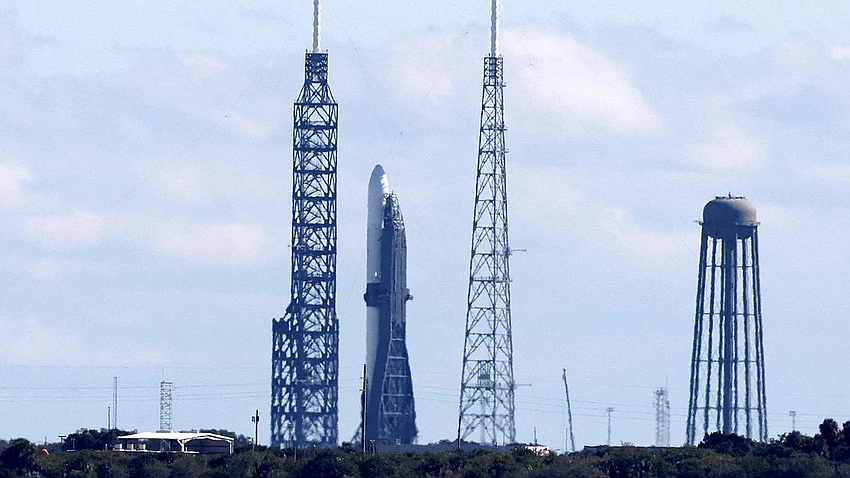
Blue Origin launches NASA's ESCAPADE to Mars; booster lands safely
Blue Origin's New Glenn rocket lifts NASA's ESCAPADE satellites toward Mars from Florida, marking a milestone with a booster landing on a floating Atlantic pad.
In Florida, Blue Origin's New Glenn rocket lifted off carrying NASA's ESCAPADE mission - two small satellites that will travel to Mars to study its atmosphere and magnetic field. The mission marks a milestone as the craft embarks on a 22-month journey to the red planet.
The most dramatic moment came when the rocket's reusable booster separated from the upper stage and made a controlled touchdown on a floating landing pad in the Atlantic Ocean. It was Blue Origin's first successful ground recovery of an orbital-class booster, following SpaceX's earlier achievement in 2015.
The ESCAPADE satellites, short for Escape and Plasma Acceleration and Dynamics Explorer, will enter Mars orbit to measure the planet's atmosphere and magnetic environment, providing new data to help scientists understand how Mars has evolved. The mission represents a growing collaboration between a private company and NASA and highlights the push toward sustainable, reusable technology for deep-space exploration.
As the launch unfolds, experts note the potential for future missions to leverage booster reuse to cut costs and increase mission tempo, with the Atlantic landing serving as a proof of concept for long-duration, crewless deep-space operations.
Cover image source: Geomagnetic storm grounds launch of Blue Origin rocket with NASA’s Mars space weather satellites 🔗
