The Housemaid: Return of the Erotic Thriller With Modern Grin

The Housemaid: Return of the Erotic Thriller With Modern Grin
The Housemaid: Return of the Erotic Thriller With Modern Grin
Paul Feig's The Housemaid blends glossy interiors with creeping menace, turning a fresh start into a pulpy, stylish psychological thriller where money, desire, and danger tighten like a trap.
There is something deliciously old-fashioned about The Housemaid (2025), and I mean that as the highest compliment. It is a film that understands the classical pleasures of the erotic psychological thriller, the genre of glossy domestic dread where money becomes a mood, desire becomes a threat, and every beautifully arranged room feels like a trap. Directed by Paul Feig and adapted from Freida McFadden’s bestselling novel, The Housemaid arrives with an almost mischievous confidence in its own pulp, its own sheen, its own willingness to be slightly outrageous. 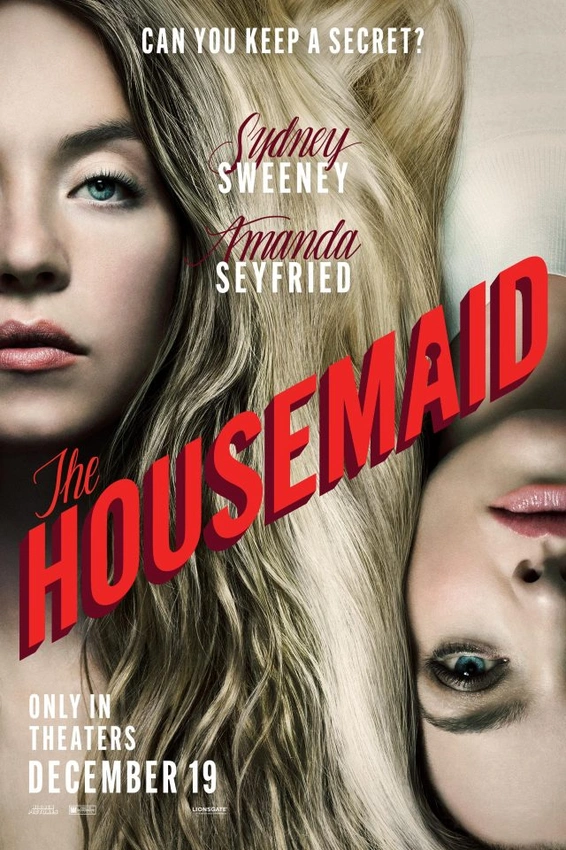
A Plot Built Like a Locked Door
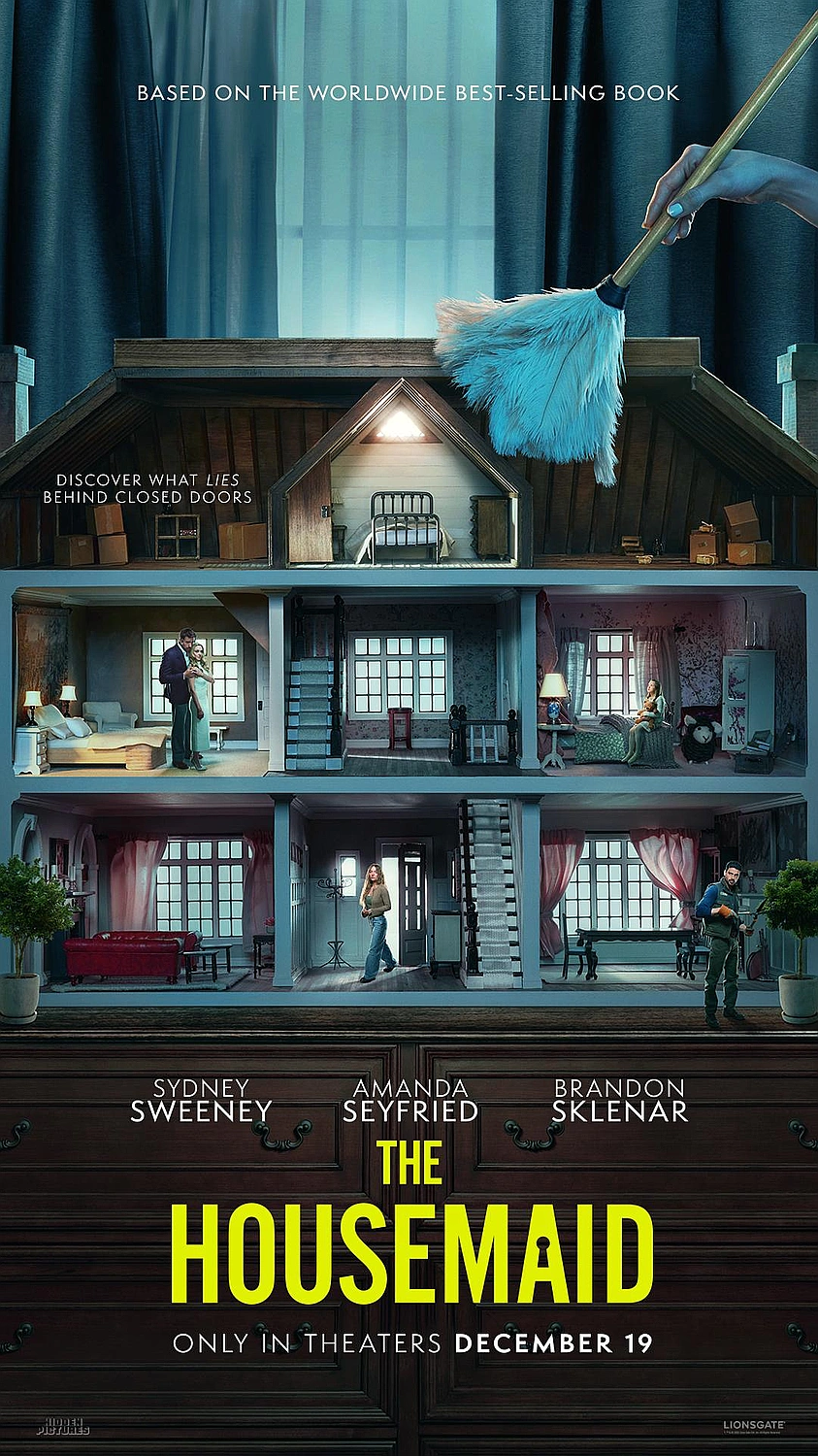
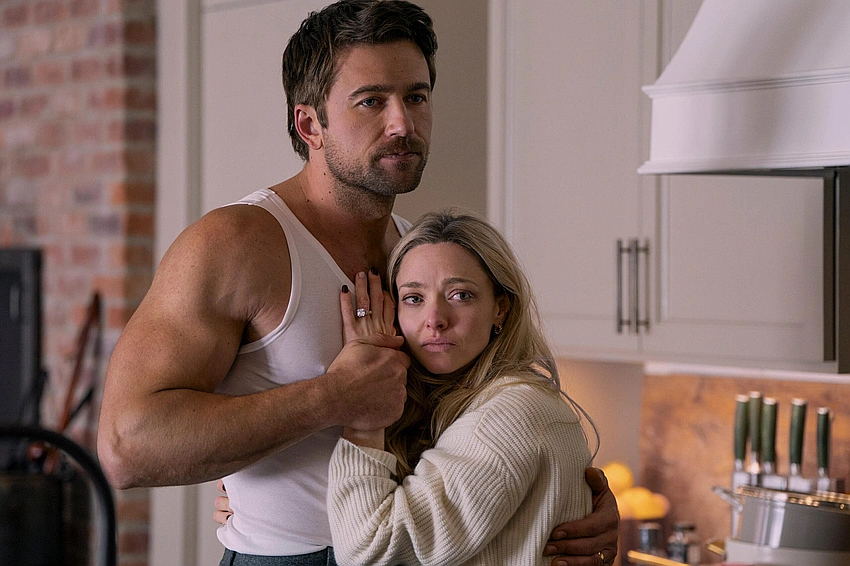
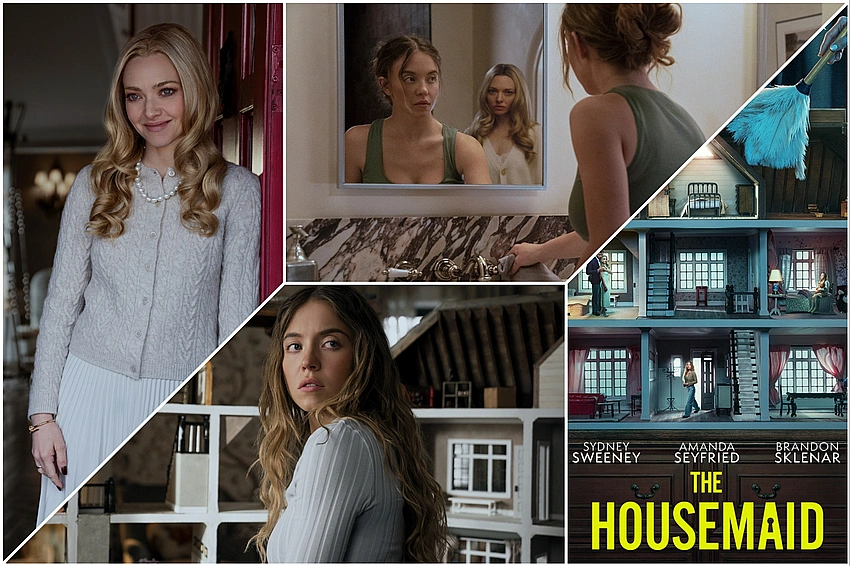
Millie Calloway, played by Sydney Sweeney, enters the Winchester home as a live-in housemaid with the promise of a fresh start. What she finds is the kind of domestic situation that feels curated for maximum unease. Nina Winchester (Amanda Seyfried) oscillates between brittle charm and apparent instability; Andrew Winchester (Brandon Sklenar) carries the polished stillness of men who look “safe” in expensive lighting. Millie’s room is in the attic, visually and symbolically placed above the family yet socially beneath them, and the architecture itself hints at enclosure, secrecy, and containment.
The erotic thriller has always understood houses as ideological machines. They are never neutral spaces. They sort bodies, assign roles, and choreograph desire. Here, the Winchester home is not merely a setting but a system, a structure that asks Millie to become small, grateful, and obedient, and then punishes her for doing it too well.
Sydney Sweeney’s Star Persona as a Text
Part of The Housemaid’s pop-cultural charge comes from how knowingly it uses Sydney Sweeney. In the last few years, Sweeney has been both a mainstream magnet and a discourse lightning rod: celebrated, scrutinised, commodified. This film harnesses that tension and makes it narrative fuel.
Her Millie is not the ingénue housemaid of older melodramas. She is watchful. She understands her own visibility. Furthermore, she knows how she is read. That matters in a film where looking is never innocent and attraction is never separate from power. The camera wants you to notice her because the household wants to notice her, and because Nina wants to control what that noticing means.
Sweeney’s performance is not subtle in a minimalist way, but it is sharp in a genre way. She knows how to play the contradictions: vulnerability that can pivot into calculation, sweetness that does not rule out violence, softness that is sometimes strategy.

Amanda Seyfried and the Weaponisation of “Unstable Woman”
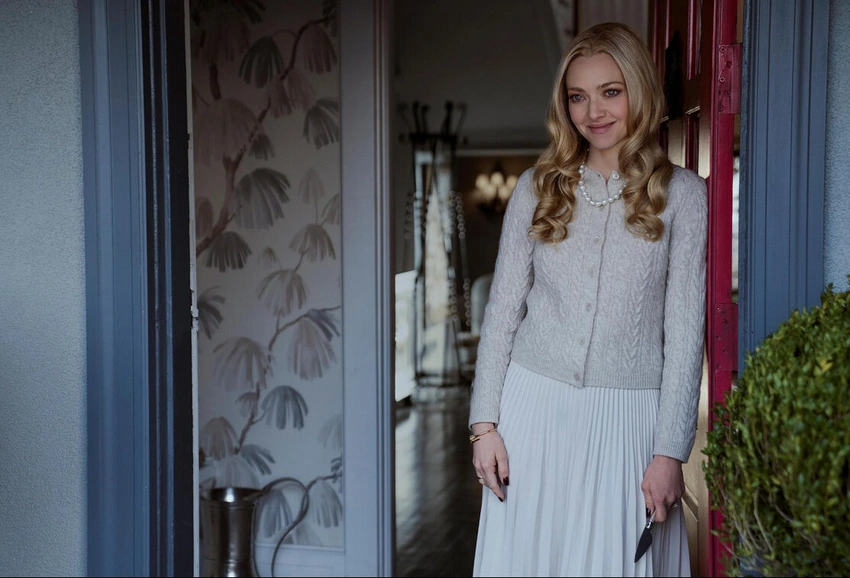
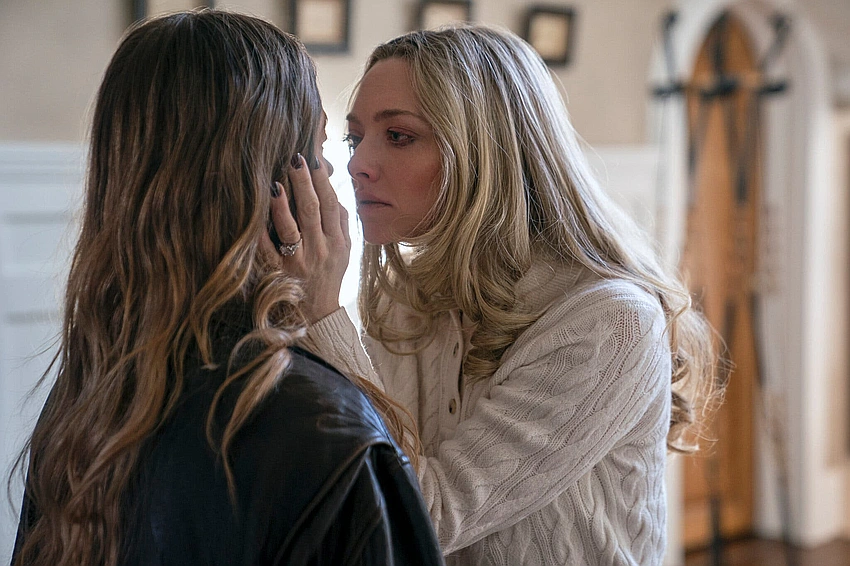
Amanda Seyfried’s Nina is the film’s most fascinating cultural artefact, because she walks straight into the archive of “unstable women” in domestic cinema and then gleefully rearranges it. Seyfried plays Nina as a character built from contradictory signals: sometimes childlike, sometimes cruel, sometimes eerily perceptive. She is presented initially through the housemaid’s gaze as chaos in a beautiful dress, the kind of woman the genre trains you to fear and mock in equal measure.
But The Housemaid is smarter than mere misogynistic spectacle. It understands that the figure of the hysterical woman is often a cover story for male control, a narrative device that lets institutions and households reframe legitimate rage as madness. If you have read even a little feminist criticism on domesticity, you can almost feel the film brushing up against that tradition even while it continues to enjoy its twists.
Class, Labour, and the Performance of Cleanliness
One of the most quietly effective things this film does is insist that housekeeping is not decorative labour. Millie is not a cute accessory to the wealthy family. She is the person who makes their illusion possible.
Cleanliness here is not only hygienic. It is ideological. The immaculate home exists to certify moral superiority, to suggest that the people inside it are orderly, rational, and deserving. Millie’s job is to sustain that mythology, and the film continually hints at how exhausting that is. She scrubs away traces, not only of dust but of reality.
The erotic thriller often fetishises luxury, but The Housemaid also exposes luxury as labour-intensive theatre. The Winchesters do not simply live in beauty. They require someone else to constantly manufacture the conditions of their “natural” elegance.
Why It Worked: A Film Made for Now
The Housemaid was released by Lionsgate in December 2025 and became a box office success, with reporting around its strong financial performance helping cement it as a modern crowd-pleaser. That matters, because we are currently living through a nostalgia loop where older genres are being resuscitated and remixed, but audiences have become harder to impress. Twists alone are not enough any more. The film has to be memetic without becoming hollow.
The Housemaid succeeds because it understands the contemporary obsession with the “perfect” home as a social media object, and the contemporary anxiety about being trapped in someone else’s curated life. If the 90s erotic thriller was obsessed with suburban repression, this one feels obsessed with curated identity and the intimacy of labour.
It is also, crucially, a film that knows the audience is reading it as discourse: about gender, class, power, and the consumption of female suffering as entertainment. It plays that game with a raised eyebrow, without losing the core pleasures of the genre.
A Wicked Little Domestic Fable
At its best, The Housemaid feels like a wicked little fable about what happens when the boundaries between service and intimacy collapse. It is a thriller where the house is a stage, the maid is both spectator and actor, and the family is a performance held together by money and secrecy.
Is it perfect? No. Does it sometimes lean too hard into the very tropes it is trying to complicate? Yes. But it is vivid, clever, and very watchable. And in a cinematic landscape that often mistakes grimness for depth, there is something strangely refreshing about a film that embraces its own genre heritage and still has something to say about the politics of the home.
#Housemaid2025 #SydneySweeney #PaulFeig #FreidaMcFadden #PsychThriller #AmandaSeyfried #MovieReview #FilmReview
