China Strikes Back: 10 US Firms Hit with Export Controls After Pentagon Blacklist

China Strikes Back: 10 US Firms Hit with Export Controls After Pentagon Blacklist
Escalating tensions! China retaliates against the US, slapping export controls on 10 American defense and rare earth companies. Discover how Beijing is fighting back against Washington's blacklist.
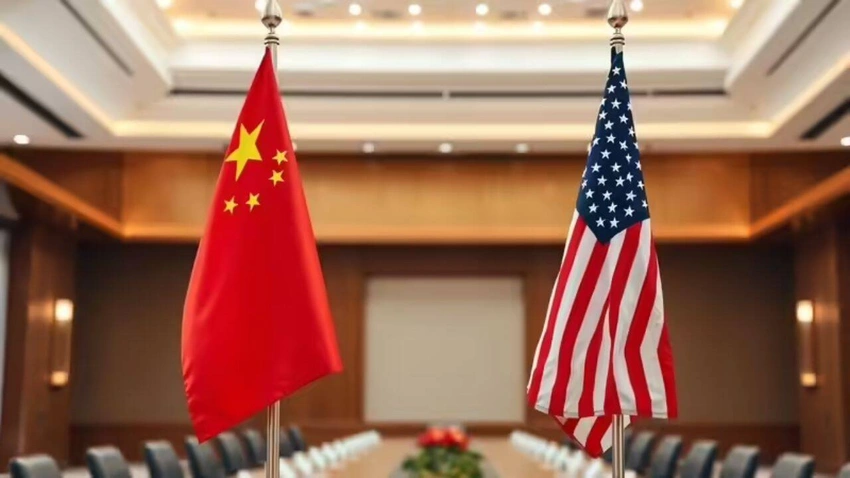
Beijing has announced a powerful retaliatory strike against Washington's recent blacklisting of Chinese firms, imposing export controls on 10 American companies deeply involved in defense and rare earths mining. The move, announced on Monday, June 22, 2026, by China's Commerce Ministry, is a direct response to what Beijing calls the U.S. government's "egregious act" of adding Chinese entities to its "military enterprise list."
The U.S. had recently expanded its blacklist to include 80 Chinese companies and their subsidiaries, including tech giants like Alibaba and Baidu, as well as electric vehicle giant BYD, alleging their involvement in aiding the Chinese military. This had prompted immediate threats of retaliation from Beijing, which has now delivered on its promise, stating the measures are to "safeguard national security."
Among the 10 entities now facing export controls are Aveox, a contractor with the U.S. military for aerospace defense, and Oshkosh Defense, known for producing military vehicle fleets. Key U.S. rare earths producers such as MP Materials and USA Rare Earth are also on the list. These controls prohibit exporters from providing "dual-use items" – products with both civilian and military applications – to the listed companies, with any ongoing export activities ordered to cease immediately. The ban also extends to any organization or individual globally transferring Chinese-origin dual-use items to these entities.
In a further escalation, China's Finance Ministry simultaneously announced a ban on government procurement from 46 U.S. firms. This affects major defense contractors like Lockheed Martin and Raytheon, as well as Boeing's defense division, and divisions of General Dynamics and Anduril Industries. This dual-pronged attack underscores the deepening economic and strategic rivalry between the two global powers.
This latest development comes just a month after U.S. President Donald Trump's visit to Beijing, where he met with Chinese counterpart Xi Jinping to discuss stabilizing fraught relations. While initial talks aimed at reducing tariffs, ties have since been severely tested by the tit-for-tat actions in the tech and defense sectors. Beijing's latest actions signal its resolve to "fight to the end" in the ongoing trade and technology war, marking a significant intensification of geopolitical tensions.
