Macklemore's Mic Drop: The High Price of Speaking Out in Music

Macklemore's Mic Drop: The High Price of Speaking Out in Music
Macklemore's pro-Palestine remarks during an Ed Sheeran concert ignited a firestorm, drawing criticism from fellow artists and a petition for his removal. What does this mean for activism in the music industry?
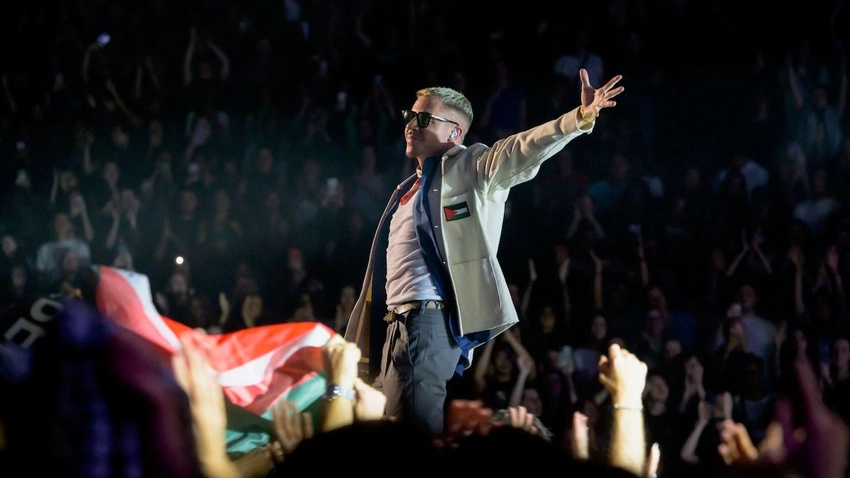
The stage isn't just for music anymore. Macklemore recently opened for Ed Sheeran at MetLife Stadium and decided to use that platform for a powerful statement, declaring, “Free Palestine!” This wasn't a casual remark, but a deliberate move, as he explained, “I want those words to be loud and clear so that people from Gaza, all the way to the occupied West Bank know that we have not forgotten them.”
He then introduced 'Hind’s Hall,' a track inspired by the Columbia University students and their encampment movement. He specifically thanked CUAD students, Students for Justice in Palestine, and Jewish Voice for Peace, acknowledging their bravery in risking diplomas and scholarships.
The Backlash and the Nuance
Naturally, such outspokenness carries weight. Fellow musicians P!NK and Boy George quickly voiced their criticism, and the Israeli American Council launched a petition demanding his removal from Sheeran's tour. The debate isn't just about the message itself, but about the boundaries of an artist's platform.
Macklemore, however, was quick to clarify his stance, emphasizing a crucial distinction: “To all of my Jewish brothers and sisters: Criticism of Israel, criticism of apartheid, being against genocide in no way is a criticism of you.” He framed his message as one for peace, dignity, respect, and equality for all human beings. He extended his calls for freedom to Lebanon, Cuba, Congo, Sudan, and even those living in fear of ICE in America, asserting, “None of us will be free until we are all free.”
Where Do We Draw the Line?
This incident forces us to confront a recurring question: what's the role of an artist in political discourse? Is a concert stage an appropriate forum for deeply divisive geopolitical statements, even when those statements come from a place of seeking peace and human rights? For Macklemore, it's clearly a fundamental part of his artistry and values.
The Israeli American Council's petition highlights the tension, stating,
The issue is not whether Macklemore has the right to hold political views. The question is where the line should be drawn.
This isn't just about Macklemore, but about the broader trend of artists engaging in activism, risking commercial repercussions, and facing public scrutiny.
It's a high-stakes game where passionate advocacy can lead to significant pushback, yet silence can be interpreted as complicity. In an increasingly polarized world, the stage remains a battleground for ideas, and artists like Macklemore are clearly ready to fight on it.
