Supreme Court strikes down Trump tariffs, reshaping prices and trade

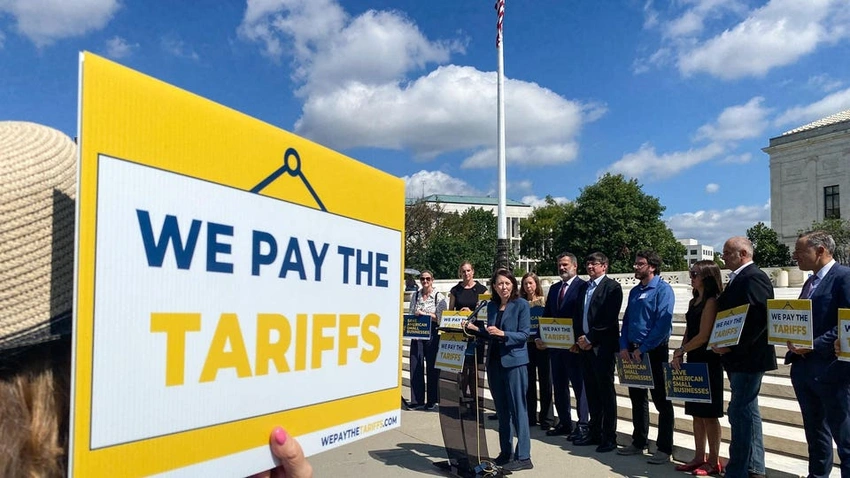
Supreme Court strikes down Trump tariffs, reshaping prices and trade
Court rules IEEPA can't justify sweeping tariffs, signaling big changes for prices, trade policy, and global markets.
The Supreme Court delivered a 6-3 ruling that limits the president’s ability to use the International Emergency Economic Powers Act to impose sweeping tariffs. The decision finds that IEEPA does not authorize the kind of unilateral duties that were once used to justify near-global “reciprocal” tariffs and related import measures. This marks a significant constraint on a cornerstone of the administration’s trade strategy, signaling a potential reorientation of how the United States might address international commerce during emergencies.
Countries affected by the IEEPA tariffs included Canada, China, Mexico, India, Brazil and dozens of others facing higher duties—a global reach that underscored the policy’s breadth and the stakes for consumers and businesses alike. With the court’s ruling, the legal basis for those duties is now in question, and the path forward for preserving or modifying such measures becomes clearer for lawmakers and the administration.
The administration had argued that IEEPA’s text allows the president to regulate imports during a declared national emergency, effectively granting authority to levy tariffs as a tool of national policy. Critics countered that the law does not permit unilateral tariffs of any size or scope, and that other courts had pushed back on broad tariff powers before this Supreme Court decision. The ruling aligns with those concerns, narrowing the executive branch’s toolkit in this arena.
IEEPA duties accounted for a substantial portion of U.S. tariff revenue last year, so the decision hits at a central pillar of the current trade architecture. Analysts say the ruling could reshape the cost structure for major consumer brands and ripple through the stock prices of companies exposed to import costs. Markets often react to procedural shifts with a mix of caution and opportunity, depending on how quickly policy makers respond and how supply chains adapt.
Beyond the immediate legal impact, the decision injects uncertainty into ongoing debates about how tariffs should be used in the future. Lawmakers may be prompted to revisit legislative language to clarify the scope of emergency powers, while the executive branch will likely seek alternative tools or targeted measures that fall within a narrowed interpretation of the statute. In a global context, the ruling could influence trade negotiations and the behavior of partner economies as they reassess vulnerabilities in supply chains and pricing under a new legal framework.
