Jubilee and the Performance of Democracy


Jubilee and the Performance of Democracy
Jubilee and the Performance of Democracy
This analysis examines Jubilee's Middle Ground and Surrounded formats, showing how online debate blends empathy with entertainment, and how cameras, retention metrics, and sponsorship shape political conversation.
Today's political conversation no longer unfolds in parliament, university halls or public squares alone. It unfolds in studios built for thumbnails, algorithms and retention graphs. Few platforms embody this transformation as clearly as Jubilee. Its immensely popular debate formats, particularly Middle Ground and Surrounded, promise empathy across ideological divides. Yet beneath this promise lies a deeper question. What happens when political disagreement becomes a profitable form of entertainment?
Jubilee's mission appears admirable. The platform presents itself as a space where people with opposing beliefs can meet, challenge one another and perhaps discover common ground. In an age marked by political fragmentation, this seems almost refreshing. The appeal is understandable. Young audiences have grown increasingly distrustful of traditional media and are drawn towards conversations that feel spontaneous rather than scripted.
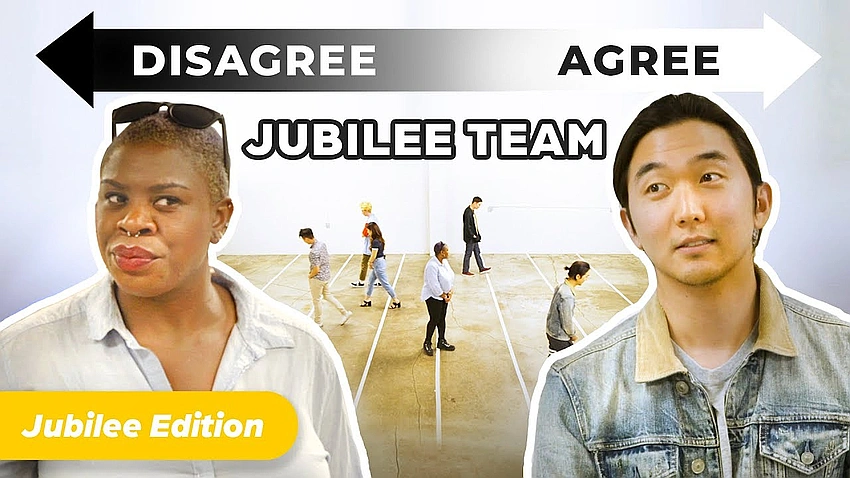
Yet spontaneity itself has become a product. Every camera angle, every participant pairing and every dramatic pause is carefully designed for digital circulation. Political discussion is no longer merely recorded. It is produced.
Founder Jason Y. Lee has repeatedly described the company's goal as fostering empathy across differences. Even so, Jubilee has evolved into one of YouTube's most successful political entertainment brands, attracting millions of viewers through formats that reward confrontation as much as understanding (The Atlantic, 2025; Jubilee).¹²
The Algorithm Loves Conflict
Social media has altered not only where politics happens but also how it is performed. Algorithms reward emotional intensity. Anger, surprise and outrage generate engagement far more effectively than careful deliberation.
Jubilee understands this logic remarkably well.
Its debates frequently feature provocative titles such as "1 Progressive vs 20 Far-Right Conservatives" or "Ben Shapiro vs 25 Liberals." Before viewers encounter the arguments themselves, they are already primed to expect spectacle. Politics becomes less about collective decision making and more about individual victory. The audience waits for the knockout moment rather than the thoughtful exchange.
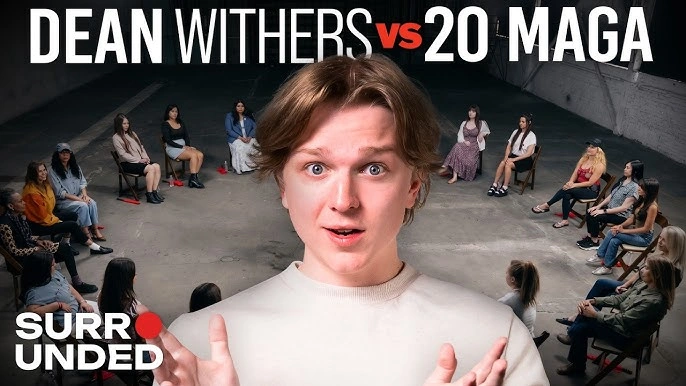
This resembles what theorist Guy Debord described decades ago in The Society of the Spectacle. Social life increasingly becomes mediated through images and performances rather than lived political participation. The debate itself is no longer the event. The viral clip is.
The platform insists that disagreement encourages empathy. Critics argue that its editing, casting and visual language often encourage viewers to consume ideological conflict as entertainment instead of democratic practice.³⁴
Capitalism Never Wastes a Crisis
Political polarisation has become one of the internet's most valuable commodities.
Every controversial debate generates reaction videos, TikToks, tweets, Reddit discussions and news articles. The original video becomes only the beginning of a much larger economy of attention. Outrage circulates. Engagement rises. Advertising revenue follows.
This is where capitalism quietly enters the conversation.
Rather than resolving political disagreement, digital platforms benefit from its endless reproduction. Polarisation becomes renewable content. Every ideological clash promises another thumbnail, another trending clip and another surge in views.
This does not necessarily mean Jubilee manufactures division. Rather, it operates within an economic system where division possesses extraordinary market value. The platform's commercial success depends upon audiences returning to watch increasingly dramatic encounters. Politics becomes infinitely reproducible because disagreement itself has become profitable.
Neutrality as a Brand
Perhaps the most fascinating aspect of Jubilee is its commitment to neutrality.
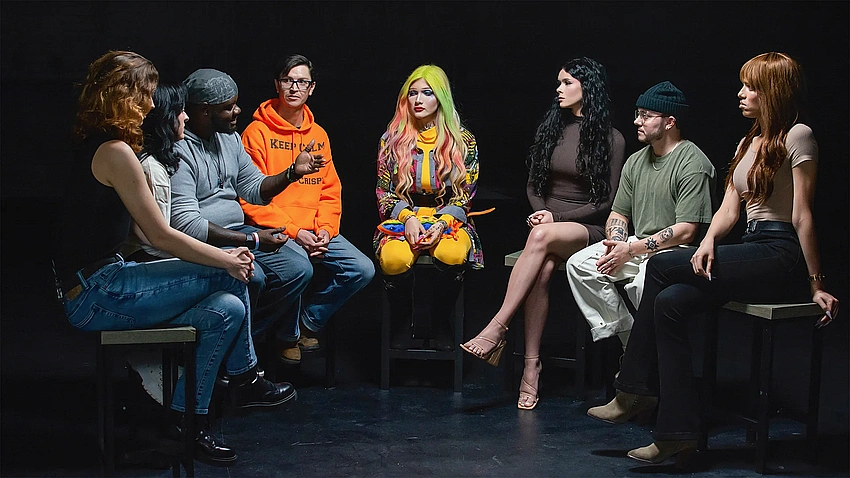
The platform rarely declares ideological positions. Instead, it presents itself as merely hosting conversations. This neutrality functions as both editorial philosophy and commercial strategy. By avoiding explicit political affiliation, Jubilee broadens its audience and strengthens its market position.
Yet neutrality is never entirely neutral.
Selecting guests, determining debate formats, choosing edits and designing titles all involve decisions about visibility and emphasis. Media scholars have long argued that representation is shaped not only by what appears on screen but also by what remains invisible.
Recent criticism surrounding Jubilee's Surrounded series illustrates this tension. Journalists and commentators have questioned whether certain participants representing extremist positions were given disproportionate visibility because inflammatory content performs exceptionally well online. Jubilee has defended its approach as encouraging open dialogue while continuing to refine its standards.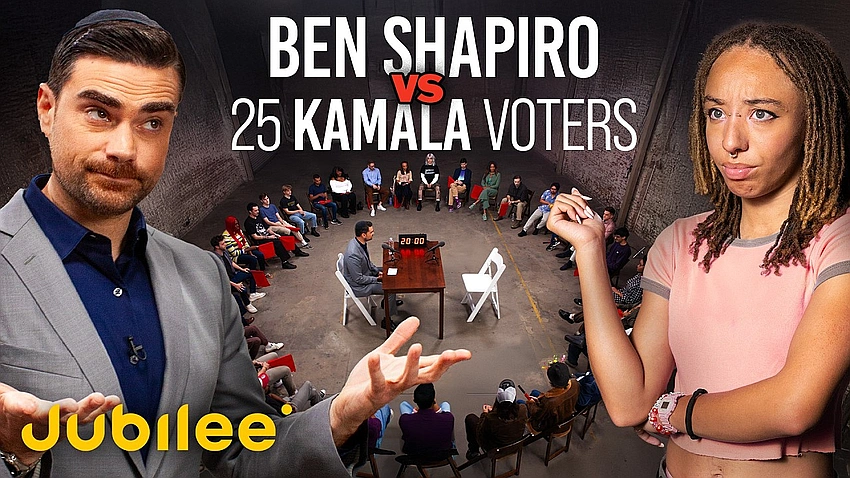
Watching Politics Instead of Doing Politics
Perhaps the greatest irony is that viewers often leave these debates feeling politically engaged despite remaining entirely passive.
Watching ideological conflict is not the same as participating in democracy. Clicking, commenting and choosing sides create a powerful feeling of involvement, yet they rarely translate into collective political action. Politics risks becoming another genre of online entertainment, consumed between gaming videos, celebrity interviews and dating shows.
Jubilee did not invent this transformation. It simply perfected a language already native to platform capitalism, where visibility, emotion and profitability become inseparable.
Its videos occasionally produce meaningful conversations and moments of genuine empathy. They also reveal something unsettling about the digital public sphere. In today's attention economy, democracy itself can become content.
When politics becomes content, disagreement stops being merely ideological. It becomes an asset.
#JubileeDebates #DigitalDiscourse #MediaEthics #MiddleGround #Surrounded
