Detectorist's Double Bronze Age Find Shocks Scotland!
Detectorist's Double Bronze Age Find Shocks Scotland!
Unbelievable! A metal detectorist in Scotland has uncovered his second Bronze Age hoard in just two years, unearthing 3,000-year-old treasures. Discover the amazing find!
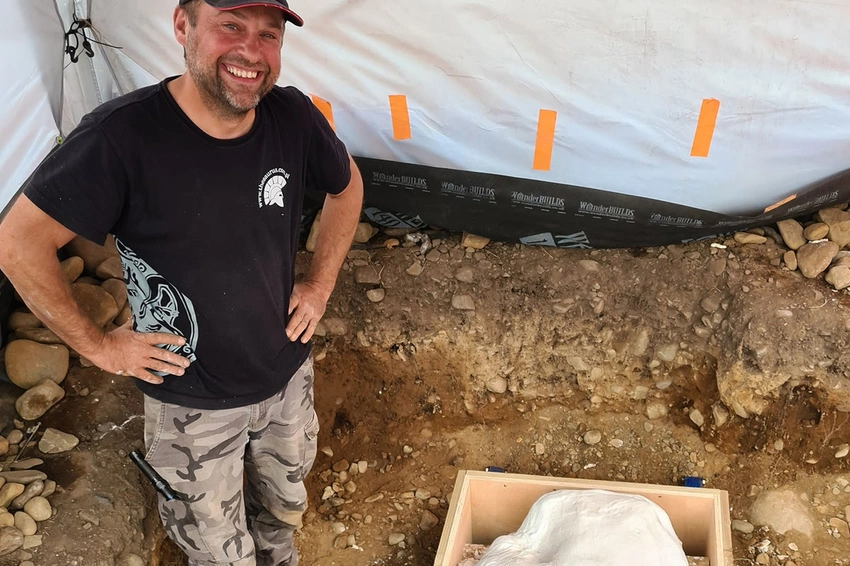
A metal detectorist has achieved an extraordinary feat, discovering his second Bronze Age hoard in the Scottish Borders within just two years. Mariusz Stepien, who found the significant Peebles Hoard in 2020, unearthed his latest haul, dubbed the Blyth Hoard, in 2022, a mere seven miles from his previous discovery.
Mr. Stepien's latest find dates back to the Late Bronze Age (circa 1150 to 800BC) and includes remarkable objects. Among them are two bronze axe-heads, unique clay moulds potentially used to manufacture fittings found in the nearby Peebles Hoard, and a complete copper ingot, a first of its kind discovered in Scotland. An ancient stone cairn was also revealed during subsequent excavations by archaeologists.
Upon discovering an axe head and noticing other bronze objects, Mr.
Stepien promptly reported his find to the Treasure Trove Unit, which then alerted archaeologists from National Museums Scotland (NMS). This swift reporting allowed for the professional excavation and understanding of the context of the find, a process praised by experts.
Dr. Matthew Knight, curator of prehistory at NMS, described the Blyth Hoard as "really incredible" due to the rarity of surviving mould materials and its close relationship to the Peebles Hoard. He highlighted how such discoveries, initially unassuming, hold many stories waiting to be told. The copper ingot, in particular, is anticipated to offer insights into the geographical source of the metals used in both hoards.
The Blyth Hoard has since been transported to the National Museums Collection Centre in Edinburgh for extensive conservation and analysis. Mr. Stepien expressed his excitement about the potential connections between his two discoveries and the further research that will illuminate the lives of the people behind these ancient artifacts.
Under Scots law, all archaeological finds must be reported to the Treasure Trove Unit, ensuring their preservation and public benefit.
