Tharoor calls delimitation 'political demonetisation' in women's quota debate

Tharoor calls delimitation 'political demonetisation' in women's quota debate
Tharoor calls delimitation 'political demonetisation' in women's quota debate
Senior Congress leader slams linking women's reservation to delimitation as political demonetisation and urges immediate implementation based on current parliamentary strength.
Senior Congress leader Shashi Tharoor criticised the government for tying women’s reservation to the delimitation exercise, calling it a form of political demonetisation. He argued that delimitation is one of the most contentious and complex administrative tasks in the country’s history and warned that linking it to women’s representation could hold the aspirations of Indian women hostage. Tharoor spoke during a Lok Sabha debate on three Bills aimed at amending the women’s quota law and establishing a delimitation commission. He urged the government to separate the two issues and proceed with the reservation plan based on the existing parliamentary strength.
In the same debate, party leaders pressed the government to explain the pace and purpose of the bills, with critics suggesting that the timing appears to be more electoral than reform-oriented. Voices within the opposition reiterated support for women’s representation but questioned the framing and sequencing of the bills, calling for clarity on immediate implementation rather than conditions attached to delimitation.
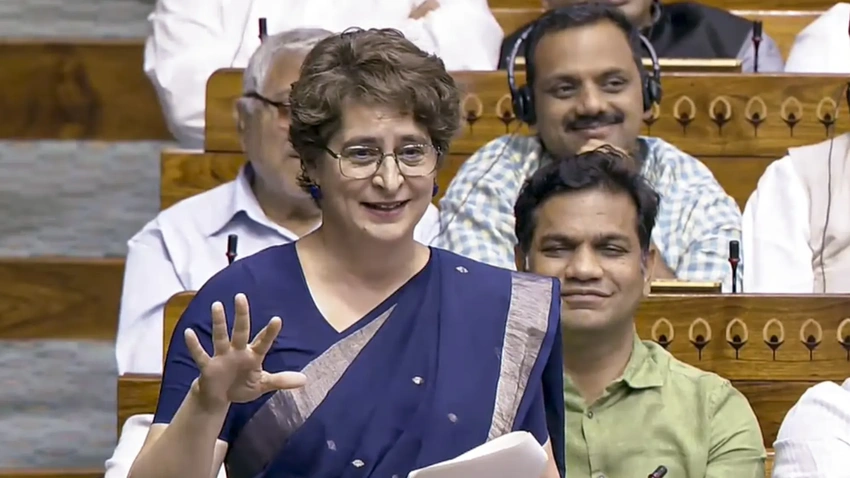
Priyanka Gandhi Vadra took aim at the government’s approach, labeling the measures as an “open attack” on democracy and questioning why there is a delay in delivering women’s reservation. She reaffirmed the Congress’s support for women’s representation while challenging the government to demonstrate its commitment beyond political messaging. Her remarks underscored a broader debate about whether the ruling coalition is pursuing real reform or prioritising electoral strategy over substance.
A notable moment came when Priyanka referenced historical thinkers, saying that Chanakya would have been shocked by the government’s framing of the issue, highlighting concerns about political framing and tactics. The discussion in Parliament continues to hinge on how and when women will gain reserved representation, and whether delimitation should precede or accompany such reforms.
As the three bills move forward, the central question remains: can India advance women’s political participation without getting entangled in a process many view as politically risky and administratively intricate?
