Is Listening to an Audiobook Actually Cheating? Science Says No

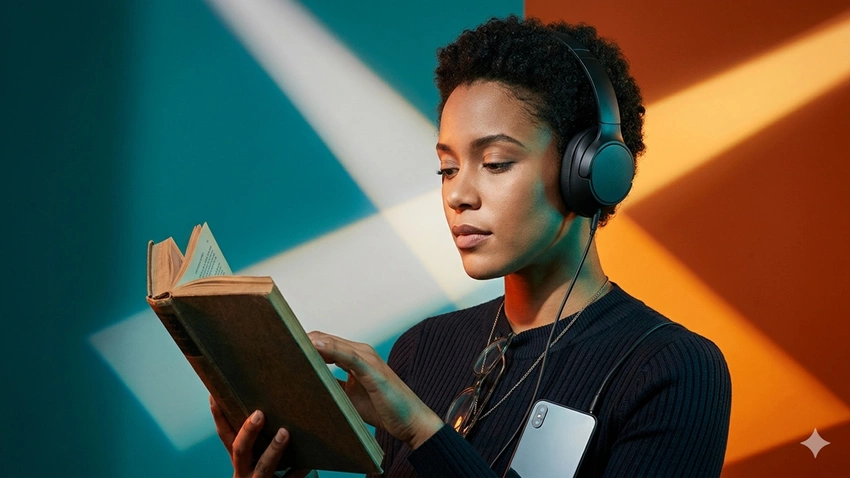
Is Listening to an Audiobook Actually Cheating? Science Says No
Stop the literary gatekeeping! Neurologists reveal that your brain treats audiobooks and paperbacks much the same. It is time to admit that ears count too.
The Great Literary Gatekeeping Debate
We have all been there. You tell someone you finished a fantastic book over the weekend, only to have them ask if you read it or listened to it. When you admit it was an audiobook, they give you that look. You know the one. It is a mix of condescension and pity, as if you have just admitted to cheating on a marathon by taking a motorized scooter. It is time we put this elitist notion to rest. Listening to a book is not a shortcut. It is just a different sensory experience.
Your Brain on Books
Neurologists have been looking into this, and the results are pretty clear. Whether you are scanning text with your eyes or processing phonemes with your ears, the language processing centers of your brain are doing the heavy lifting. Studies show that the prefrontal cortex and the temporal lobe do not really care if the signal came through the optic nerve or the auditory nerve. They are busy decoding syntax, building imagery, and connecting with the narrative in almost identical patterns.
In fact, for many, audiobooks can be even more immersive. Think about the oral tradition. For thousands of years, humans shared stories through speech. Homer did not write the Odyssey for a silent digital reader; he composed it to be performed and heard. We are biologically hardwired for storytelling through sound. Listening to a skilled narrator can add layers of emotional depth that a flat page might lack.
Accessibility and Real Life
Let us talk about the practical side too. Life is busy. Between commuting, working out, and doing the dishes, many of us do not have the luxury of sitting in a quiet corner with a physical tome for hours on end. Audiobooks democratize literature. They make it accessible to people with visual impairments, dyslexia, or just those who are constantly on the move. If a story reaches your brain and sparks an idea, the delivery method is secondary.
Why the Gatekeeping?
The resistance to audiobooks often comes from a place of tradition. We equate the physical act of turning pages with intellectual rigor. But the goal of reading is comprehension and emotional connection. If you can discuss the themes of a novel, cry at the ending, and remember the character arcs, you have consumed the book. Period. Let us stop the literary gatekeeping and celebrate the fact that more people are engaging with stories in whatever way fits their lives.
