India's New "Tomahawk" Missile: Game-Changer for Future Conflicts?

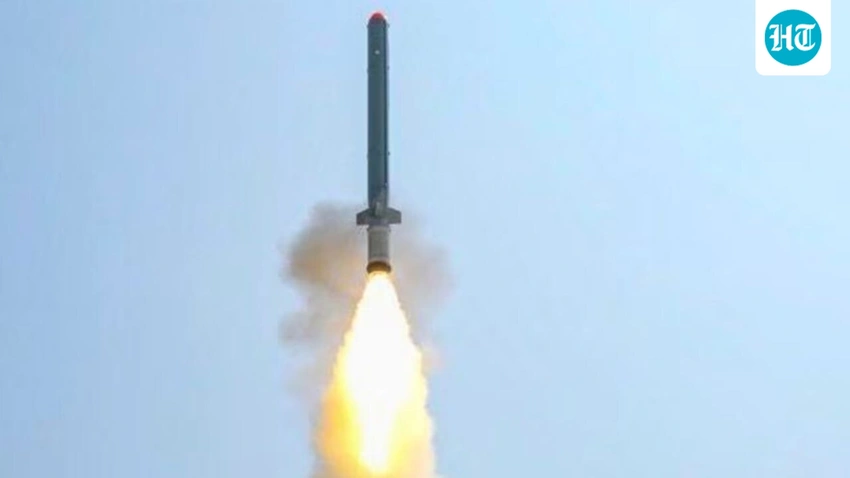
India's New "Tomahawk" Missile: Game-Changer for Future Conflicts?
India is developing the LR-LACM, a cost-effective "Tomahawk"-style missile with a 1,500 km range. Discover how this weapon could redefine national security and complement the mighty BrahMos. #IndianMilitary
India is quietly making significant strides in its indigenous missile development program, with a new long-range weapon poised to become as crucial as the formidable BrahMos. This new system, dubbed the Long Range Land Attack Cruise Missile (LR-LACM) and unofficially referred to as India's "Tomahawk," is designed to bolster the nation's strategic defense capabilities for sustained combat operations.
The BrahMos missile, known for its swift and decisive capability, has demonstrated its immense power in various scenarios, highlighting its critical role in modern defense. However, modern warfare often demands solutions that are not only potent but also cost-effective for prolonged engagements. This is precisely where the LR-LACM is designed to excel.
With an impressive strike range of 1,500 kilometers, the LR-LACM is being developed as a cheaper alternative to the high-cost BrahMos, intended to complement it rather than replace it. This strategic duality allows India to maintain strong deterrence while ensuring economic viability during extended military campaigns. The LR-LACM is engineered for top precision guidance, making it a highly accurate weapon in the nation's arsenal.
This new missile represents a significant leap forward from past indigenous missile experiments. It is considered a successor to the earlier Nirbhay cruise missile project, building upon lessons learned and incorporating advanced technology to achieve its extended range and accuracy. Its development underscores India's commitment to self-reliance in defense and its resolve to project strategic power across its operational sphere.
The introduction of the LR-LACM will provide India with enhanced strategic staying power, allowing for more flexible and sustainable long-range strike options. This ensures that the nation can effectively respond to emerging threats and safeguard its interests over the long term, cementing its position as a regional power with a robust and versatile defense infrastructure.
