Keyless Car Theft Prevention in the Era of Connected Vehicles: A Complete, Practical Guide for Moder

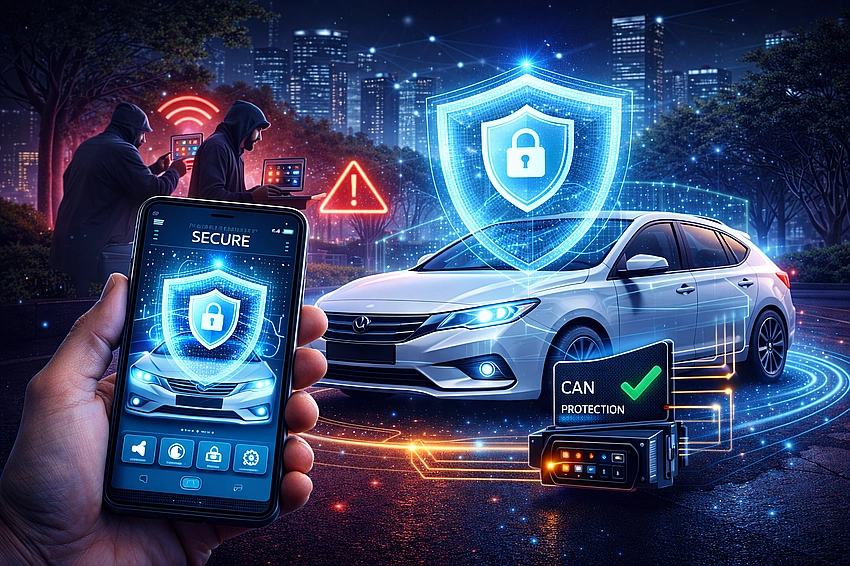
Keyless Car Theft Prevention in the Era of Connected Vehicles: A Complete, Practical Guide for Moder
The modern automobile has evolved into a rolling computer network. With keyless entry, smartphone apps, over-the-air updates, and cloud connectivity, driving has never been more convenient, or more complex. However, as vehicles become smarter, criminals are also becoming more sophisticated. Car theft is no longer about breaking windows or hot-wiring ignitions. Today, it’s about exploiting digital vulnerabilities.
In this new landscape, keyless entry systems and connected vehicle architectures have introduced serious security challenges. That’s why Keyless car theft prevention 🔗 has become a critical priority for manufacturers, fleet operators, insurers, and everyday drivers alike. Understanding how modern theft works and how to stop it is the first step toward protecting your vehicle.
This comprehensive guide explores how keyless car theft happens, why connected vehicles are more vulnerable, and what practical, proven steps you can take to stay secure.
Understanding the Rise of Connected Vehicles
Connected vehicles rely on embedded software, sensors, wireless communication, and in-vehicle networks to deliver advanced features such as:
- Keyless entry and start
- Remote locking and unlocking
- Vehicle-to-cloud communication
- Advanced driver assistance systems (ADAS)
- Infotainment and navigation services
While these features improve comfort and safety, they also increase the vehicle’s attack surface. Every wireless interface, Bluetooth, Wi-Fi, cellular, NFC, or RF, can potentially be exploited if not properly secured.
Why Connectivity Changes the Threat Model
Traditional car theft required physical access and mechanical knowledge. Connected vehicles, by contrast, can be compromised digitally, often without leaving visible signs of tampering. This shift has forced the automotive industry to rethink security from the ground up.
How Keyless Car Theft Works
Keyless car theft is not a single technique but a collection of methods that exploit wireless and networked systems. Understanding these methods is essential for effective prevention.
Relay Attacks
Relay attacks are among the most common forms of keyless car theft. Criminals use radio devices to amplify the signal from a key fob, often while it’s inside your home, and relay it to the vehicle. The car “believes” the key is nearby and unlocks.
Key characteristics:
- No physical damage to the vehicle
- Can be completed in seconds
- Difficult to detect after the fact
CAN Bus Injection Attacks
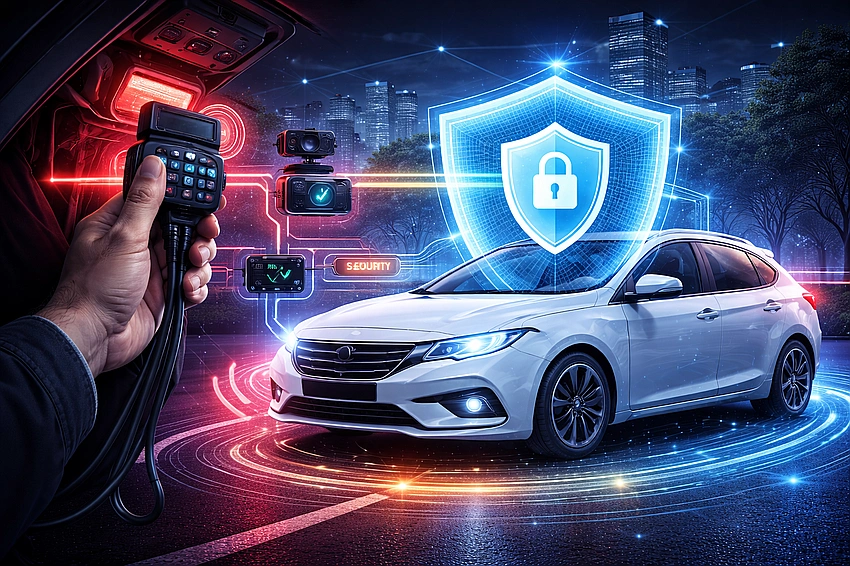
In this advanced method, attackers access the vehicle’s Controller Area Network (CAN) bus by removing a light, bumper, or wheel arch. Once connected, they inject malicious messages that instruct the car to unlock or disable immobilizers.
This attack highlights the importance of strong vehicle network defenses, especially as cars rely on internal digital communication.
OBD Port Exploits
The On-Board Diagnostics (OBD) port, designed for maintenance, can be misused to reprogram keys or override security if left unprotected.
App and Cloud Exploits
As vehicles integrate with mobile apps and cloud services, compromised credentials or poorly secured APIs can allow remote access to vehicle functions.
Why Keyless Systems Are Attractive to Criminals
Keyless systems offer speed, stealth, and scalability to attackers.
- Speed: Vehicles can be stolen in under a minute.
- Stealth: No alarms, no broken glass, no forced entry.
- Scalability: Techniques can be reused across vehicle models.
For organized crime groups, keyless theft is efficient and profitable.
The Role of In-Vehicle Networks in Security Risks
Modern vehicles contain dozens of electronic control units (ECUs) communicating over networks such as:
- CAN (Controller Area Network)
- LIN (Local Interconnect Network)
- FlexRay
- Automotive Ethernet
The CAN bus is particularly critical because it controls core functions like braking, steering, and door locks. Unfortunately, many legacy CAN implementations lack authentication, making message injection possible.
This is where 🔗automotive network security 🔗 becomes a foundational requirement, not an optional add-on.
Keyless Car Theft Prevention: Core Principles
Effective protection is built on layered defenses. No single solution is enough on its own.
1. Signal Protection
Prevent unauthorized RF communication with key fobs and vehicle receivers.
Examples:
- Faraday pouches for key fobs
- Motion-sensor-enabled smart keys
- Reduced signal strength designs
2. Network-Level Protection
Even if an attacker gains physical access, they should not be able to manipulate vehicle commands.
- CAN message authentication
- Intrusion detection systems (IDS)
- Secure gateways between ECUs
3. Software and Firmware Security
- Secure boot mechanisms
- Encrypted firmware updates
- Regular vulnerability patching
4. User Awareness and Behavior
Drivers play a critical role in prevention through informed habits.
Advanced Technologies Fighting Keyless Car Theft
CAN Intrusion Detection Systems
These systems monitor traffic on the CAN bus and detect abnormal message patterns that indicate an attack.
Benefits:
- Real-time detection
- No impact on driving experience
- Effective against CAN injection attacks
Cryptographic Message Authentication
By validating messages before execution, vehicles can reject unauthorized commands, even if the network is accessed.
Behavior-Based Anomaly Detection
AI-driven systems learn “normal” vehicle behavior and flag deviations instantly.
Best Practices for Drivers
While manufacturers and cybersecurity firms develop advanced defenses, drivers can reduce risk immediately.
Everyday Habits That Matter
- Store keys in RF-shielded pouches at home
- Disable keyless entry if not needed
- Lock cars manually and double-check
- Park in well-lit, secure areas
Vehicle Configuration Tips
- Enable automatic software updates
- Use strong, unique passwords for vehicle apps
- Avoid third-party devices of unknown origin
Fleet and Enterprise Vehicle Security
Fleet vehicles are especially attractive targets due to their predictability and scale.
Fleet-Specific Risks
- Multiple vehicles with identical configurations
- Centralized access credentials
- High resale value of stolen vehicles
Enterprise-Grade Solutions
- Centralized monitoring dashboards
- Policy-based vehicle access control
- Network-level intrusion prevention
Regulatory and Industry Responses
Governments and standards bodies are taking action to improve automotive cybersecurity.
UNECE WP.29 Regulations
These regulations require manufacturers to:
- Implement cybersecurity management systems
- Monitor and respond to threats
- Secure software updates
ISO/SAE 21434
This standard defines best practices for automotive cybersecurity across the vehicle lifecycle.
For more authoritative guidance, European Union Agency for Cybersecurity 🔗 (ENISA).
The Cost of Ignoring Keyless Car Theft Prevention
Failing to address modern vehicle theft risks can result in:
- Financial losses
- Increased insurance premiums
- Data privacy breaches
- Brand reputation damage
For consumers, the emotional and logistical toll of vehicle theft can be significant, even if insurance covers the loss.
The Future of Keyless Car Security
As vehicles become autonomous and fully software-defined, security will be inseparable from safety.
Emerging Trends
- Zero-trust vehicle architectures
- Hardware security modules (HSMs)
- Vehicle identity and authentication frameworks
- Secure vehicle-to-everything (V2X) communication
The future of mobility depends on trust, and trust depends on strong security.
Frequently Asked Questions (FAQs)
1. What is keyless car theft?
It is the unauthorized access and theft of vehicles using wireless or digital techniques rather than physical force.
2. Are all keyless cars vulnerable?
Not equally. Vulnerability depends on vehicle design, software, and security controls.
3. Do Faraday pouches really work?
Yes, when properly used, they can block RF signals and prevent relay attacks.
4. Can software updates improve vehicle security?
Absolutely. Updates often patch known vulnerabilities and enhance defenses.
5. Is CAN bus hacking common?
It is becoming more prevalent as criminals adopt more advanced methods.
6. Who is responsible for vehicle cybersecurity?
It’s a shared responsibility between manufacturers, suppliers, fleet operators, and drivers.
Security as a Core Feature, Not an Afterthought
The era of connected vehicles has transformed driving, but it has also transformed car theft. As digital threats replace physical ones, Keyless car theft prevention must be approached with the same seriousness as brakes or airbags.
From protecting wireless signals to securing in-vehicle networks and educating drivers, effective prevention requires a layered, proactive strategy. By combining advanced technology, smart design, and informed behavior, we can enjoy the benefits of connected mobility without sacrificing security.
