Trump: King Charles Opposes Iran Nuclear Weapon at White House Dinner

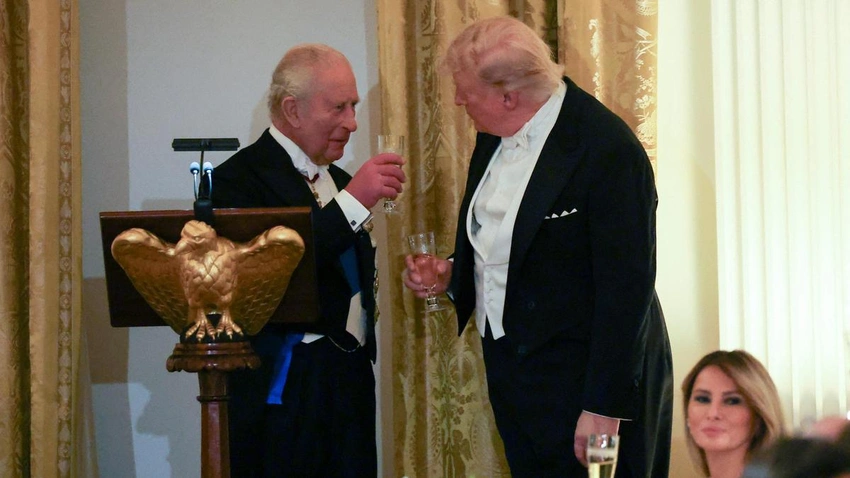
Trump: King Charles Opposes Iran Nuclear Weapon at White House Dinner
Trump claims King Charles doesn’t want Iran to have a nuclear weapon during a White House dinner as US-UK ties anchor a tense Middle East moment.
At a White House state dinner honoring Britain's King Charles III, Donald Trump spoke of the U.S.-UK relationship amid a tense Middle East backdrop. \"We're doing a little Middle East work right now and we're doing very well,\" he said, framing the moment as progress on volatile regional issues and a sign of strong ties between the two allies.\n\nKing Charles, in turn, underscored the longevity of the transatlantic partnership. He recalled the shared history from World War II and credited Washington for helping rebuild Europe, calling NATO's postwar role foundational to their cooperation. \"During World War II, at a most critical time in the darkest days of the 20th century, American leadership helped rebuild a shattered continent, playing a decisive role as a defender of freedom in Europe,\" he noted.\n\nThat dinner took place on the second day of a four-day U.S. visit, a period marked by heightened talk of Iran and the prospect of nuclear ambitions. Trump has asserted that Charles does not want Iran to possess a nuclear weapon, a claim that was echoed in other coverage of the event, though Charles himself did not address Iran or the war during his remarks.\n\nTrump has also criticized British Prime Minister Keir Starmer, saying Starmer isn’t offering enough help in prosecuting the Iran war, a line that adds to the show of alliance but also signals ongoing political theater around foreign policy.\n\nAnalysts say the exchange illustrates how heads of state use high-profile gatherings to signal alignment on international security, even as public statements can diverge from formal policy. The White House dinner served as a stage for reaffirming the long-standing US-UK bond while Iran policy remains a flashpoint in global diplomacy.\n\nOverall, the event highlights how NATO and the transatlantic alliance continue to frame discussions about defense and diplomacy at a moment when Middle East tensions are shaping global strategy.
