Why Less Is More: The Minimalist Approach to Skin Care for Sensitive Skin
Why Less Is More: The Minimalist Approach to Skin Care for Sensitive Skin

Introduction
Most of us have been taught to believe that more is better when it comes to skin care. More steps, more products, more ingredients, more technology. Walk into any beauty store and you will find entire walls dedicated to serums, essences, ampoules, toners, mists, and treatments, each promising to solve a different problem. For people with normal or resilient skin, this abundance is exciting. For people with sensitive skin, it is often the source of the problem itself.
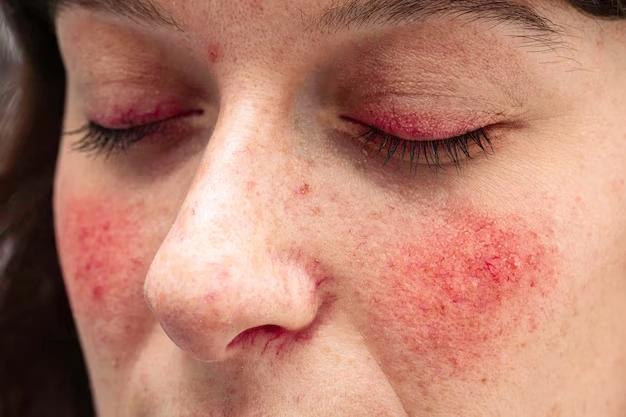
If your skin stings after applying new products, flushes easily, breaks out in redness without warning, or feels perpetually uncomfortable no matter what you try, the answer is rarely another product. It is almost always fewer products, chosen more carefully. The minimalist approach to skin care products 🔗 is not about being lazy or cutting corners. It is about being strategic, intentional, and deeply respectful of what your skin actually needs rather than what marketing tells you it needs.
This blog explores why simplicity is the most powerful tool available to anyone with sensitive skin, how to strip your routine back to its most effective core, and how to rebuild thoughtfully if and when your skin is ready for more.
The Problem with Overloading Sensitive Skin
Here is a truth that the skin care industry rarely advertises: the more products you layer onto sensitive skin, the more opportunities you create for something to go wrong. Every product you apply contains multiple ingredients. A single serum might have twenty or thirty components. A moisturizer might have forty. When you stack five or six products in a single routine, your skin is being exposed to potentially over a hundred different ingredients twice a day, every day.
For skin with a healthy, intact barrier, this is manageable. The barrier acts as a filter, limiting how much of what is applied actually penetrates into deeper layers. But sensitive skin, almost by definition, has a compromised or thinner barrier. That means more of what you apply gets through, and the skin's immune response has far more to react to.
The result is a cycle that many sensitive skin sufferers know well. You try a new product hoping it will calm your skin. It triggers a reaction. You try another product to counteract the reaction. That causes a different issue. You add a soothing mask to calm everything down. Before long, your routine is enormous and your skin is more irritated than it was when you started.
Breaking this cycle requires courage, because it means pulling back rather than pushing forward. But simplifying is almost always the right first move.
Starting Over: The Reset Routine
If your skin is in a reactive state or you have lost track of what is causing what, the most effective thing you can do is a full routine reset. This means stripping everything back to three products and three products only: a gentle cleanser, a simple moisturizer, and a mineral sunscreen for daytime use.
Use only these three products for at least four weeks. No serums, no toners, no exfoliants, no masks, no eye creams. Just cleanse, moisturize, and protect. This period serves two purposes. First, it gives your skin a chance to recover and rebuild its barrier without the constant onslaught of new inputs. Second, it establishes a baseline, a known state of calm from which you can reintroduce products one at a time with full knowledge of how your skin responds.
During your reset, pay close attention to how your skin feels day to day. Most people find that within two to three weeks their skin is noticeably calmer, less reactive, and more comfortable than it has been in months. That calm is the goal. Everything you add after that point should be evaluated against whether it maintains that calm or disturbs it.
Choosing the Right Three Products
The reset only works if the three core products you choose are genuinely gentle and compatible with sensitive skin. Here is what to look for in each.
For your cleanser, choose something fragrance-free, sulfate-free, and with a short ingredient list. A cream or lotion cleanser is usually better tolerated than a foaming gel, which can be too stripping for skin that is already compromised. The cleanser should leave your skin feeling soft and comfortable, never tight, dry, or squeaky clean. If it does the latter, it is too harsh.
For your moisturizer, look for formulations built around ceramides, glycerin, or squalane. These ingredients work with your skin's natural structure to reinforce the barrier and hold moisture in rather than drawing on external sources or delivering active ingredients that your skin may not be ready for. Avoid anything with essential oils, synthetic fragrance, or alcohol listed high on the ingredient list.
For your sunscreen, mineral options containing zinc oxide or titanium dioxide are almost universally better tolerated by sensitive skin than chemical UV filters. Chemical sunscreens work by absorbing UV rays and converting them into heat, a process that can cause stinging, redness, or heat-triggered flushing in reactive skin types. Mineral sunscreens sit on top of the skin and physically reflect UV light, making them gentler and less likely to provoke a reaction.
The Science Behind Barrier Repair
Understanding why barrier repair is the foundation of sensitive skin care makes the minimalist approach make much more sense. Research published by the National Eczema Association 🔗 and supported by clinical dermatology consistently shows that a healthy skin barrier is the single most important factor in reducing skin reactivity. When the barrier is intact and functioning well, irritants cannot penetrate easily, moisture stays where it belongs, and the skin's immune response does not need to fire as frequently.
The skin barrier is made up of skin cells bound together by a matrix of lipids including ceramides, fatty acids, and cholesterol. When this matrix is disrupted, whether through over-cleansing, harsh ingredients, excessive exfoliation, or environmental damage, gaps form in the barrier and the skin becomes permeable to things it would otherwise block. Restoring this matrix with topical ceramides and barrier-supportive ingredients is the most direct and evidence-based way to reduce sensitive skin reactivity over time.
This is why the minimalist approach works. By removing the products that may be disrupting the barrier and focusing on the ones that actively repair it, you are addressing the root cause of sensitivity rather than just managing the symptoms on the surface.
How to Reintroduce Products After Your Reset
Once your skin has been calm and stable for at least four weeks on your reset routine, you can begin to consider whether there are additional products you genuinely want or need. The word genuinely matters here. Not products you want because they are trending or because a review said they were life-changing. Products that address a real, specific concern your reset routine is not handling.
If you want to target dullness or uneven skin tone, a low concentration Vitamin C serum used a few times a week in the morning is a reasonable next step. If fine lines or texture are your concern, a very low dose retinol used once or twice a week in the evening can be introduced carefully. If redness or inflammation is still present even on your calm baseline, a centella asiatica serum or a niacinamide product at around two to five percent concentration may help.
The critical rule is one new product at a time, introduced at two week intervals minimum. Apply it to your whole face for the first time on a day when you have no social obligations, so that if there is a reaction you can manage it calmly. Watch for any change in your skin over the following two weeks. If it remains calm and comfortable, the product is compatible with your skin. If it reacts, you know exactly what caused it and you remove that single product rather than your entire routine.
This slow, methodical approach is far less exciting than building a full routine all at once. But it is the only approach that gives you real, reliable information about what your skin actually tolerates.
What Minimalism Looks Like in Practice
A practical minimalist routine for sensitive skin looks something like this. In the morning, rinse your face with cool or lukewarm water or use your gentle cleanser if you applied any products the night before or if your skin feels like it needs a proper cleanse. Apply a small amount of your ceramide moisturizer while your skin is still slightly damp. Finish with your mineral sunscreen, applied generously enough to actually protect your skin rather than rationed to save product.
In the evening, use your gentle cleanser to remove the day's sunscreen and any environmental buildup. Follow with your moisturizer. That is the entire routine. If you have introduced a treatment serum at the appropriate stage of your rebuild, it goes between cleansing and moisturizing.
Two steps in the morning, two in the evening. That is all most sensitive skin genuinely needs.
FAQs
1. How can I tell if a product is truly suitable for sensitive skin?
“Sensitive skin” isn’t regulated, so don’t rely on the label. Check the ingredient list—avoid fragrance, essential oils, alcohol denat, and harsh sulfates. Use tools like INCI Decoder or EWG to verify ingredients.
2. Is an adjustment period normal when switching to a simpler routine?
Yes. Your skin may take 3–4 weeks to adapt. Mild dryness or breakouts can happen and don’t always mean the routine isn’t working.
3. Can I follow a minimalist routine with prescription treatments?
Yes, but follow your dermatologist’s advice first. Keep the rest of your routine simple to avoid irritation from combining too many active ingredients.
4. Is a minimalist routine safe for children with sensitive skin?
Generally yes, but children’s skin is more delicate. Stick to gentle, fragrance-free products and consult a pediatric dermatologist for conditions like eczema.
Conclusion
In a world that profits from convincing you that your skin needs more, choosing less is a quiet act of self-awareness. Sensitive skin does not need the newest serum or the most innovative formula. It needs consistency, gentleness, and the respect of not being overwhelmed by ingredients it was never designed to handle all at once.
Start with three products. Keep them simple. Give your skin time. Add only what it genuinely needs, one thing at a time. That is the minimalist approach, and for sensitive skin, it is often the most transformative one available.
Explore a carefully selected range of the best skin care products 🔗 for sensitive skin, chosen for their clean formulations, minimal ingredient lists, and proven gentleness on even the most reactive skin types.
