Trade Turnaround: India’s Deficit Drops—Is the Economy About to Boom?

Trade Turnaround: India’s Deficit Drops—Is the Economy About to Boom?
India's merchandise trade deficit dropped to $18.78 billion in June 2025, below expectations. Explore the key factors behind this shift and what it means for the economy.
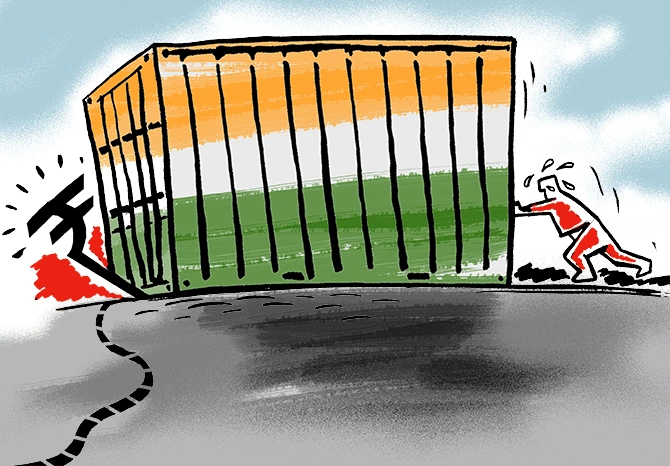
India’s merchandise trade deficit in June 2025 narrowed significantly, settling at $18.78 billion, down from $21.88 billion in May and well below economists' expectations of around $22.24 billion. This improvement reflected a sharp slowdown in imports, particularly crude oil and gold, despite exports slipping to a seven-month low, marking a notable change in the country's trade dynamics.
 To understand the importance of this shift, it helps to look back at India’s trade journey. After independence in 1947, India ran a small trade deficit of just about $0.1 billion in 1948, but by 1980, that figure had climbed to approximately $6.3 billion amid import-heavy policies. The 1980s witnessed gradual reforms, culminating in the watershed 1991 liberalization, which opened markets and fuelled exponential economic growth. But it also led to a widening trade imbalance by 2022, the merchandise trade deficit had ballooned to nearly $119.5 billion, before narrowing to about $79.4 billion in 2023. In this context, June’s $18.78 billion monthly deficit marks a small but meaningful step toward correcting persistent structural imbalances.
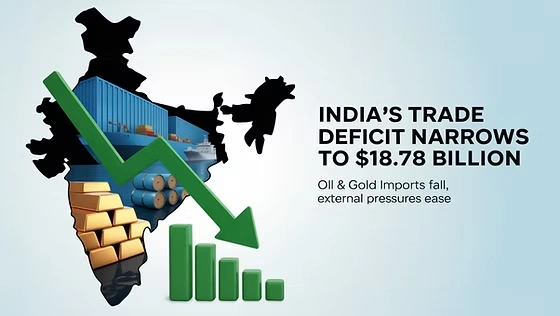
In June, imports fell sharply from $60.61 billion in May to $53.92 billion, mainly due to a drop in crude oil imports (from $14.7 billion to $13.7 billion) and a steep decline in gold (from $2.5 billion to $1.8 billion). While exports dipped to $35.14 billion, the fall was largely driven by commodity prices rather than demand, marking the lowest export value since November. Overall, non‑oil imports dropped more significantly than exports, compressing the trade deficit and offering policymakers some breathing room.
Service exports continue to bolster India’s external balance. In June, services recorded a surplus of $15.62 billion, with exports totalling $32.84 billion against $17.58 billion in imports. When combined with goods, this translated into a modest overall trade gap, much improved from previous months.
Commerce Secretary Sunil Barthwal highlighted the influence of global oil prices:
India’s exports and imports in June were affected by a fall in crude oil prices.
He added that both the merchandise and services sectors are in the positive territory, suggesting that India remains on track to exceed last year’s export record.
Meanwhile, Aditi Nayar of ICRA noted the favourable impact on the current account, stating that India is likely to see the deficit fall to about 0.7 percent of GDP in Q1 FY2026, down from 0.9 percent in the same quarter last year.
Despite these gains, India’s reliance on imported crude oil and gold, key drivers of the trade deficit, remains a concern. In fiscal 2024, essential imports continued to weigh on the balance, though services and remittances helped moderate the impact. Historically, India depended on foreign oil and industrial inputs, with these imports making up over 50 percent of total merchandise outflows.
Today, India’s economic landscape reflects a blend of service sector strength and goods sector vulnerability. The services sector, especially information technology and tourism, now contributes roughly 55 percent of GDP and plays a crucial role in export revenues, an immense shift from its earlier narrow manufacturing focus. Even so, goods imports driven by energy needs and tech dependencies continue to strain the trade balance.
June’s upbeat numbers follow a mixed start to the year. January saw a trade deficit of around $23 billion, and although occasional dips in import and commodity prices have provided respite, a definitive reversal in trend remains to be seen. Meanwhile, earlier in 2025, India even recorded a current account surplus of 1.3 percent of GDP, its first in four quarters, and thanks to strong services exports and remittances, though merchandise deficits persisted.
Looking ahead, several factors will shape India’s external position. Negotiations over India-U.S. Free Trade Agreements and those with the EU are expected to influence export and import volumes. Global commodity trends, such as oil price volatility, and policy measures, like limitations on precious metal imports, will also be key. Exchange rate shifts, too, may drive future outcomes.
In plain terms, June’s outcome is encouraging but only a small part of a much larger narrative. India has evolved from a modest post‑independence trader into a major global economy with growing service dominance and persistent goods deficits. While the small trade gap in June improves the current account and eases pressure on the rupee and inflation, sustained reform in exports, reduced import dependency, and success in trade diplomacy will be essential for durable progress.
#TradeDeficit #IndiaEconomy #Imports #Exports #EconomicTrends
