Hyundai Exec Urges India: Build Advanced Auto Tech to Cut $1.4B Deficit!
Hyundai Exec Urges India: Build Advanced Auto Tech to Cut $1.4B Deficit!
Hyundai Motor India's Tarun Garg calls for India to develop advanced auto tech, like semiconductors & EV cells, to slash the $1.4B trade deficit and boost self-reliance. A crucial step for India's auto future!
Hyundai Motor India's Chief Operating Officer, Tarun Garg, has issued a compelling call for India to dramatically shift its focus in the automotive sector. He emphasizes the urgent need to move beyond exporting conventional auto components and instead prioritize the development and export of advanced technologies, engineering capabilities, and innovation.
This strategic pivot is crucial to address India's substantial $1.4 billion auto-component trade deficit.
Garg highlighted that while India has excelled in building scale within the auto industry, the time has come to "accelerate and leapfrog towards greater self-reliance." This includes establishing robust domestic capabilities to design, develop, and manufacture cutting-edge future technologies. Key areas for this investment include semiconductor chips, EV battery cells, power electronics, and other critical technologies.
He stressed that technology ownership is not just an economic advantage but "essential for strategic independence."
The automotive landscape has undergone a profound transformation over the past three decades.
Vehicles, once largely mechanical systems, have evolved into intelligent, connected, and increasingly software-defined mobility solutions. This evolution has raised customer expectations for quality, safety, reliability, and performance to unprecedented levels.
Garg noted that insights gained from working with global automotive supplier ecosystems have underscored the importance of diverse strengths: the scale and platform thinking from the US, precision engineering from Germany, supply-chain depth and speed from China, lean manufacturing from Japan, and technology with rapid execution from South Korea.
To meet these evolving demands and secure India's position in the global automotive market, Garg advocates for significantly increased investment in research and development (R&D) and innovation. Stronger R&D is vital for improving product architecture, materials, and manufacturing processes, which in turn allows companies to deliver affordability without compromising on critical aspects like quality, safety, and performance.
This domestic R&D push is seen as fundamental to bridging the existing technology gap and fostering true self-reliance.
Adding to the complexities of the current landscape, India's auto exports are facing immediate headwinds.
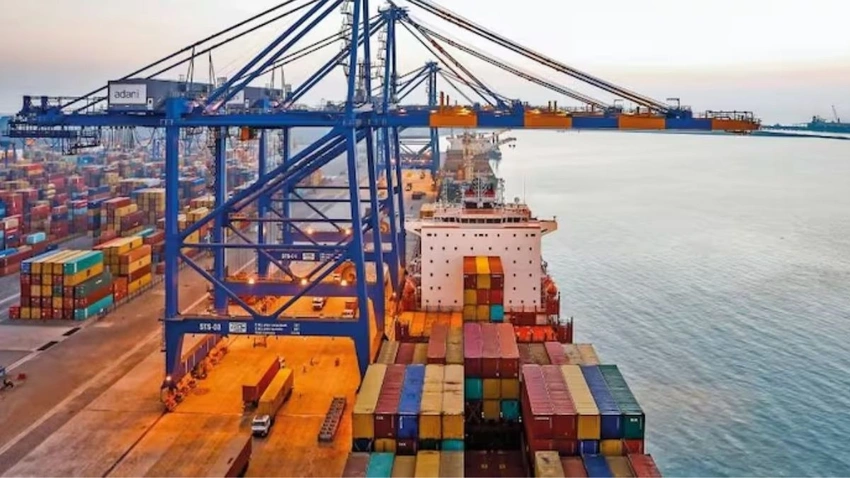
A significant shortage of shipping vessels, exacerbated by ongoing tensions in West Asia, has disrupted shipments from major carmakers, including Maruti Suzuki and Hyundai. This logistical challenge could persist, potentially affecting export volumes, especially to regions like Latin America which require longer shipping routes.
While the industry navigates these immediate hurdles, the long-term vision articulated by Tarun Garg for technological self-sufficiency remains a critical pathway for India's automotive future.

Login to comment.
No thots yet. Be the first to share your thoughts!