Big Tech Owes Photographers. But How Would it Compensate?

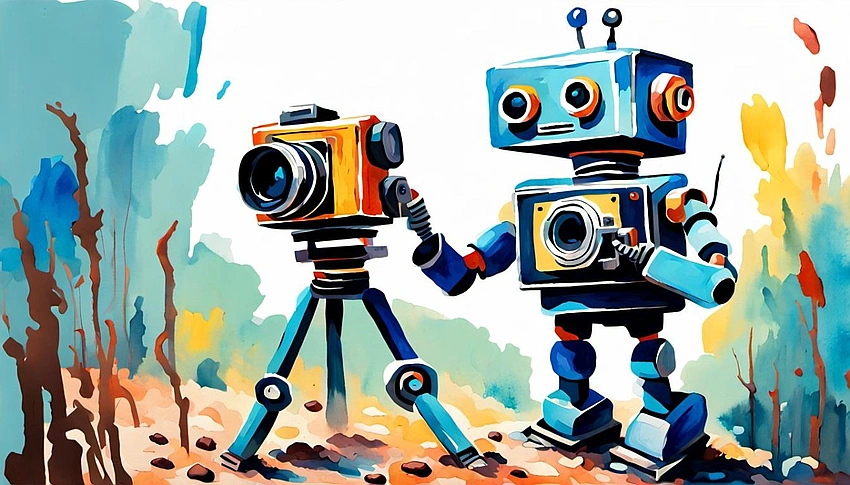
Big Tech Owes Photographers. But How Would it Compensate?
From the muddy trenches of wildlife photography, a look at how AI devoured our portfolios and why the only path forward involves paying the humans who actually go outside.
I spent last Tuesday morning knee-deep in a marsh that smelled distinctively of sulfur and decaying matter, waiting for a Great Blue Heron to do something other than look catatonic. It took four hours. I got bit by multiple mosquitoes and temporarily lost a lens cap in the muck. But eventually, the bird struck, the shutter clicked, and I captured a millisecond of raw, chaotic reality.
Wow. It was worth it.
Meanwhile, in a server farm somewhere in a tax-advantageous state, an AI model generated a “photorealistic” heron in four seconds. It was perfectly lit, the water was impossibly blue, and there were no mosquitos to bite anyone.
This is the current state of visual culture: a battle between the muddy, uncomfortable truth of human observation and the high-gloss, hallucinatory averaging of machine learning. And here is the rub, that machine only knows what a heron looks like because it digested a few thousand of my photos, and millions of photos by my peers, without so much as a “thank you,” let alone a venmo transaction.
Big Tech owes photographers. Big time. But the invoice isn't just for copyright infringement; it’s for the strip-mining of human perspective.
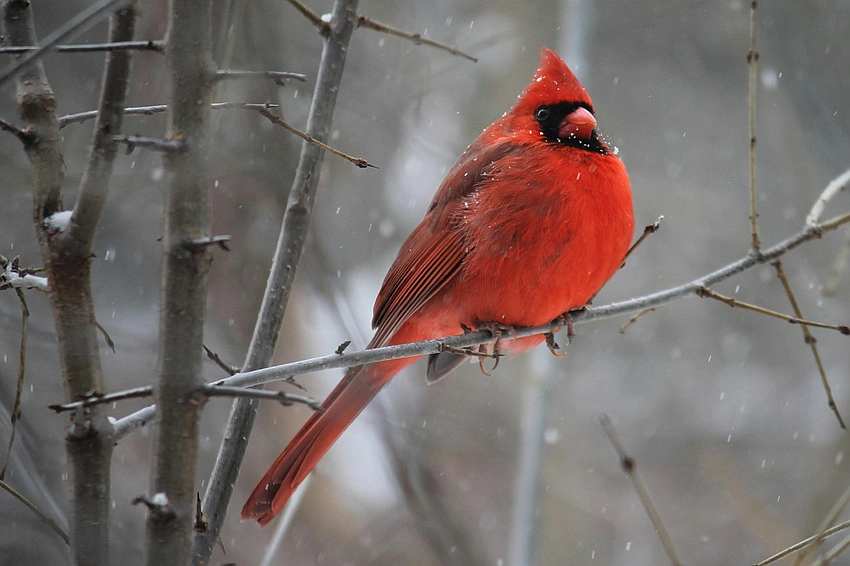
The Great Scraping
For the last decade, we lived in a sort of feudal arrangement with social media platforms. We provided the “content” (a soulless word for art, but let’s go with it), and they provided the “exposure.” It was a bad deal, but we understood the rules.
Then, the terms of service changed while we were sleeping.
Tech giants didn’t just want to host our images anymore; they wanted to dissolve them into data. They scraped the internet’s visual history, our sunsets, our street portraits, our meticulously lit macro shots of beetles, and fed them into the maw of Large Language Models and image generators. We were the bees making honey, and Big Tech just bulldozed the hive to build a synthetic syrup factory.
From a sociological standpoint, this is what we might call “extraction capitalism” applied to creativity. They took the finished product of our labor, stripped it of context and authorship, and sold it back to the world as a subscription service. It’s the ultimate gaslight: using our own eyes to render us obsolete.
The "Vibes" Economy vs. Reality
The result is a flood of what internet critics call “slop”,, uncanny, smooth, frictionless imagery that mimics the vibe of photography without the substance of it. It’s visual filler. But here’s the irony: AI models are prone to “model collapse.” If you train an AI on AI-generated images, the quality degrades. It gets weird. It needs fresh, human-made data to stay tethered to reality.
They need us. They need the people who go out into the sulfur-smelling marshes. So, how do we fix this broken marriage?
Making It Right in the Post-AI Era
We can’t put the genie back in the bottle. The technology is here, and honestly, some of it is cool (I use AI to denoise my high-ISO shots, I’m not a Luddite). But we need a new economic contract.
1. The "Spotify for Pixels" Model (But Good) If an AI model uses my image in its training dataset, that is a usage license. Period. We have the blockchain technology to track this. If a prompt generates an image that leans heavily on a specific photographer's style or specific image data, a micro-payment should trigger. If tech companies can figure out how to serve me an ad for boots ten seconds after I talk about hiking, they can figure out how to attribute source data.
2. The "Human-Certified" Badge We need a cultural shift toward valuing provenance. Camera manufacturers are already working on cryptographic signatures that prove an image was captured by a sensor, not a GPU. Social platforms need to prioritize this. “verified Human” shouldn’t just be a blue check you buy; it should be metadata proof that light actually hit a sensor.
3. Opt-In, Not Opt-Out Currently, companies assume they own everything unless you rigorously tell them otherwise. This defaults to theft. The future must be built on consent. If you want high-quality, human-curated training data (which is the premium fuel for these models), you should have to pay for access to premium libraries, not just scrape the public web like a raccoon in a dumpster.
Photography is more than just making pretty rectangles. It is the act of witnessing the world. If Big Tech wants to simulate that act, they need to start paying the witnesses. Until then, I’ll be in the marsh, waiting for the heron, keeping the receipts.
But they won't do this. So what else can we demand?
Let me know in the comments below what we should reasonably be owed by the big tech?
