How December 25 Became Christmas: The History Behind the Holiday

How December 25 Became Christmas: The History Behind the Holiday
Explore how December 25 was chosen and how Christmas evolved from a Roman church tradition into a global festival of faith, food, and family.
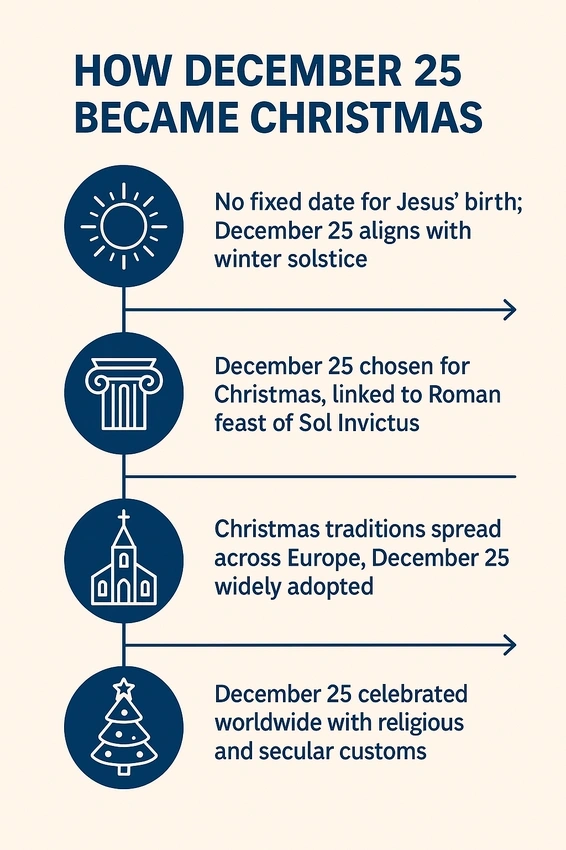
December 25 is today stamped in our calendars as Christmas, a day of carols, gifts, and festive meals. But the path from a quiet church decision to a global celebration is a winding one. In the 4th century, the Roman Church began fixing December 25 as the date to celebrate Jesus’s birth. The choice didn’t happen in a vacuum. It came at a time when Christian leaders worked to distinguish their faith from rival traditions and to reach new communities across a sprawling empire.
Choosing December 25 also aligned with existing winter celebrations. The solstice long lit up the darkest days of the year, and many cultures marked that time with feasts and lights. Linking Jesus’s birth to this period offered a shared rhythm that helped the new faith take root in places where days grew short and spirits grew bright with communal gatherings. Over the centuries, December 25 became a liturgical anchor in Rome and then spread to other Christian communities, gradually expanding well beyond the city’s walls.
As centuries passed, Christmas grew from a solemn feast into a season of storytelling, music, and ritual. Medieval streets filled with processions, nativity plays, and generous acts of charity. In the 19th century, popular culture reshaped the holiday once again: stories, songs, and images—along with new customs like gift-giving and festive hospitality—took on a global appeal. Modern Christmas blends religious reverence with secular joy, from family meals to holiday markets, movies, and charitable acts.
It’s important to note that not all Christian denominations celebrate on December 25. Some Orthodox churches observe the holiday on January 7, reflecting different calendars and traditions. Still, December 25 remains a focal point for a worldwide tapestry of customs that honor birth, light, and hope. In today’s connected world, Christmas continues to be a moment when faith, culture, and community intersect in homes, churches, and public spaces around the globe.
