Kalanick's VC Reality Check: Only 1% Are Truly Helpful?

Kalanick's VC Reality Check: Only 1% Are Truly Helpful?
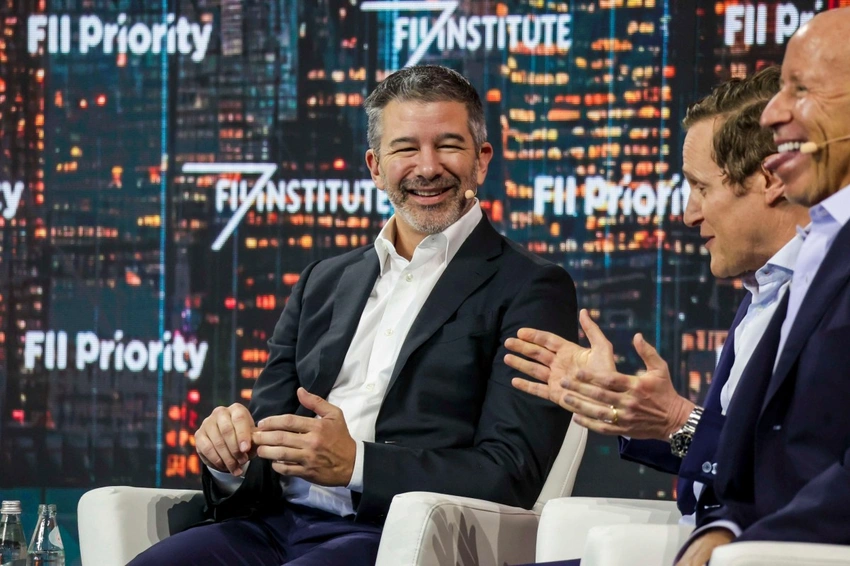
Travis Kalanick, founder of Uber and robotics company Atoms, shares his blunt truth about venture capitalists. He reveals why founders should be wary, and how few VCs truly add value.
Travis Kalanick, the founder whose journey with Uber reshaped an industry and his own career, has a message for founders navigating the high-stakes world of venture capital. After recently securing a colossal $1.7 billion for his new robotics venture, Atoms, with Andreessen Horowitz leading the charge, Kalanick isn't holding back on his seasoned, albeit cynical, take on investors.
He's been on both sides of the VC relationship, from raising an unprecedented $15 billion for Uber to being controversially pushed out.
His insights are a wake-up call.
Kalanick's history with VCs is undeniably complex. While he acknowledges the crucial role they played in Uber's meteoric rise, he also points to the boardroom battles that ultimately led to his departure.
He's particularly 'salty' about key investor Bill Gurley of Benchmark, a firm he now explicitly advises founders to avoid.
Despite Benchmark recently raising another $2 billion, Kalanick's animosity runs deep, stemming from personal experience at the highest levels of startup warfare.
His worldview on VCs isn't just about one traumatic event. Kalanick, who has started numerous companies, believes the bar for a venture capitalist is incredibly low. He warns that “a super high bar for a VC is 'do no harm.'” Yet, in his estimation, only a mere 10% of VCs even meet that modest standard.
The percentage of VCs who are actually “helpful” plummets to a shocking 1%.
It's a reflection of his extensive career spanning multiple ventures and funding rounds.
Why so few? Kalanick explains it through a compelling analogy: the founder is the “chess master” of their company, living and breathing every move. The VC, in contrast, is merely a “chess enthusiast” who drops in occasionally to check on the game's progress.
They aren't “in that deep,” making it genuinely challenging for them to provide meaningful, hands-on assistance. It's a stark reminder that while VCs provide capital, their operational depth often pales in comparison to the founders they back.
The relationship, he suggests, is inescapably complicated. VCs, being “glamorized” and holding “a seat at the table” with “certain powers,” naturally want to have an impact.
When a founder doesn't take their advice, Kalanick says, “that's a hard thing” for many investors to accept.
This creates a constant tension, a push-pull between experienced entrepreneurs who know their vision best and powerful financiers who feel they have earned the right to steer the ship.
Despite these profound criticisms, Kalanick isn't telling founders to shun venture capital altogether. In fact, he still advises founders to seek VC money. It's a necessary evil for many ambitious startups, a powerful tool for growth even if it comes with significant strings attached and a low probability of truly helpful guidance.
His message isn't to avoid VCs, but to approach them with eyes wide open, understanding that true partnership might be a rare gem among many enthusiasts.
