Trump: US ‘armada’ heads to Middle East as Iran death toll tops 5,000

Trump: US ‘armada’ heads to Middle East as Iran death toll tops 5,000
President Trump says a US armada is en route to the Middle East to monitor Iran, as Tehran's crackdown pushes the death toll past 5,000 amid mounting regional tensions.
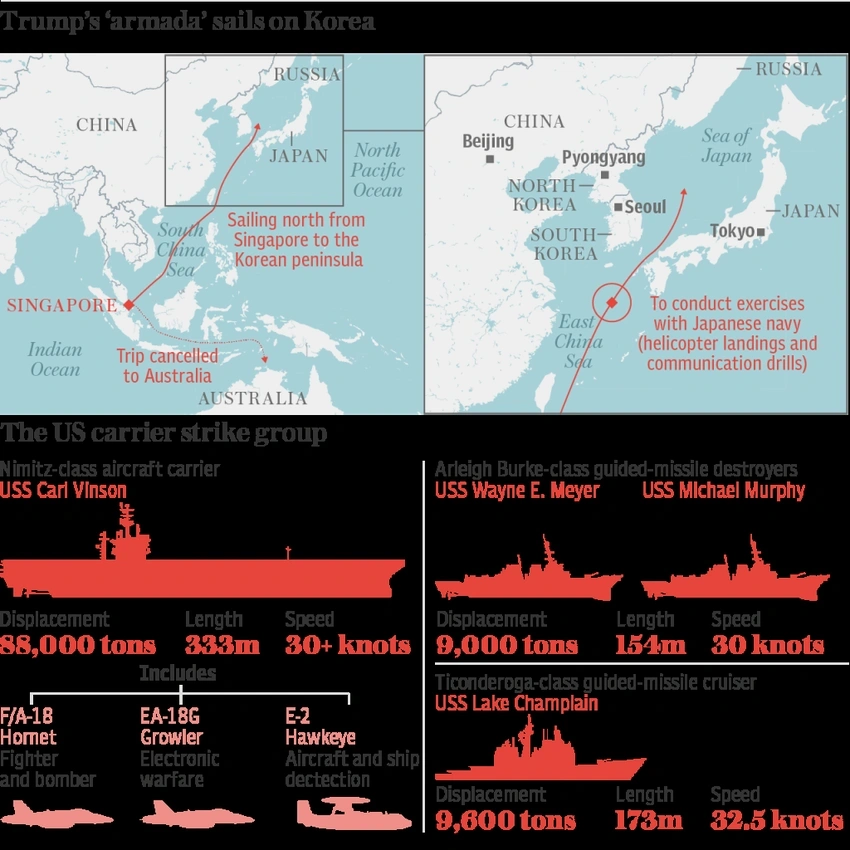
President Donald Trump announced that an American naval armada is heading toward the Middle East, saying we have a lot of ships in that direction and that Washington is watching Iran closely. He spoke on Air Force One after returning from the World Economic Forum in Davos, insisting the move is a precautionary deterent rather than a prelude to conflict. The unfolding deployment involves the aircraft carrier USS Abraham Lincoln and several guided-missile destroyers, with air defense systems expected to bolster U.S. and allied bases in the region in the coming days. The UK also signaled support by planning to send RAF Eurofighter Typhoon jets from 12 Squadron to Qatar, following a request from Doha.
In Tehran, officials warned that any attack would be treated as an all-out war and would be met with the hardest possible response, underscoring the fragile balance as tensions flare. The timing comes as international observers track a violent crackdown on protests in Iran, with the death toll climbing past 5,000 according to HRANA, a group that has historically provided verified casualty figures from Iran. HRANA’s updated tally attributed 4,716 demonstrators among the dead, plus 203 government-affiliated deaths, 43 children, and 40 civilians not taking part in protests, along with more than 26,541 arrests.
The move marks a new chapter in a long standoff between Washington and Tehran. Trump had previously signaled that help could arrive, but he pulled back from a direct attack after concessions from allied Gulf states and a lack of a decisive military option that could secure regime change in Tehran. As this new armada edges closer to the region, observers say the risk of miscalculation remains high, even as diplomatic channels continue to press for restraint.
Analysts note the broader context—where hard-edged warnings, show-of-force deployments, and regional alliances intersect—could shape the next several weeks of diplomacy and potential escalation. For now, officials emphasize preparedness and deterrence, rather than anticipation of a rapid strike, while civilians in the region brace for any rapid developments.
