SpaceX Starship Reaches Orbit! 🚀 Major Milestone for Moon & Mars Missions!

SpaceX Starship Reaches Orbit! 🚀 Major Milestone for Moon & Mars Missions!
History made! SpaceX's Starship rocket successfully achieved orbit, marking a critical step towards future lunar and Martian exploration. Discover the significance of this colossal achievement!
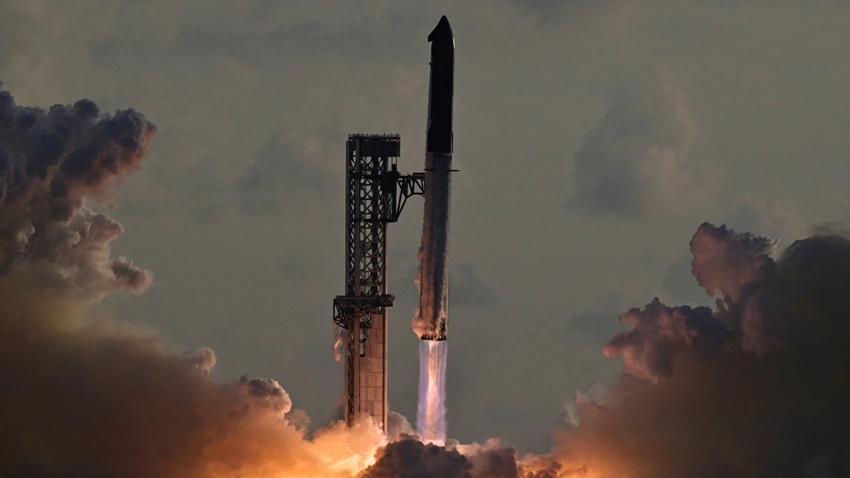
SpaceX has finally made good on its ambitious promise: its colossal Starship rocket has officially reached Earth orbit for the very first time. After three and a half years and numerous attempts, the 14th launch saw the towering stainless steel machine ascend successfully, marking a monumental achievement in space exploration.
Starship performs its orbital insertion burn and enters orbit of Earth for the first time,
SpaceX confirmed on X, sharing video of the engine maneuver.
The spacecraft soared from its Starbase, Texas, launch pad to a 170-mile-high circular orbit in just 25 minutes and 17 seconds. This success cannot be overstated for both SpaceX's and NASA's long-term ambitions. Starship is designed to be the cornerstone for humanity's return to the Moon and eventual journey to Mars.
It's also envisioned as the ultimate successor to SpaceX's highly successful Falcon 9 rocket, which in 2025 accounted for nearly 51% of global commercial launches. With a payload bay capable of carrying almost five times the cargo of a Falcon 9, Starship promises to consolidate launches and significantly reduce costs.
Standing at an impressive 407 feet, Starship is a two-part rocket, equipped with 33 first-stage engines generating an astounding 16.7 million pounds of thrust. This makes it by far the most powerful rocket ever successfully launched, easily surpassing NASA's Space Launch System (SLS). The upper stage, also called Starship, is a 171-foot, six-engine machine designed for satellite deployment and crew travel.
NASA recognized its potential early on, selecting Starship in 2021 as one of two spacecraft for landing astronauts on the moon as early as 2028, with a crewed test in Earth orbit planned for the Artemis III mission in 2027. The journey to orbit hasn't been without its challenges. Early Starship launches were far from routine, notably the inaugural flight in April 2023, which ended in a spectacular explosion just four minutes after liftoff.
This incident, which scattered debris and sparked a significant fire, led to environmental concerns and legal challenges. However, SpaceX pressed on, conducting launches approximately every three months, each building towards this latest success. Even this historic launch experienced its share of complexities.
One of Starship's six engines failed to ignite properly during ascent, requiring the other engines to compensate.
Furthermore, to simplify the flight objectives, the typical "chopstick recovery" for the first stage, where giant metal arms catch the booster upon its return, was bypassed. Instead, the first stage executed a soft, engine-assisted splashdown in the Gulf of Mexico.
The Starship spacecraft itself was slated for a six-orbit, 10-hour mission. This successful orbital insertion marks a monumental leap forward for future space exploration and reusability goals.
