Incredible: Dad Donates Liver & Bowel to Son, 6, in Rare Transplant!

Incredible: Dad Donates Liver & Bowel to Son, 6, in Rare Transplant!
A father’s love knows no bounds! Discover the heroic story of Gary Jackson, who donated part of his liver and bowel to his six-year-old son, Harry, in a groundbreaking, life-saving transplant at King's College Hospital i
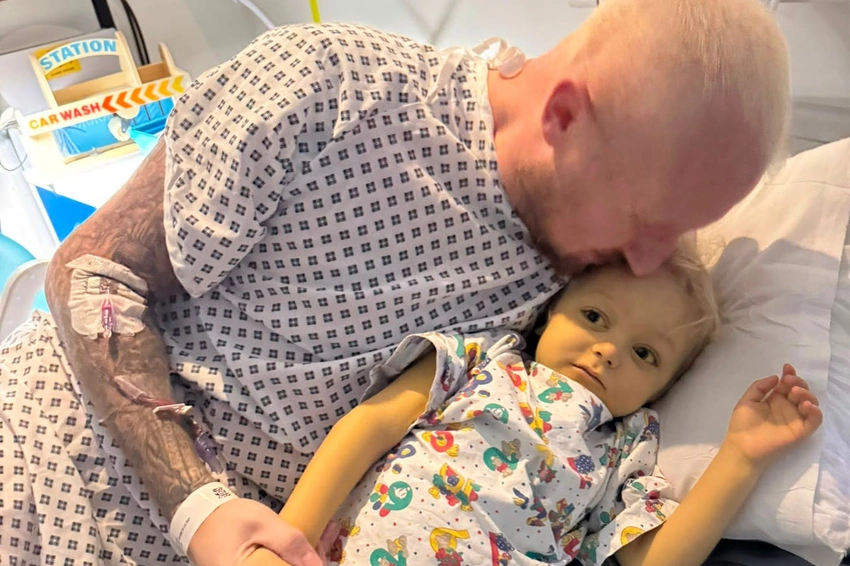
In an extraordinary display of parental love and medical advancement, a father has donated a portion of his liver and bowel to his six-year-old son, Harry Jackson, in an "extremely rare" and life-saving transplant. The father, Gary Jackson, described the act as the "greatest privilege" of his life, giving his son a second chance. Harry was born with a condition called malrotation, an abnormality of the bowel that develops in the womb.
This led to a serious complication known as volvulus, where the bowel twists, cutting off its blood supply, a life-threatening situation. Over time, Harry developed intestinal failure-associated liver disease (IFALD), a progressive liver condition caused by years of intravenous feeding necessary to manage his initial diagnosis.
Facing dire choices, Harry's parents, Annie and Gary, consulted with specialists at King's College Hospital in London.
The discussion centered on the possibility of a combined liver and bowel transplant. Without hesitation, the couple, who hail from Cambridge, volunteered for medical testing to determine if either of them was a suitable donor match for their son. The procedure, performed at King's College Hospital, is considered one of the most complex, making Harry one of only about 10 children worldwide to have undergone such an operation.
His mother, Annie Cerveno, shared the family's journey, explaining that while they always knew a bowel transplant might be necessary one day, they hoped it would be much later. However, when Harry's liver began to fail due to total parenteral nutrition (TPN) that was keeping him alive, the urgency of the situation became clear.
Suddenly we were faced with the reality that he needed both a liver and bowel transplant much sooner than we had ever imagined,
Ms. Cerveno stated. She highlighted the plight of "hundreds of children like Harry waiting for the phone call that could save their lives." The prospect that one of them might be able to help Harry directly was a ray of hope they had to explore immediately.
"If there was any possibility we could help him ourselves, we had to try," she added. Following weeks of rigorous assessment and preparation, Gary was found to be a suitable match, leading to the groundbreaking surgery. This incredible story underscores the profound sacrifices parents make for their children and the remarkable progress in pediatric transplant medicine, offering hope to families facing similar unimaginable challenges.
