"Korean Kanakaraju" Review: Dull Narrative, Uneven Screenplay, Say Critics

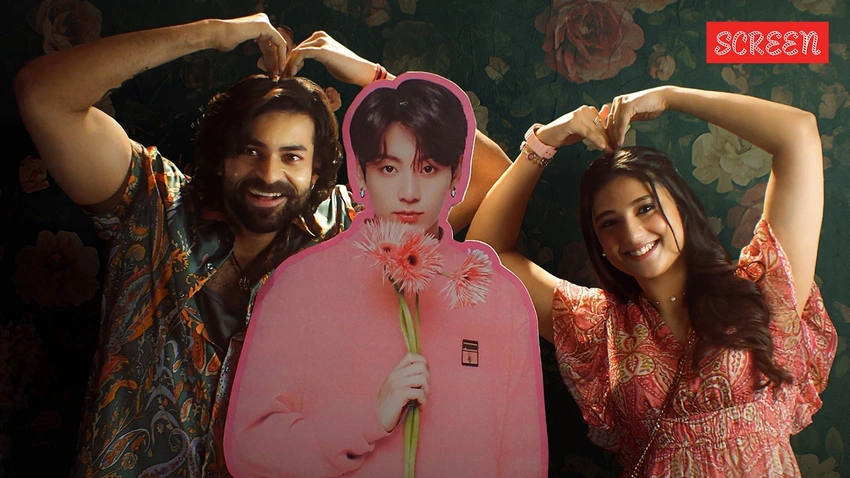
"Korean Kanakaraju" Review: Dull Narrative, Uneven Screenplay, Say Critics
Telugu horror-comedy "Korean Kanakaraju" starring Varun Tej struggles despite comic timing. Read why director Merlapaka Gandhi's film falls flat due to an uneven plot.
The Telugu cinema landscape frequently turns to the horror-comedy genre, banking on a few genuinely funny moments to carry otherwise uneven narratives. Audiences often overlook flaws if the laughs land. Director Merlapaka Gandhi attempts to tap into this familiar template with his latest offering, "Korean Kanakaraju," adding a contemporary twist with K-dramas and K-pop influences.
The film's premise is undeniably intriguing: the ashes of a Korean man mysteriously find their way to an unassuming bar in Andhra Pradesh's Anantapur district. Through a series of bizarre events, Kanakaraju (Varun Tej) accidentally consumes alcohol mixed with these ashes and becomes possessed by the Korean spirit. What follows is a comedic and supernatural tug-of-war for control over Kanakaraju's identity.
The narrative also weaves in local elements, connecting Anantapur's association with a major Korean automobile manufacturer to Chaitra's (Ritika Nayak) dream of visiting Korea and her fascination with K-pop and K-dramas. The plot attempts to bridge the gap between Rayalaseema machismo and Korean gang wars, with Kanakaraju's hapless friend Kistappa (Sathya) caught in the chaotic crossfire.
However, despite its promising setup, "Korean Kanakaraju" struggles significantly with an uneven screenplay, stretching to a lengthy 165 minutes. Critics note that the film takes over 45 minutes to establish its central conflict, with an opening act described as generic. Kanakaraju’s introduction, his family dynamics, budding romance, and local rivalries are all presented in a formulaic manner, further burdened by unmemorable songs.
The film reportedly only truly "comes alive" once Kanakaraju is possessed by the spirit. Some pre-interval sequences, particularly those set in a factory, are highlighted as being competently handled. While Varun Tej and Sathya are praised for their comic timing, their performances are ultimately unable to rescue the overall dull narrative, which struggles to maintain engagement.
