India Ranks 13th in Global Future Skills, Faces Talent Gap!

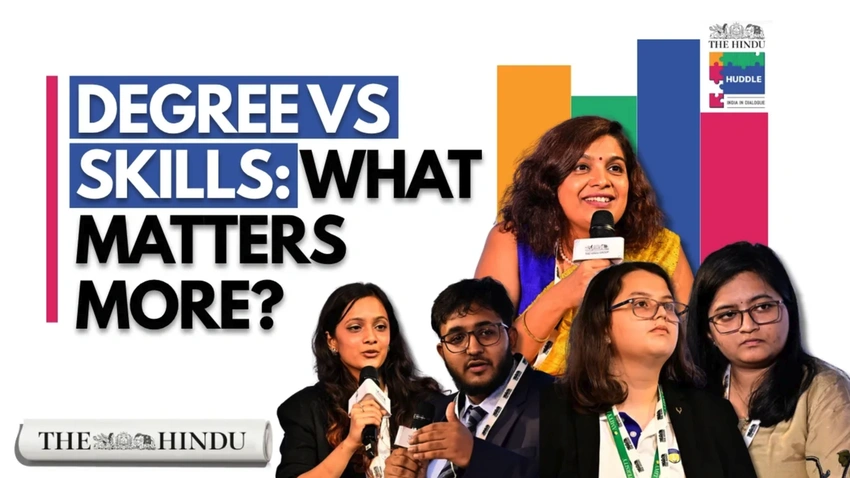
India Ranks 13th in Global Future Skills, Faces Talent Gap!
India secures 13th place in the QS World Future Skills Index 2027, excelling in AI readiness but battling critical skills alignment challenges. Explore what this means for India's future workforce!
India has secured the 13th position in the QS World Future Skills Index 2027, a significant finding released recently. The London-based higher education analyst, QS, highlighted India's "exceptional system scale" and its strong potential to accelerate AI-led growth, especially among lower-middle-income economies. This places India in a promising spot on the global stage for future readiness.
Despite this impressive ranking, the report also brings to light a critical challenge: India scores "poorly on skills alignment and quality consistency." This issue could significantly hinder the country's ability to transform its demographic and economic strengths into a robust "future-ready talent" pipeline. India's overall score of 89.4 out of 100 demonstrates its robust performance in AI-economy readiness, confirming its potential to become one of the fastest-growing economies in the coming decade.
However, the "relative weak spot" remains the alignment of skills. There's a noticeable mismatch between the evolving demands of the labour market and the capacity of educational institutions to produce talent proficient in AI, digital technologies, and "green" skills at the necessary scale.
The QS World Future Skills Index is compiled based on a comprehensive analysis of 89 countries. It assesses their readiness to harness economic opportunities presented by AI through both talent-supply and talent-demand perspectives. The methodology combines QS's proprietary data on higher education performance, skills gaps, and AI transformation with internationally recognised third-party indexes.
The index is structured around four equally weighted indicators. On the talent supply side, "Skills Alignment" evaluates how well graduates' skills match employer expectations, while "Academic Readiness" measures the depth, quality, and future-skills orientation of a country's higher education system. For talent demand, "Future of Work" gauges how prepared a country’s labour market is for AI, digital, and green transformations, and "Economic Transformation" assesses the extent to which economic conditions can convert skills into productivity, innovation, and growth. This detailed framework underscores both India's progress and the areas that require urgent attention for sustained future growth.
