Delhi Traffic Alert! Barapullah Flyover Design Flaw Causing Major Jams 🚨

Delhi Traffic Alert! Barapullah Flyover Design Flaw Causing Major Jams 🚨
New Barapullah Phase-III flyover is a traffic nightmare! Delhi Police demand PWD redesign bottleneck causing hours-long delays. Find out why it's gridlock!
Delhi's recently opened Barapullah Phase-III Flyover has quickly become a commuters' worst nightmare, prompting the Delhi Traffic Police to demand an immediate redesign from the Public Works Department (PWD). The new flyover, meant to ease congestion, is instead causing massive traffic jams, with commuters reporting an hour or more to travel a mere eight kilometers.
The problems began almost immediately after its opening, with travel times soaring for the route from Safdarjung Hospital to Sarai Kale Khan.
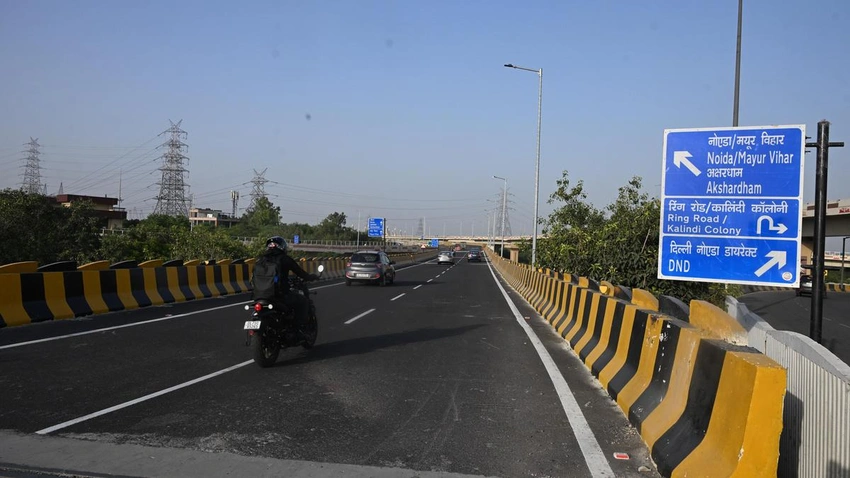
The crux of the problem lies at the merger point near Sundial Park, where the Phase-III flyover connects with the existing corridor. A joint inspection conducted by senior Traffic Police officers and PWD officials on October 1st highlighted "geometric and structural defects" as the primary cause of the chaos.
This inspection followed repeated reports of severe congestion, leading to a formal letter from the Deputy Police Commissioner's office (southern range) to the PWD.
One significant issue identified is the "sharp/rectangular geometry" of the merger point instead of a smooth curve.
This design flaw forces an abrupt merging of traffic, creating an instant bottleneck.
To make matters worse, a drone survey revealed that multiple three-lane roads are converging into a single three-lane corridor at several points, with one lane even ending abruptly where the new spur joins the existing flyover.
Compounding the problem is a severe mismatch in lane capacities. The new Phase-III Flyover, carrying three lanes of traffic, merges with another three lanes from the Sundial side (coming from Sarai Kale Khan/Ring Road), and an additional three lanes from the Ashram/DND side.
However, the existing Barapullah Flyover at this crucial stretch has only two lanes.
This dramatic reduction in lanes forces nine theoretical lanes of traffic into two, leading to predictable and severe congestion, as highlighted by traffic science principles studied since the 1950s.
The Traffic Police have formally written to the PWD, urging them to execute prompt modifications. Their key suggestion is to redesign the merger at Sundial Park with a smooth curvature to facilitate safer and more fluid traffic flow. This change is crucial to easing the daily distress faced by thousands of commuters and ensuring road safety on this vital city link, which connects Mayur Vihar to South Delhi.
