Boy George's AI Exit: Where Art, AI, and Activism Collide

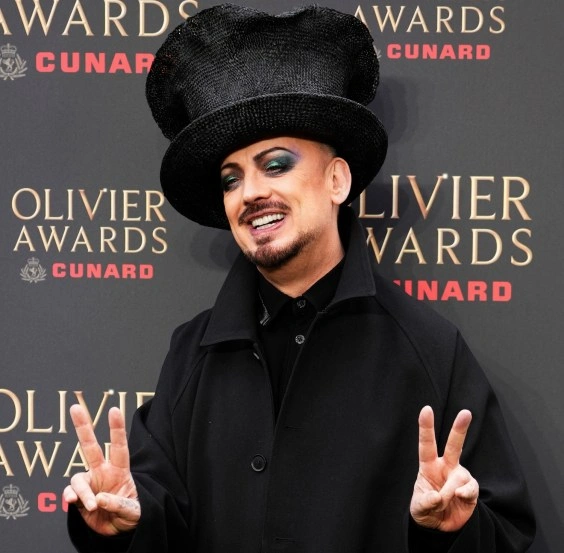
Boy George's AI Exit: Where Art, AI, and Activism Collide
Boy George's use of AI for a pro-Israel song led to his exit from Jesus Christ Superstar. We're breaking down the complex intersection of AI art, celebrity platforms, and political repercussions.
When Boy George declared he was using “AI for good,” few could have predicted the swift, dramatic fallout. The 'good' in question? A new reggae song created with artificial intelligence, publicly supporting Israel.
Fast forward a few days, and George is no longer slated to perform in Jesus Christ Superstar at the London Palladium.
This isn't just about a celebrity's political stance; it's a potent illustration of where art, technology, and deeply held convictions clash in our hyper-connected world. We’re witnessing a real-time case study of the lines blurring, if not outright dissolving, between an artist’s creative output, their public persona, and the tools they choose to employ.
The AI Art Conundrum
First, let's talk about AI in creative fields.
Boy George isn't the first artist to experiment with AI, and he certainly won't be the last.
The debate rages: Is AI-generated content 'art'?
Does it diminish the artist's role, or augment it? When the output carries a specific, politically charged message, does the AI become an extension of the artist's voice, or merely a neutral tool misused? George's statement about using 'AI for good' suggests a belief in its positive potential, yet the reaction demonstrates that 'good' is very much in the eye of the beholder, especially when it touches on sensitive global conflicts.
Celebrity Platforms and Political Payoffs
Public figures have always navigated the tricky terrain of personal beliefs versus professional implications. From sports stars to pop icons, speaking out carries weight. In George's situation, the combination of his platform, the contentious nature of the Israel-Palestine conflict, and the novel use of AI as the medium for his message created a perfect storm.
The consequence, losing a role in a major production, highlights the very real professional risks involved. It suggests that for some, the political statement, particularly when it's perceived as insensitive or aligned with a 'genocidal regime' as critics have framed it, can overshadow artistic merit or even contractual obligations.
Where Do We Draw the Line?
This incident forces us to confront difficult questions:
- Artistic Freedom vs. Accountability: How far does an artist’s freedom to express their views extend before it impacts their career, particularly when those views are facilitated by emerging tech like AI?
- The Medium is the Message: Does the use of AI in creating the song add another layer of controversy? Does it make the message seem less authentic, or more calculated?
- Audience Expectation: What do we expect from our entertainers? To entertain, or to stand for something? And what happens when those 'somethings' are divisive?
Boy George's departure from Jesus Christ Superstar isn't just a footnote in entertainment news. It's a stark reminder that in an era of rapidly evolving technology and deeply entrenched political divides, artists - and the tools they use - are under unprecedented scrutiny. The line between art and politics, already faint, seems to vanish entirely when AI enters the conversation.
