UK Defends Palestine Action Ban as High Court Ruling Faces Appeal

UK Defends Palestine Action Ban as High Court Ruling Faces Appeal
The government argues the ban is essential to counter-terrorism powers while the Court of Appeal weighs the High Court ruling and protest rights.
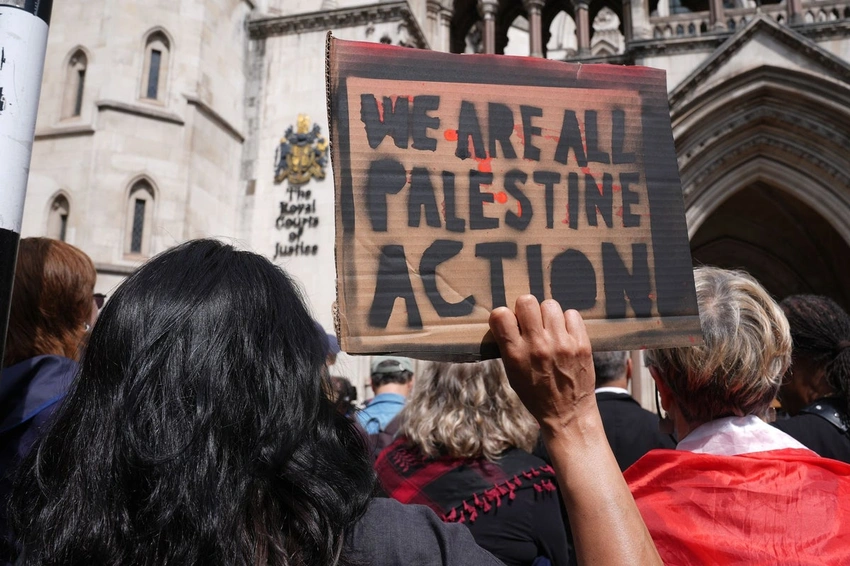
London — The government on Tuesday defended its decision to proscribe Palestine Action under anti-terrorism legislation as the High Court's ruling that the move was unlawful continues to reverberate through Westminster.
A rare five-judge panel at the Court of Appeal is hearing the government’s appeal to overturn the High Court decision and uphold the proscription, a process that began after the group was named a terrorist organisation in 2025. In opening submissions, the government’s lawyer argued that overturning the ban would weaken ministers’ counter-terrorism powers and hinder Parliament’s ability to respond to evolving threats.
The lawyer said Palestine Action is not comparable to groups such as Hamas or the IRA where there is an overt link between those who engage in violent activity and their supporters. He stressed that the proscription regime is designed to prevent supportive activity that could enable terrorism, even if the group’s members are not all involved in violence themselves. The hearing also raised questions about the impact on peaceful protest rights. The government contends that the rights of those who would support Palestine Action are affected but that Parliament gave ministers discretion to use such powers when there is expert evidence of terrorism.
Opponents of the ban argue that criminalising a political protest group risks chilling legitimate speech and assembly. The High Court previously ruled that the proscription interfered with freedom of expression, and the Court of Appeal is weighing that concern against the government’s claims of preventive security. The panel’s decision could have wide implications for how quickly and broadly authorities can designate organisations as terrorists, and for how protests related to contentious issues are conducted in the future.
