The Rise and Fall of Dark Academia


The Rise and Fall of Dark Academia
The Rise and Fall of Dark Academia
From Tumblr to TikTok, dark academia turned a mood into a movement. Explore how candlelit desks, gothic architecture, and The Secret History reshaped a stylish take on study, obsession, and culture.
There was a moment somewhere between 2019 and 2021 when it felt as though everyone wanted to live inside a library. Not a real one, with flickering Wi-Fi and overworked students, but an imagined archive: candlelit desks, Latin marginalia, wool coats, and a vague sense of tragedy.
What came to be called dark academia was less a subculture than a mood-boarded philosophy. Emerging from Tumblr around the mid-2010s and crystallising on platforms like TikTok and Pinterest, it offered a curated version of intellectual life, one built on classical literature, gothic architecture, and the performance of study.
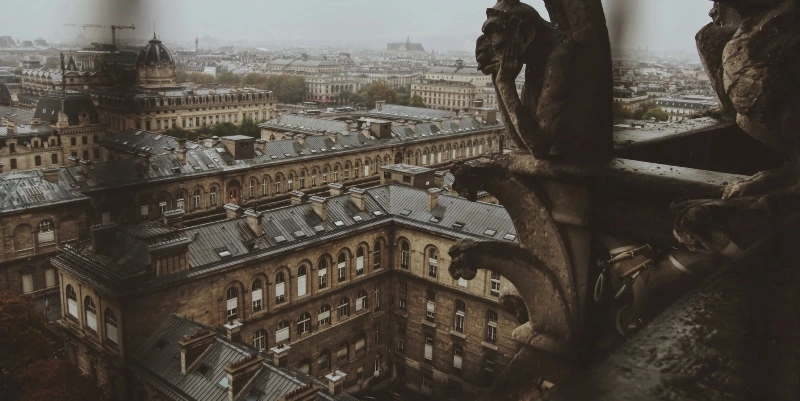
Its literary centre of gravity is widely traced to Donna Tartt’s The Secret History (1992), a novel that aestheticised elitist education, obsession, and moral decay. Around it gathered older canonical ghosts of Wilde, Byron, the Brontës, forming a lineage that was less historically accurate than atmospherically consistent.
Dark academia did not merely celebrate knowledge; it staged it. Reading became visual. Thinking became aesthetic.
Pandemic Romanticism and the Hunger for Elsewhere
The explosion of dark academia cannot be understood without the pandemic. When universities shut down and education moved online, students found themselves severed from the very spaces that structured intellectual identity.
In this vacuum, dark academia offered a substitute reality. It transformed absence into fantasy. Students, confined to their homes, gravitated towards content that reimagined academic life as immersive, obsessive, and beautiful.

There was also a broader cultural longing at play. At a time when STEM fields increasingly dominated educational discourse, dark academia reasserted the humanities, not as a viable career path, but as an aesthetic refuge. It allowed young people to inhabit the idea of intellectualism without the institutional precarity that often accompanies it.
The appeal, then, was not simply scholarly. It was escapist.
The Seduction of Elitism
Yet the very qualities that made dark academia alluring also made it troubling.
At its core, the aesthetic is deeply entangled with cultural capital. It romanticises elite educational institutions like Oxbridge and Ivy League colleges, spaces historically structured by exclusion. The visual language of the trend (tweed, Latin, classical antiquity) gestures towards a narrow, Eurocentric canon, often erasing other intellectual traditions.

Dark academia reproduces older hierarchies under the guise of nostalgia. It invokes a past that was, in reality, inaccessible to many marked by racial, class-based, and gendered exclusions.
More subtly, it transforms education into spectacle. The labour of thinking is replaced by its visual shorthand: annotated books, handwritten notes, performative exhaustion. In this sense, dark academia aligns with what might be called aestheticised intellect: knowledge not as practice, but as posture.
From Subculture to Commodity
Like most internet-born aesthetics, dark academia did not remain subcultural for long.
By the early 2020s, it had been absorbed into fashion and retail. High-street brands began marketing “dark academia” collections; social media tutorials instructed users on how to become the aesthetic. What began as a loosely defined intellectual mood hardened into a consumable identity.
This commodification reveals something fundamental about contemporary digital culture: aesthetics are not just expressive, they are marketable. Dark academia became a lifestyle one could purchase, assemble, and discard.

And discard it was. As with many microtrends, its lifecycle was accelerated by the very platforms that sustained it. The same algorithmic logic that amplified it ensured its eventual dilution.
Fast fashion, too, played a role. The demand for aesthetic coherence led to cycles of overproduction and disposal, raising ethical concerns about sustainability.
In becoming ubiquitous, dark academia lost its mystique.
Fragmentation and Afterlives
Dark academia has not disappeared so much as it has dissolved.
By the mid-2020s, it had splintered into adjacent aesthetics; light academia, poetcore, even medievalcore. These iterations retain elements of the original (books, nostalgia, intellectual fantasy) but reconfigure them into softer, more personalised forms.
This fragmentation reflects a broader shift in digital culture: the move from unified subcultures to endlessly customisable micro-identities. Where dark academia once offered a coherent aesthetic, its successors emphasise variation and hybridity.
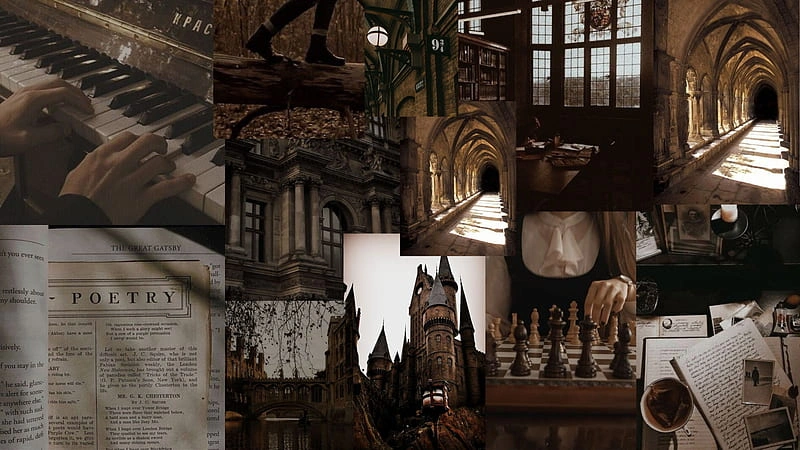
In this sense, its “fall” is less a collapse than a diffusion. It has become part of the visual vocabulary of the internet; no longer dominant, but still legible.
What Remains
To say that dark academia has declined is not entirely accurate. Its imagery persists: the annotated margin, the rain-soaked campus, the solitary reader. But its cultural position has changed.
What once felt like a shared fantasy now reads as a case study in the lifecycle of online aesthetics. Perhaps its most enduring legacy lies in what it revealed: a widespread desire for intellectual meaning in an age that often reduces knowledge to utility. Dark academia may have been flawed but it articulated a longing that remains unresolved.
Not for academia as it is, but for what it might have been: slow, communal, and deeply felt.
#DarkAcademia #LiteratureLovers #CampusAesthetic #GothicArchitecture #BookishVibes
